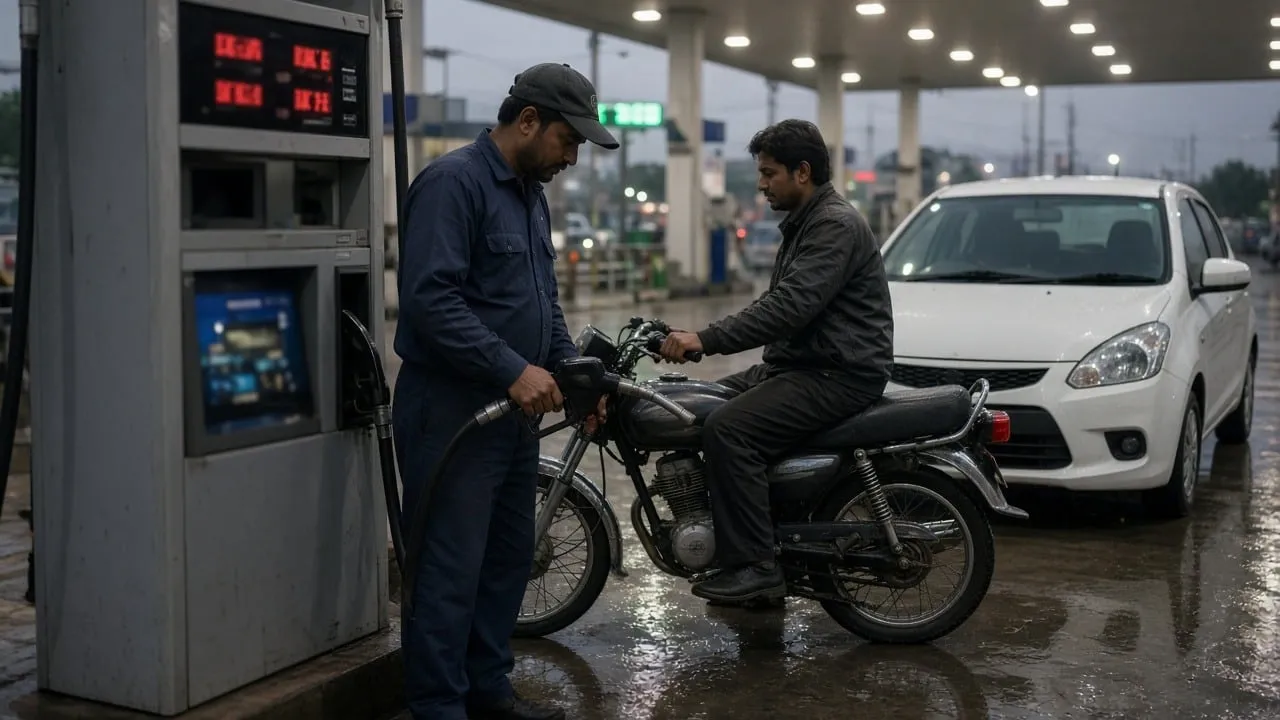
All Pakistan Petrol Pump Owners Association Requests Prime Minister for Monthly Fuel Prices
The All Pakistan Petrol Pump Owners Association has formally asked Prime Minister Shehbaz Sharif to revise petroleum prices once a month instead of every day. Association representatives state that daily changes leave fuel dealers with financial losses they cannot recover. In a letter dated November 16, 2026, APPPOA Vice Chairman Nouman Ali Butt explained the operational challenges facing fuel retailers across the country. The letter outlines how the current pricing mechanism threatens the survival of small and medium-sized fuel stations that serve local communities and employ large workforces.
The core issue stems from the mechanics of fuel retail, where dealers purchase inventory in bulk at a specific rate and distribute it to motorists over subsequent days. When petroleum values fluctuate on a daily basis, stations often find themselves holding expensive stock that must be sold at lower rates when the market drops. This financial mismatch drains working capital and creates severe hardship for business owners who operate on tight profit margins. The association seeks urgent intervention from the federal government to stabilize the retail sector and prevent widespread station closures.
Why Daily Fuel Price Revisions Harm Dealers
Pump owners report that daily pricing creates immense difficulty in managing working capital and planning future inventory purchases. Without price stability, station managers cannot accurately forecast expenses or maintain steady operational cash flow. When prices drop overnight, the inventory purchased at the previous higher rate loses value instantly. Dealers absorb this negative difference because retail prices must match the new government rates immediately. This constant erosion of capital makes it nearly impossible for independent stations to maintain healthy financial reserves.
Beyond financial losses, the daily adjustment system causes widespread confusion among motorists at the service stations. Drivers often argue with pump attendants when prices shift unexpectedly between visits, leading to friction and operational delays. The association emphasizes that its members provide a critical public utility under challenging economic conditions. Sustained losses threaten the viability of the entire retail distribution network, which could eventually disrupt fuel supplies to the public.
The Proposal for Monthly Petroleum Price Revisions
The All Pakistan Petrol Pump Owners Association has formally requested that the federal administration replace the daily price change mechanism with a predictable monthly price revision schedule. Association leaders argue that a monthly system would restore stability to the petroleum sector and protect independent dealers from unpredictable losses. A fixed monthly rate allows businesses to sell their entire purchased inventory without the sudden shocks associated with daily market drops. The proposal aims to balance consumer protection with the commercial reality of running a fuel station.
Furthermore, the association has offered to meet with Prime Minister Shehbaz Sharif in person to present detailed financial data supporting their request. By explaining the daily operational realities face-to-face, dealer representatives hope to secure a policy reversal. The group maintains that monthly adjustments still allow pump rates to reflect broader global market movements while sparing local retailers from ruinous daily volatility.
Impact of Daily Pricing on Motorists and the Fuel Sector
The federal government introduced daily fuel price updates in July as part of a shift toward more responsive market pricing. However, retail associations have consistently voiced opposition to the system since its inception, arguing that it places an unfair burden on small businesses. While daily updates aim to pass global crude price changes to consumers quickly, they create significant turbulence for the middle tier of the supply chain. Motorists experience frequent rate shifts at the pump, which complicates personal budgeting and transportation planning.
Transitioning back to a monthly pricing cycle would provide drivers with fixed fuel costs for weeks at a time, offering greater predictability for household and business transport budgets. Conversely, a monthly system means that any sudden drop in international oil prices would reach local pumps much more slowly. Motorists would have to wait until the next review cycle to benefit from cheaper crude imports. Understanding these trade-offs remains essential for policymakers as they weigh the demands of retail station owners against broader economic policies.
Background of Fuel Pricing Policies in Pakistan
Pakistan regulates petroleum products through a complex mechanism involving the Oil and Gas Regulatory Authority and the Ministry of Finance. Historically, the government adjusted prices on a fortnightly or monthly basis to absorb international market fluctuations gradually. The transition to a daily pricing model earlier this year represented a major departure from traditional administrative practices. Proponents of frequent revisions argued that faster adjustments prevent sudden, massive price spikes and align domestic rates more closely with daily movements in global petroleum benchmarks.
However, the unique structural challenges of Pakistan's retail sector mean that policy changes often produce unintended consequences. Unlike large corporate chains in other nations, many petrol pumps in Pakistan operate as independent, family-owned small businesses with limited financial buffers. These operators rely heavily on steady inventory turnover to service loans, pay employees, and cover utility costs. The ongoing friction over pricing schedules highlights the persistent difficulty of balancing macroeconomic reform with the survival of grassroots commercial enterprises.





