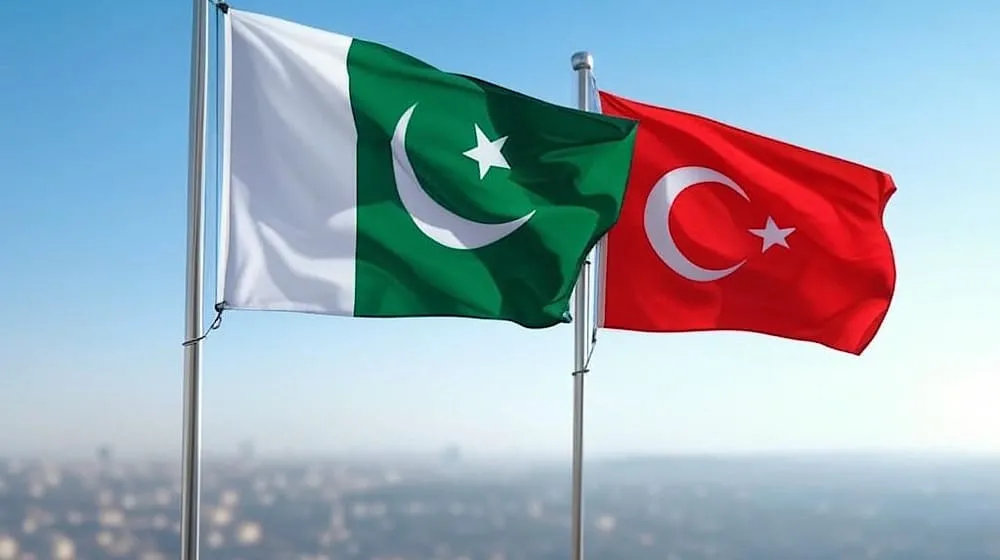
Pakistan has reaffirmed its commitment to the agreed $5 billion bilateral trade target with Turkiye and wants more Turkish investment, especially in its Special Economic Zones (SEZs).
The pledge came on Friday when Turkish Ambassador Irfan Nezioglu called on Minister of State for Finance and Revenue Bilal Azhar Kayani in Islamabad, according to a Finance Division press release. The two sides reviewed cooperation in trade, investment, and energy.
Kayani welcomed Turkiye's strong interest in investing in Pakistan and said both countries should use their strong political goodwill to increase trade volumes.
What the $5 Billion Target Means for Pakistan and Turkey
The $5 billion figure represents the total value of goods exchanged between the two nations in a given fiscal year. It is a cumulative target that includes exports from Pakistan to Turkiye as well as imports from Turkiye to Pakistan. Achieving the goal would place the bilateral trade relationship among the top ten for both countries in the region, according to trade data compiled by the World Bank.
For Pakistan, reaching the target is linked to broader economic objectives such as expanding foreign exchange earnings, creating jobs in export-oriented sectors, and attracting foreign direct investment (FDI) into its Special Economic Zones. For Turkiye, the target offers a gateway to South Asian markets, a diversified supply chain for its manufacturing sector, and opportunities to export technology and services.
Why Turkish Investment in SEZs Is a Priority
Special Economic Zones are designated areas where businesses enjoy tax holidays, streamlined customs procedures, and relaxed labor regulations. Pakistan currently operates more than 30 SEZs, many of which are still in the development stage. The government estimates that fully operational SEZs could contribute up to Rs. 1.6 billion in annual tax revenue and generate thousands of skilled jobs.
Turkish firms have expressed interest in sectors such as automotive assembly, textiles, and food processing, areas where Turkiye has established global supply chains. By investing in SEZs, Turkish companies could benefit from lower production costs while gaining access to the broader South Asian market through Pakistan's trade agreements with neighboring countries.
Minerals, DISCOs, and Ship-Breaking: Emerging Sectors for Cooperation
The minister appreciated the active participation of Turkish companies in the Pakistan Minerals Investment Forum 2026 (PMIF26) underway in Islamabad, as well as the interest of Turkish firms in the privatization of power distribution companies (DISCOs). The minerals sector, which includes copper, gold, and rare earth elements, accounts for roughly 8 percent of Pakistan's export basket. Turkish expertise in mining technology and financing could accelerate project timelines and improve environmental compliance.
Power distribution companies, known locally as DISCOs, have been slated for privatization as part of Pakistan's broader energy reform agenda. Turkish utility firms have a track record of modernizing grid infrastructure in emerging markets, making them natural partners for Pakistan's effort to reduce transmission losses and improve service reliability.
Maritime and ship-breaking were also highlighted as sectors with significant room for partnership. Pakistan's coastal city of Gadani hosts one of the world's largest ship-breaking yards, but the industry faces challenges related to safety standards and environmental regulations. Turkish shipyards and recycling firms could bring best-practice technologies that improve worker safety and increase material recovery rates.
How the Two Countries Plan to Translate Goodwill Into Actionable Targets
Both sides agreed to renew efforts to expand the Pakistan-Turkiye Trade in Goods Agreement, discussed ways to turn political goodwill into actionable targets, and agreed to hold further meetings. The Trade in Goods Agreement, originally signed in 2016, provides tariff reductions on a list of 1,200 product categories. Expanding the agreement would involve adding new product lines, simplifying customs documentation, and establishing a joint monitoring committee to track progress.
Future meetings are expected to include senior officials from ministries of commerce, industry, and foreign affairs, as well as representatives from the private sector. These gatherings will likely produce a roadmap that outlines specific quarterly targets, investment pipelines, and dispute-resolution mechanisms.
History of the $5 Billion Goal
The $5 billion goal is not new. Leaders of both countries have repeated it for years, as ProPakistani reported when Pakistan and Turkey set out to raise trade by $5 billion back in 2020, and again when both countries renewed the target in 2025. The original 2020 announcement came after a high-level visit by Turkish President Recep Tayyip Erdoğan, during which both sides pledged to deepen economic ties.
In 2022, a joint business council was formed to identify bottlenecks in trade logistics, but progress stalled due to global supply-chain disruptions and domestic economic challenges in Pakistan. The 2025 renewal coincided with Turkey's launch of its "New Economic Horizon" program, which seeks to increase Turkish exports to non-EU markets.
Impact on Businesses and Citizens
For Pakistani exporters, a higher trade volume with Turkey could mean better market access for textiles, leather goods, and agricultural products. For Turkish investors, the promise of SEZ incentives and a growing consumer base offers a compelling case for setting up manufacturing units. Consumers in both countries may see a wider range of affordable products as tariffs are reduced and supply chains become more efficient.
In addition, the focus on energy and minerals could lead to more reliable electricity supply and higher employment in mining regions such as Balochistan and Khyber Pakhtunkhwa. The ship-breaking collaboration may improve occupational safety for thousands of workers at Gadani.
What to Watch for Next
While the press release did not specify exact dates, the next round of meetings is expected within the next three months. Observers will watch for a formal memorandum of understanding (MoU) that outlines investment commitments, timelines for SEZ development, and a detailed action plan for expanding the Trade in Goods Agreement.
Key indicators to monitor include: the number of Turkish firms registering projects in Pakistani SEZs, progress on DISCO privatization, and the volume of ship-breaking contracts awarded to Turkish companies. Trade data released by the State Bank of Pakistan at the end of each quarter will provide a quantitative measure of whether the $5 billion target is on track.
Stakeholders are also awaiting clarification on financing mechanisms. The Finance Division has hinted at possible joint loan facilities or credit lines that could lower the cost of capital for Turkish investors, but details remain to be confirmed.
In sum, the reaffirmation of the $5 billion trade target marks a renewed diplomatic push, but the ultimate success will depend on concrete policy steps, private-sector participation, and sustained political support from both Islamabad and Ankara.





