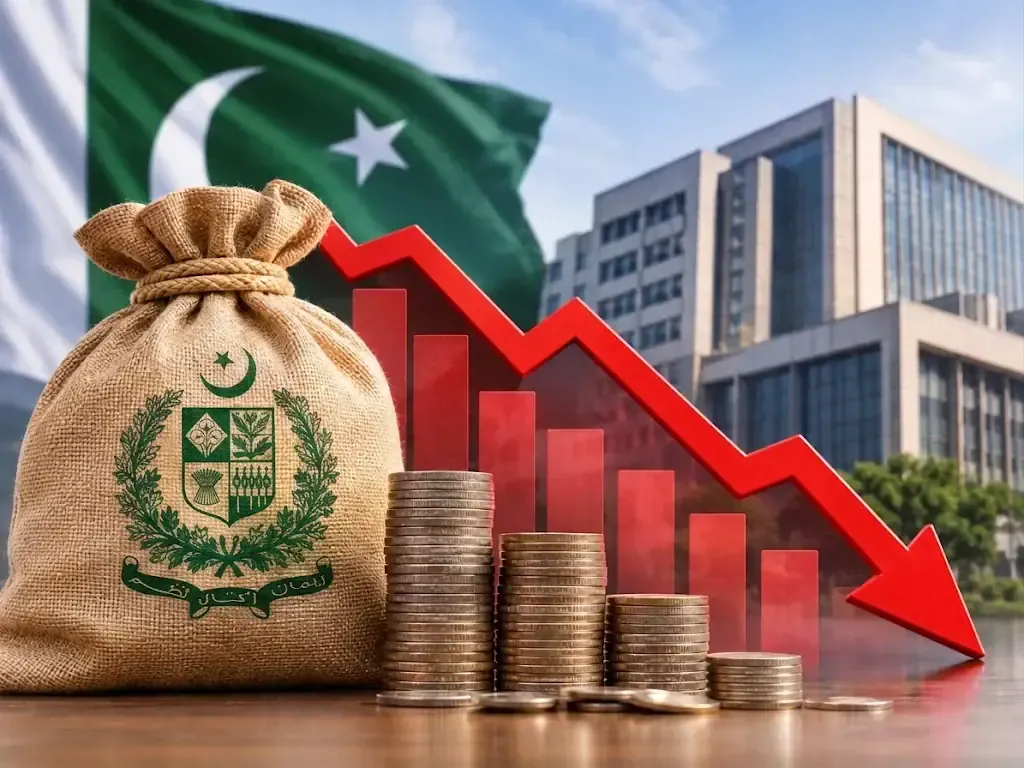
Pakistan State-Owned Enterprises Record Rs. 343 Billion Loss
Pakistan state-owned enterprises recorded combined losses of Rs. 342.8 billion during the first half of fiscal year 2025-26, placing a heavy burden on public finances while government financial support to these entities increased by 31% to Rs. 804 billion compared with the same period last year. These figures illustrate the ongoing financial strain that government-run commercial entities place on the national budget, underscoring the urgency behind current economic policy debates.
Adviser to the Prime Minister on Privatisation Muhammad Ali shared the figures on Thursday while addressing the Pakistan Prosperity Forum, organised by the Policy Research Institute for Market Economy. The disclosure sheds light on the scale of public sector financial leakages at a time when macroeconomic stability remains a primary objective for economic managers in the country.
Muhammad Ali Outlines Privatisation Strategy at Pakistan Prosperity Forum
Speaking at the event, Ali described privatisation as an important tool for economic transformation, saying it could attract investment, improve operational efficiency and reduce the government's financial burden. He added that recent major privatisation transactions reflected a shift towards bringing in fresh capital, management expertise and innovation rather than focusing solely on sale proceeds.
The adviser stressed that privatisation should not be treated as an end goal but as a means of improving business performance and creating long-term economic value. He also said Pakistan needed structural reforms to strengthen economic resilience against geopolitical tensions and global energy disruptions.
Ali further called for stronger cooperation between public institutions, private businesses, employees and regulators to achieve sustainable economic transformation.
Targeting Power Distribution Companies for Structural Reform
Highlighting ongoing reforms, he said the government was pursuing the privatisation of three power distribution companies under Batch-I: Islamabad Electric Supply Company (IESCO), Gujranwala Electric Power Company (GEPCO) and Faisalabad Electric Supply Company (FESCO).
He emphasised that the process must be accompanied by electricity market liberalisation, transparent tariff-setting mechanisms and clear dispute resolution procedures to prevent public-sector monopolies from simply being transferred to private ownership.
Understanding the Financial Burden of State-Owned Enterprises
State-owned enterprises in Pakistan historically encompass a wide variety of commercial entities operating in sectors ranging from energy and transport to manufacturing and finance. Many of these organizations struggle with operational inefficiencies, overstaffing, and outdated infrastructure, which consistently generate steep financial deficits.
When these companies run negative balances, the government is frequently required to step in with cash injections, bailouts, and direct subsidies to keep them operational. This fiscal support diverts scarce public resources away from critical development areas such as health, education, and infrastructure.
The Role of the Policy Research Institute for Market Economy
The forum where these figures were made public was organized by the Policy Research Institute for Market Economy, a prominent think tank focused on free-market solutions and economic policy in Pakistan. Events hosted by such organizations serve as platforms for policymakers, business leaders, and researchers to discuss reforms and share official data with the public.
Discussions at the Pakistan Prosperity Forum centered around structural impediments to growth and how private sector participation can enhance productivity across various industries.
Next Steps in Pakistan Privatisation Agenda
The inclusion of power distribution companies in the first batch of privatisations marks a critical test for the government execution capabilities. Managing the transfer of utility assets requires careful regulatory oversight to protect consumer interests while ensuring that private investors find the ventures commercially viable.
Observers will be watching closely to see how the administration handles labor concerns, tariff adjustments, and regulatory frameworks as the privatisation schedule moves forward in the coming months.





