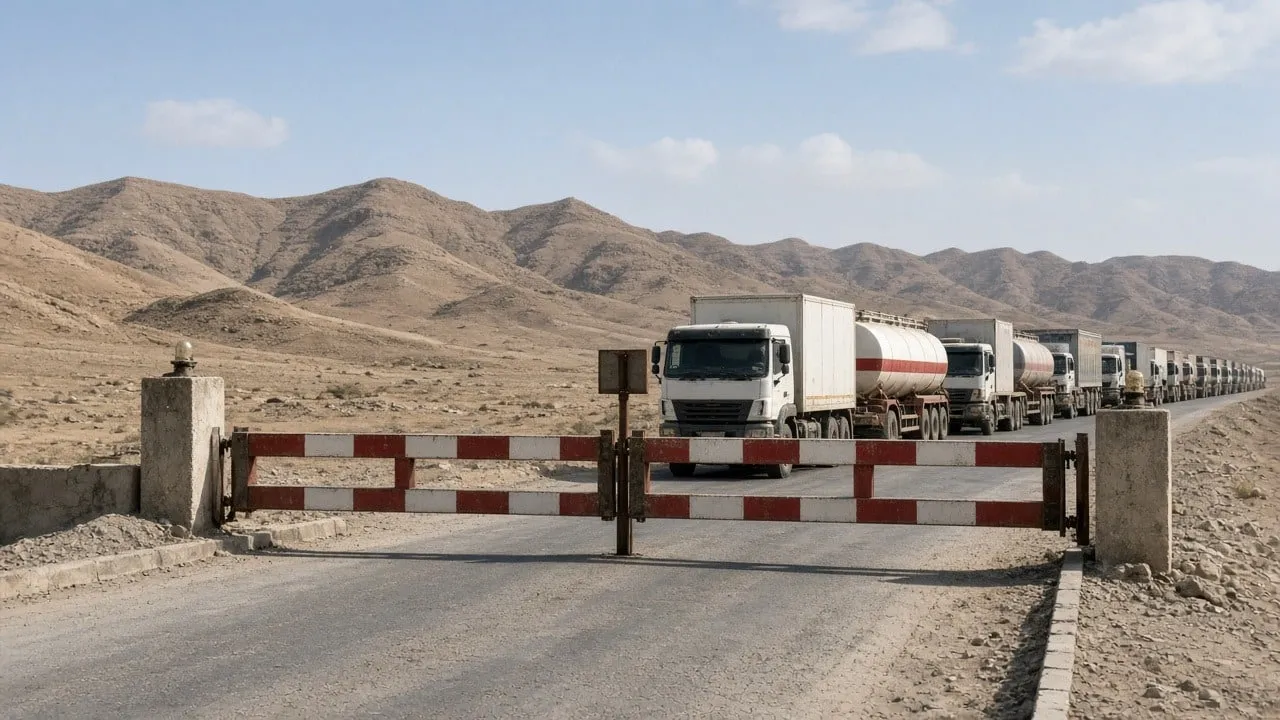
Pakistan halted trade with Iran via the official Taftan and Gabd-Rimdan border crossings located in Balochistan on Friday, as authorities pointed to security issues and anti-smuggling efforts.
On Friday, the Ministry of Commerce released a memorandum canceling an October 3 order that previously permitted commerce through these two points, taking effect immediately.
Government Says the Closure Is Temporary
Shahid Rind, adviser to the Balochistan chief minister on media and political affairs, stated that the short-term halt aims to tackle security problems, halt smuggling, and enhance border efficiency.
Via a statement posted on X, Rind rejected social media rumors and urged the public to ignore unverified reports, explaining that the measure was required to strengthen security and administration along the frontier.
Rind mentioned that high-ranking officials from both nations are advancing toward resolving administrative matters, and the border should reopen soon, noting that a joint framework is being created to upgrade border management and block smuggling.
Esmail Baqaei, spokesperson for Iran's foreign ministry, likewise termed the shutdown temporary, based on reports from the state-run IRNA news agency, though he pointed to technical problems and stated that both nations are holding talks to bring back regular functions.
Trucks Stranded and LPG Supplies at Risk
The Quetta Chamber of Commerce and Industry instructed its members to halt new export and import bookings with Iran until further instructions.
Numerous commercial trucks loaded with liquefied petroleum gas, fresh fruit, rice, and other vital goods remain stalled on both sides of the frontier.
The Wana news agency in Iran stated that passenger movement at the Rimdan-Gabd crossing remains active even though commercial traffic is paused.
The Gabd-Rimdan pathway functions as a vital supply route for Pakistan's energy demands, bringing in more than 4,000 tonnes of liquefied petroleum gas daily.
Pakistani shipments, particularly rice, have also expanded via this corridor over recent months.
Insiders in trade and energy sectors cautioned that the stoppage might intensify liquefied petroleum gas shortages in Karachi and other urban areas while raising open-market costs, given that the Taftan route already faced problems from unrest in Balochistan.
Business owners also cautioned about potential damage to the national treasury and the income of citizens relying on cross-border commerce.
A Setback for Growing Pakistan-Iran Trade
An Iranian delegation headed by Trade and Industry Minister Mohammad Atabak traveled to Islamabad in August for the 10th meeting of the Pak-Iran Joint Trade Committee.
During discussions with Prime Minister Shehbaz Sharif, both governments resolved to expand bilateral commerce to $10 billion and maintain continuous operations at border crossings.
This disruption is not the first for the route, as trading activity through the Gabd-Rimdan crossing reportedly stopped in June, despite Pakistan Customs denying any interruption to liquefied petroleum gas imports at that time.