Pakistan Kinnow Exports Target Set for the New Season
Pakistan has set a target of exporting 200,000 tonnes of kinnow this season, which is expected to bring in about $100 million (over Rs. 27 billion) in foreign exchange. The citrus export season kicked off this month after the government gave the go-ahead and issued clearance orders to airports, seaports and border crossings across the country.
This initiative forms a vital part of the agricultural trade calendar for the nation. Citrus fruits, particularly the distinct variety of mandarin known locally as kinnow, represent a major source of rural employment and international revenue. Growers and processing units spend months preparing the fruit for global markets, ensuring strict quality control measures are met before international dispatch.
Sargodha Ready, but Shipping Is a Worry
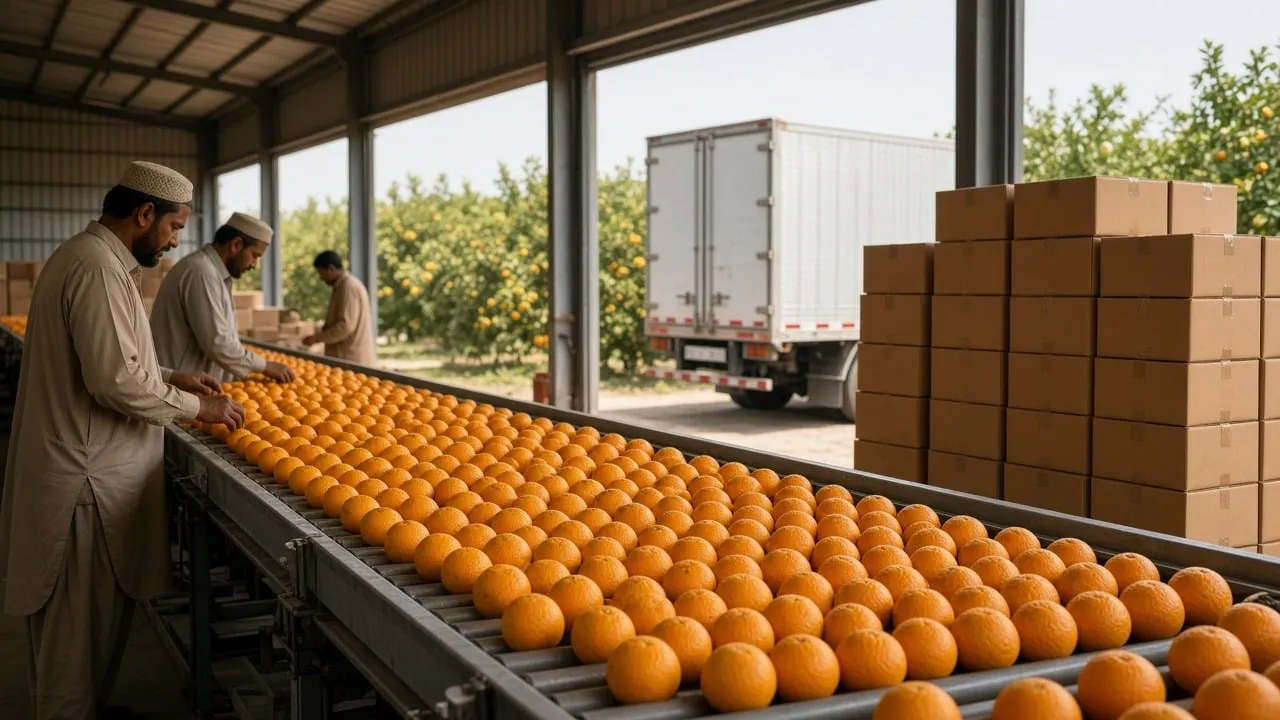
Chaudhry Shoaib Ahmed Basra, Senior Vice Chairman of the All Pakistan Fruit and Vegetable Exporters Association (PFVA) and former president of the Sargodha Chamber of Commerce and Industry, said processing and grading plants across Sargodha, the country's main kinnow-growing region, have completed preparations for shipments abroad. However, exporters fear that wars in the region and disruption to global shipping routes could cut exports by up to 100,000 tonnes compared with previous years.
Basra said such a shortfall would hurt growers, exporters and the country's foreign exchange earnings. He urged the government to offer emergency freight subsidies and help secure alternative trade routes to protect the season's target. The logistical bottleneck remains a primary concern for business owners operating processing facilities in the central agricultural belt.
Where Pakistani Kinnow Is Headed Internationally
This season, Pakistani kinnow will be shipped to Russia, Saudi Arabia, Oman, Qatar, Dubai, Indonesia, Malaysia, Sri Lanka and the Philippines, among other markets. Exporters also got a fresh opening earlier this month when Uzbekistan approved 184 Pakistani kinnow exporters and 39 packing facilities for its market.
Diversifying trade destinations helps mitigate risks associated with reliance on traditional buyers. Uzbekistan represents a promising addition to the established trade corridors in Central Asia, providing local fruit processors with new avenues for growth and revenue generation.
Target Lower Than Last Season
The new target is a third lower than last season, when exporters aimed to ship 300,000 tonnes worth $110 million. It is also far below the roughly 550,000 tonnes Pakistan exported in its record 2020-21 season. Kinnow makes up roughly 70 to 80 percent of Pakistan's citrus production, and the 2025-26 crop was estimated at around 2.7 million tonnes.
The reduction in export volume goals reflects compounding pressures from rising production costs, weather variables affecting crop yields, and ongoing maritime transport complications. Agricultural experts monitor these metrics closely to evaluate the overall health of the horticulture sector.
Understanding the Economic Impact on Growers
The financial health of thousands of farming households in the central regions depends heavily on a successful export window. When shipping volumes drop, domestic markets experience a surplus, which drives down prices and reduces profit margins for independent farmers. Processing plants also face operational undercapacity if raw fruit supply fails to meet projected processing capacity.
Industry stakeholders continue discussions with federal authorities to address logistical hurdles. Securing financial relief in the form of transport support remains a central demand from trade bodies seeking to maintain competitiveness against rival citrus producers in the global marketplace.
Future Outlook for Citrus Trade Operations
As the season progresses, stakeholders will watch maritime freight rates and regional geopolitical stability closely. Meeting the 200,000-tonne goal requires seamless coordination between customs officials, port authorities, and transport operators across all designated exit points in the country.
The expansion into new Central Asian territories like Uzbekistan offers a buffer against potential shortfalls in traditional destination ports. Industry representatives maintain that proactive government intervention in logistics will determine whether the sector can achieve its financial objectives before the export window closes.