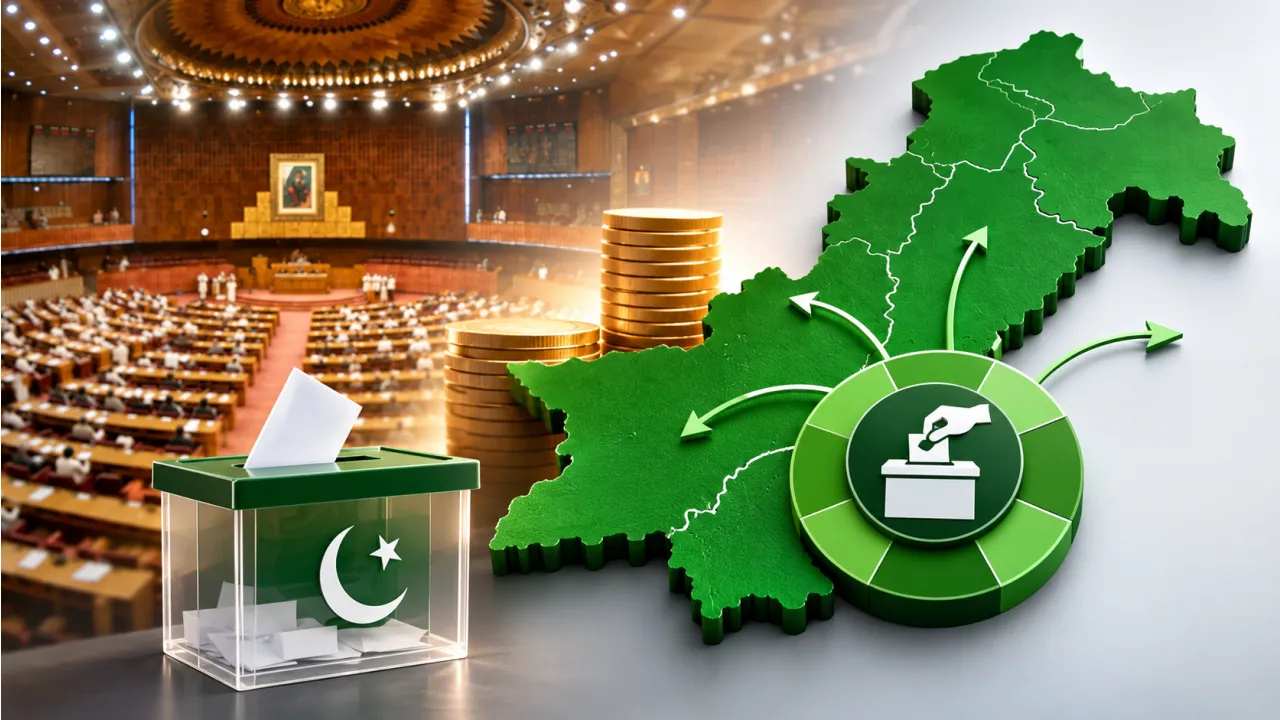
Pakistan Considers Nationwide Referendum for Administrative Restructuring
The federal government is actively evaluating a proposal to establish between 10 and 12 administrative provinces across Pakistan. This proposed restructuring involves dividing Punjab into four distinct administrative units, while Sindh, Khyber Pakhtunkhwa, and Balochistan could each be split into two separate provinces. Federal authorities have accelerated preparations for a possible nationwide referendum on the creation of these new provinces as political leaders turn to public opinion to resolve longstanding disagreements regarding the country administrative boundaries.
Government officials are reportedly considering holding this referendum before the Senate elections, which are expected to take place in the first week of March 2027. According to recent reports, the administration could approach the courts to seek legal and constitutional clarity regarding the framework required to conduct such a referendum. Upcoming legislative sessions in both the National Assembly and the Senate are expected to play a crucial role in determining the path forward as leaders attempt to build a solid political consensus.
Interior Minister Mohsin Naqvi Proposes Public Vote
Interior Minister Mohsin Naqvi recently proposed holding a public referendum to determine whether Pakistan should create additional provinces or administrative units. Speaking to reporters in Lahore on November 12, he urged political parties to let ordinary voters decide the matter. He stated that he would personally support the final outcome regardless of whether the public favored or opposed the proposal.
Naqvi argued that political parties frequently emphasize the principles of democracy and the supremacy of the people, which makes a public vote an appropriate method to settle the debate. Furthermore, he assured ruling coalition partners that no final decision would be taken against their wishes. He stressed that any administrative move of this magnitude would require a broad consensus among all coalition members before implementation.
Constitutional and Political Reactions to the Referendum Plan
The referendum proposal has received notable backing from other high-ranking officials, including Punjab Assembly Speaker Malik Muhammad Ahmad Khan. Speaking to the media in Lahore on Friday, Khan stated that the will of the people should take precedence over the opinions of individual elected representatives when addressing matters of profound public importance.
Drawing on the framework of the 1973 Constitution, Khan argued that ultimate authority rests with the citizens of the country. He maintained that a referendum should decide whether new provinces ought to be established. He added that the public decision must be respected even if it directly conflicts with the official positions of established political parties, such as the Pakistan Peoples Party, which strongly opposes dividing the province of Sindh.
Differing Legal Perspectives on Parliamentary Authority
In contrast to the stance taken by the Punjab Assembly Speaker, Prime Minister Adviser Rana Sanaullah offered a different constitutional perspective on the matter. Sanaullah maintained that Parliament must retain the ultimate authority over the creation of any new provinces within the federation. He questioned who currently holds the specific legal authority to conduct a nationwide referendum, emphasizing that the issue demands thorough parliamentary consideration and debate.
The debate over redrawing provincial boundaries touches upon complex historical, ethnic, and administrative issues within Pakistan. Provinces like Punjab are often viewed as disproportionately large in terms of population and landmass, leading to persistent demands from various regional groups for smaller administrative units to improve governance and resource distribution. However, opposition from regional parties complicates any legislative changes, making the idea of bypassing parliament through a direct public vote a contentious alternative for national leaders.
Next Steps and Legal Considerations for Federal Authorities
As the federal government continues its preparations, lawmakers and legal experts are closely monitoring the procedural requirements for altering internal boundaries. The 1973 Constitution outlines specific mechanisms for creating new provinces, typically requiring constitutional amendments passed by substantial majorities in parliament. Introducing a referendum into this legal equation represents a novel approach that bypasses traditional legislative hurdles, though it introduces new constitutional questions regarding executive overreach and the binding nature of public votes.
Observers are watching for formal announcements from the judiciary regarding the legal feasibility of the proposed referendum. With the timeline pointing toward early 2027, political parties across the spectrum must decide whether to align with the push for a public vote or defend the traditional supremacy of parliamentary legislation. The coming months will test the internal stability of the ruling coalition as leaders negotiate these competing visions for Pakistan administrative future.