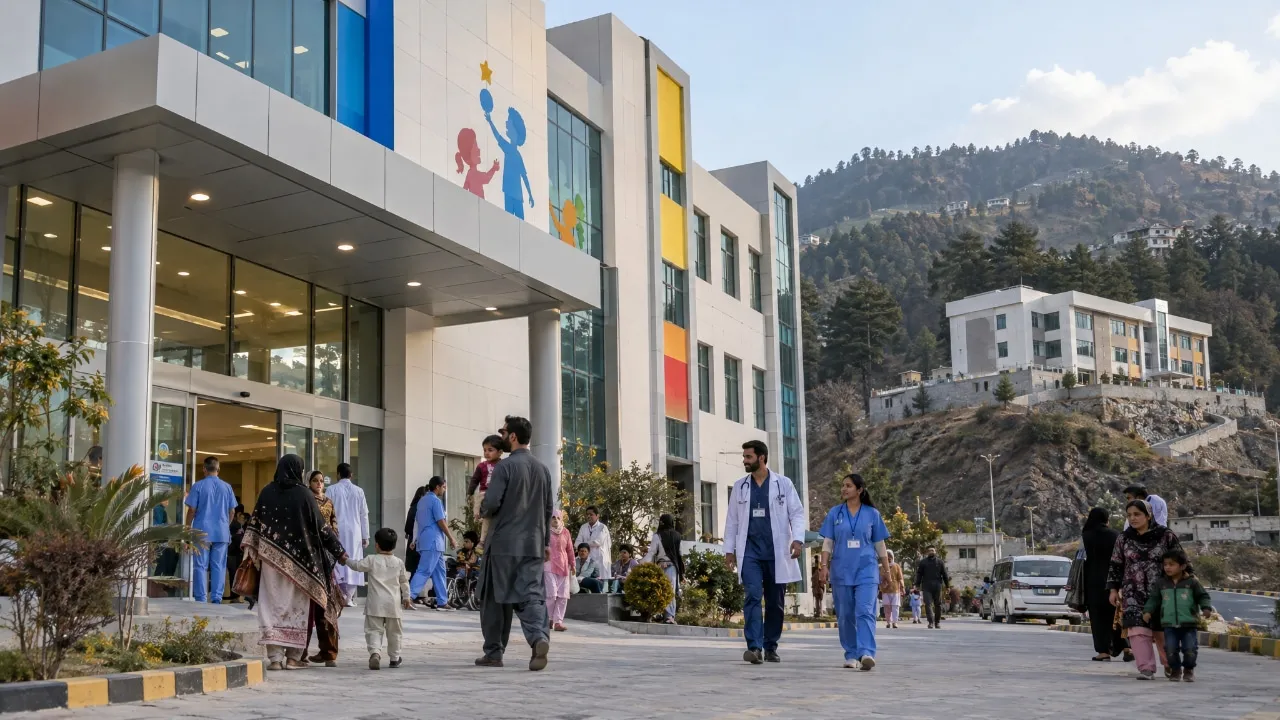
Punjab Approves Rs. 11.65 Billion for Two New Hospitals
The government of Punjab has officially approved two major healthcare infrastructure projects with a combined financial outlay of Rs. 11.65 billion. This funding forms a key component of the latest provincial development package aimed at expanding medical access and upgrading public health facilities across the region. Officials confirmed that the financial allocations were formally sanctioned during a high-level administrative review session held on Friday.
Specifically, the newly cleared projects involve the construction of a dedicated medical facility in the hill station area of Bhurban, Murree, alongside a large-scale children's healthcare center in Rawalpindi. These initiatives represent a targeted effort by provincial authorities to address growing regional healthcare demands, particularly in specialized pediatric medicine and mountain-region medical response. The total package approved during this governance cycle reflects a substantial commitment to public sector development.
Details of the PDWP Meeting and Broader Allocations
The health-sector allocations were part of 11 projects worth Rs. 126.668 billion cleared during the 13th meeting of the Provincial Development Working Party on Friday. The Provincial Development Working Party functions as the primary planning and vetting forum for public sector development schemes within the region, reviewing feasibility reports, cost estimates, and strategic priorities before final implementation begins.
During the session, the board evaluated multiple infrastructure proposals spanning various public service sectors. While roads, transport, and urban development often dominate public agendas, the inclusion of high-value medical projects highlights an intentional shift toward strengthening the social sector. The Rs. 11.65 billion earmarked for healthcare represents a vital slice of the overall Rs. 126.668 billion package approved by the committee.
New 50-Bed Hospital in Bhurban, Murree
A 50-bed hospital will be built in Bhurban, Murree, at a cost of Rs. 1.507 billion. Murree and its surrounding areas experience heavy tourist influxes throughout the year, in addition to serving a permanent local population that often struggles with timely access to advanced medical care. Mountainous terrain and winter weather can severely restrict travel times to major urban medical centers, making local emergency infrastructure essential.
The establishment of a 50-bed facility in Bhurban addresses these geographical vulnerabilities by providing stabilization, emergency response, and routine inpatient care closer to home for residents and visitors alike. Medical specialists note that having immediate secondary care capacity in a popular tourist destination significantly reduces trauma-related mortality rates resulting from road accidents or sudden medical emergencies on winding mountain roads.
Children's Hospital Approved in Rawalpindi
In addition to the Murree project, a children's hospital in Rawalpindi has been approved at Rs. 10.143 billion. Rawalpindi serves as a major urban hub connecting the northern parts of the province and neighboring regions, bearing a heavy patient load from surrounding districts where pediatric specialists are scarce. Existing facilities in the city often operate at maximum capacity, straining resources and forcing families to seek care across long distances.
The massive investment of Rs. 10.143 billion indicates that the new children's hospital will feature advanced diagnostic tools, specialized pediatric wards, and comprehensive intensive care units. Public health advocates have long emphasized the need for dedicated pediatric infrastructure in densely populated urban centers to handle complex childhood illnesses, neonatal care, and emergency pediatric surgeries without overwhelming general hospitals.
How the Provincial Development Working Party Operates
The Provincial Development Working Party operates under the Planning and Development Board of the provincial government, serving as the clearing house for development schemes that exceed certain financial thresholds. When departments propose new schools, roads, or hospitals, civil servants and technical experts within the board scrutinize the financial models, environmental impacts, and long-term utility of each proposal.
Once the Provincial Development Working Party grants approval, projects move from the planning phase into procurement, contractor selection, and eventual ground-level execution. Funding is typically released in phases tied to project milestones, ensuring fiscal accountability and steady progress. Citizens and local businesses watch these announcements closely, as public infrastructure spending directly influences regional economic activity and quality of life.
Impact on Regional Healthcare and Future Expectations
The approval of these two medical facilities marks a meaningful step forward in regional health planning, directly affecting patients, medical professionals, and local economies in Rawalpindi and Murree. Citizens in these districts will soon benefit from reduced travel times for specialized treatments, while local healthcare workers anticipate improved working environments equipped with modern medical technology.
As these 11 projects move past the planning stage, public attention will shift toward monitoring construction timelines, fund utilization transparency, and timely completion dates. While exact construction start dates and operational deadlines have not yet been finalized by executing agencies, residents can expect ground-level preparations to begin in the coming months as administrative formalities conclude.





