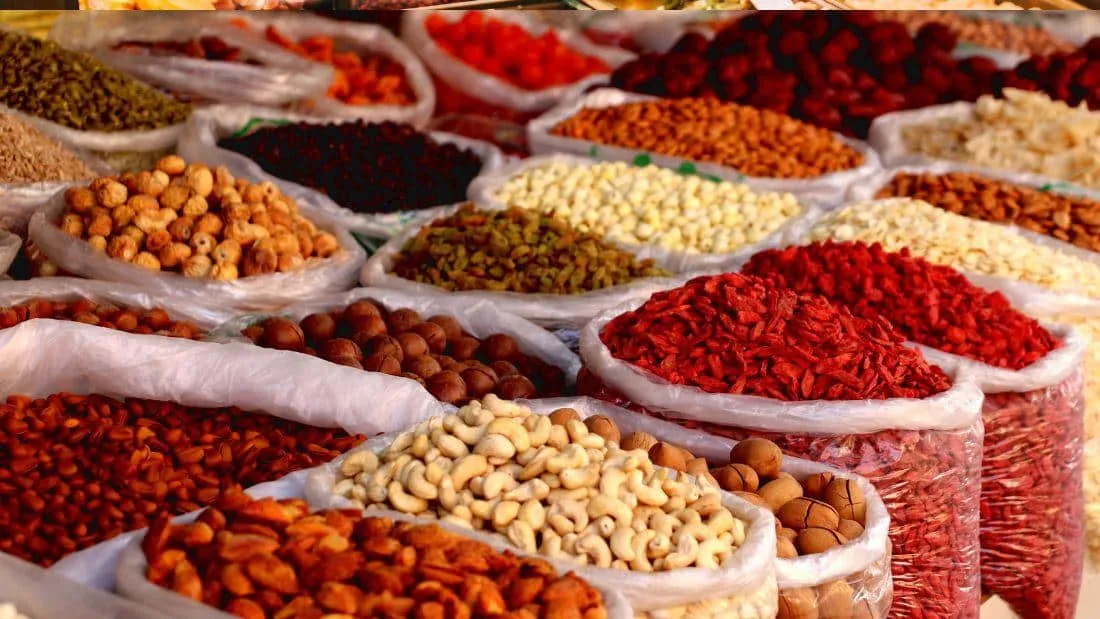
Household Spending on Premium Dry Fruits in Pakistan
Pakistani households that buy premium dry fruits spend more than twice as much as those purchasing cheaper varieties, reflecting the significant price difference between the country's two major dry fruit categories. According to Gallup Pakistan Digital Analytics' household consumption analysis based on the Household Integrated Economic Survey (HIES) 2024-25, households purchasing almonds, walnuts, pistachios and cashews spend approximately Rs. 800 during a typical two-week period.
In comparison, households buying everyday dry fruits such as dried dates, peanuts, coconut and sesame spend around Rs. 350 over the same period. This means spending on premium dry fruits is approximately 2.3 times higher than spending on cheaper varieties. The stark contrast highlights the economic stratification present in dietary habits across the nation, where high-value agricultural imports and luxury food items claim a substantial share of household budgets for specific demographics.
Understanding these purchasing patterns requires looking closely at how families allocate their disposable income toward nutrition and gifting during various seasons. Dry fruits hold a traditional place in local culture, often associated with hospitality, winter warmth, and festive occasions. However, market dynamics ensure that only certain segments of the population can afford the upper tier of these commodities.
Market Reach and Consumer Demographics
The spending difference is also visible in the number of households buying each category. Only 7 percent of Pakistani households, equivalent to approximately 2.7 million homes, purchased premium nuts during a typical two-week period. For everyday dry fruits, the purchase rate stood at 12 percent, covering around 4.6 million households.
This reach indicates that everyday items like peanuts and dried dates maintain a much broader consumer base. They appear in significantly more pantries due to their accessibility and lower cost per kilogram. Premium nuts, conversely, function more as occasional purchases or luxury items restricted to urban centers and higher-income families.
Retailers across major urban markets note that foot traffic for high-end varieties spikes during specific months, while affordable options sell steadily throughout the year. The structural gap between these two groups shapes how importers and local traders stock their inventories.
Income Divide in the Dry Fruit Market
The spending difference comes against a wider income divide in Pakistan's dry fruit market. Among the wealthiest 20 percent of households, 15.5 percent purchased premium nuts, compared with just 3.6 percent among the poorest 20 percent. This income disparity illustrates how purchasing power dictates access to nutrient-dense foods that are often touted for their health benefits.
Lower-income families concentrate their spending on affordable alternatives that provide energy and basic nutrition without straining limited budgets. Economic pressures in recent years have forced many consumers to reevaluate their grocery lists, prioritizing essential staples over luxury snacks.
Wealthier households absorb price fluctuations more easily, allowing them to maintain consistent consumption of high-end nuts despite broader inflation affecting the agricultural sector. Market analysts point out that this divide mirrors broader economic inequalities within the country.
Annual Market Value and Economic Impact
Overall, Pakistani households spend an estimated Rs. 56 billion annually on premium nuts and another Rs. 42 billion on everyday dry fruits. These figures underscore the massive scale of the domestic dry fruit trade, which combines local production with substantial imports from neighboring regions.
The combined yearly expenditure of nearly Rs. 98 billion on both categories demonstrates that despite inflationary pressures, consumers continue to dedicate funds to these traditional foods. Importers, wholesalers, and agricultural producers rely heavily on this steady demand to sustain their businesses.
Supply chains for almonds, walnuts, and pistachios involve complex logistics, connecting orchards in northern regions and international suppliers to urban retail bazaars. The total market value reflects both the high unit cost of luxury nuts and the sheer volume of everyday varieties consumed nationwide.