On November 7, 2026 Pakistan's National Cyber Emergency Response Team (National CERT), which operates under the Cabinet Division, issued a cybersecurity advisory warning banks, financial institutions, and critical infrastructure operators that artificial intelligence-powered cyberattacks are becoming faster, smarter, and harder to stop.
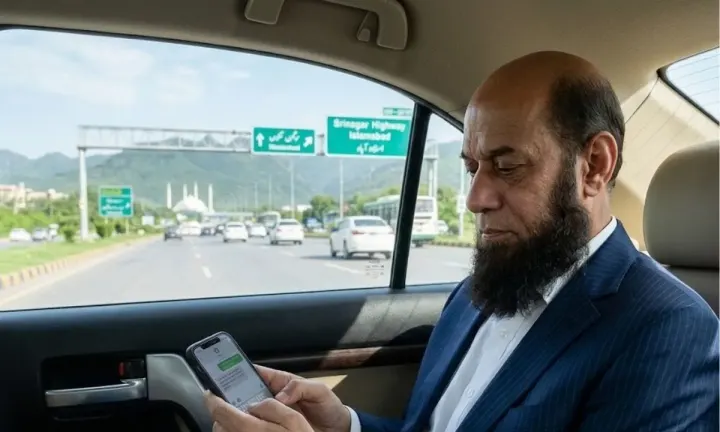
The advisory describes a concrete scenario that could affect any Pakistani with a mobile banking app: attackers could make the phone screen display a balance that is not real, creating panic while the actual funds remain untouched.
What the AI Banking Fraud Warning Actually Says
According to the advisory, cyber attackers could attempt to gain unauthorised access to customers' bank accounts and manipulate displayed account balances, potentially showing inaccurate financial information even when the actual funds remain unchanged. In plain words, your money may still be there, but your app could show something completely different.
Such activities could create panic among customers and undermine confidence in the financial system. That is exactly the goal of this kind of attack. When people stop trusting their bank apps, they pull out cash, avoid digital payments, and the whole digital economy takes a hit.
In the advisory, National CERT said cybercriminals were increasingly using AI-powered bots, botnets and automated tools to identify system vulnerabilities, steal credentials and launch coordinated attacks at greater speed and scale.
The advisory identified core banking systems, digital payment platforms, application programming interfaces (APIs) and customer-facing applications as potential targets. These are the exact systems millions of Pakistanis use every day through apps like their bank's mobile portal, JazzCash, or Easypaisa-linked accounts.
Beyond Banks: AI Threats to Pakistan's Critical Infrastructure
The National CERT warning does not stop at banking. The warning covers core banking platforms, digital payments, customer applications and APIs, as well as oil and gas sites, power networks, water utilities, factories and transport systems.
This broader scope shows that AI-powered attacks are being treated as a national security issue, not just a banking sector problem. In March, National CERT had also warned that hostile actors could exploit supply chains to infiltrate critical infrastructure, including banking and power systems. The November advisory is part of a pattern of escalating alerts.
Pakistan's CERT chief has also said the country recorded 253 cyberattacks in 2026 at the time of his remarks. With AI tools now automating attack discovery and execution, that number is expected to keep rising.
Deepfakes Are Already Being Used in Pakistani Financial Crime
The advisory is not happening in a vacuum. AI-based fraud is already active in Pakistan and linked to international crime networks. Pakistan's National Cyber Crime Investigation Agency arrested three men in Lahore for their alleged involvement in an international cyber fraud syndicate that used artificial intelligence to fabricate identities and target Canadian financial institutions, manufacturing counterfeit passports and synthetic photographs to bypass digital banking verification procedures.
Generative AI is introducing a new category of threat: deep-fake-enabled identity fraud, synthetic identity creation, and AI-accelerated phishing campaigns that are more convincing and more scalable than anything that came before.
Earlier in 2025, the Securities and Exchange Commission of Pakistan (SECP) warned that it had seen AI-generated ads on social media using pictures of celebrities, finance influencers and brokerage executives to pull people into fake share trading groups on WhatsApp. The same technology, deep-fake video and AI-generated images, is now being pointed at banking systems more directly.
NCCIA's own website lists financial fraud as the most reported cybercrime in its 2026 figures, at 48 per cent of complaints. That is nearly half of all reported cybercrimes in Pakistan.
What Banks Have Been Told to Do
The NCERT recommended that financial institutions closely monitor automated login attempts, repeated authentication failures, unusual API requests, changes in application configurations and abnormal transaction patterns.
Banks have also been advised to watch for discrepancies between core banking records and customer account balances, as manipulation of displayed balances could undermine public confidence in digital banking services.
The advisory recommended multi-factor authentication, stronger access controls, continuous security monitoring and independent transaction reconciliation for financial institutions.
The State Bank of Pakistan is also urging banks to adopt zero-trust architecture, a security model where nothing inside or outside the network is trusted by default and every access request must be verified. This push connects directly to the SBP's core banking network upgrade, which is building a stronger technical foundation for exactly this kind of resilience.
What You Should Do Right Now
The advisory is aimed at banks and institutions, but ordinary Pakistani users can take steps too. Here is a simple checklist:
- Turn on two-factor authentication (2FA) for every banking and payment app you use. This is the single most effective protection.
- Check your balance from two sources. If your app shows something unusual, log in from a browser or call your bank directly before doing anything else.
- Do not trust unexpected calls or messages claiming to be from your bank. PTA has said that neither it nor banks will ever call to ask for your ATM PIN, OTP or account details.
- Report suspicious activity fast. NCCIA investigates the crime, PTA acts on the phone number, and the platform removes the ad. You can reach NCCIA on 1799 or at complaint.nccia.gov.pk.
- Keep your banking apps updated. Security patches fix the exact weaknesses AI bots are trained to find.
Frequently Asked Questions
What is AI banking fraud as described in Pakistan's National CERT advisory?
It refers to the use of artificial intelligence tools, automated bots, and deepfake technology to attack banking systems, steal login details, and manipulate the account information customers see on their screens, without necessarily moving the actual money straight away.
Can hackers really change what your bank app shows without touching your money?
Attackers could alter account balances shown to customers without changing underlying records, while intrusions into industrial control systems could interrupt operations and public services. The goal is often to cause panic and confusion rather than immediate theft.
Is this threat specific to Pakistan or a global problem?
It is a global threat but Pakistan is specifically vulnerable right now because of rapid digital banking growth among first-time users. First-time banking users, unfamiliar with OTP security, unaware of SIM-swap risks, and unacquainted with the tactics of social engineering, are disproportionately vulnerable to fraud. Pakistan's expanding digital finance base makes it an attractive target.
What is the best single thing a Pakistani bank customer can do to stay safe?
Enable multi-factor authentication (MFA) on all your banking and payment apps immediately. National CERT has instructed banks to implement MFA and continuously monitor suspicious transactions and unusual online activities. As a user, turning on MFA from your side adds a critical extra layer of protection that AI bots find very hard to bypass.