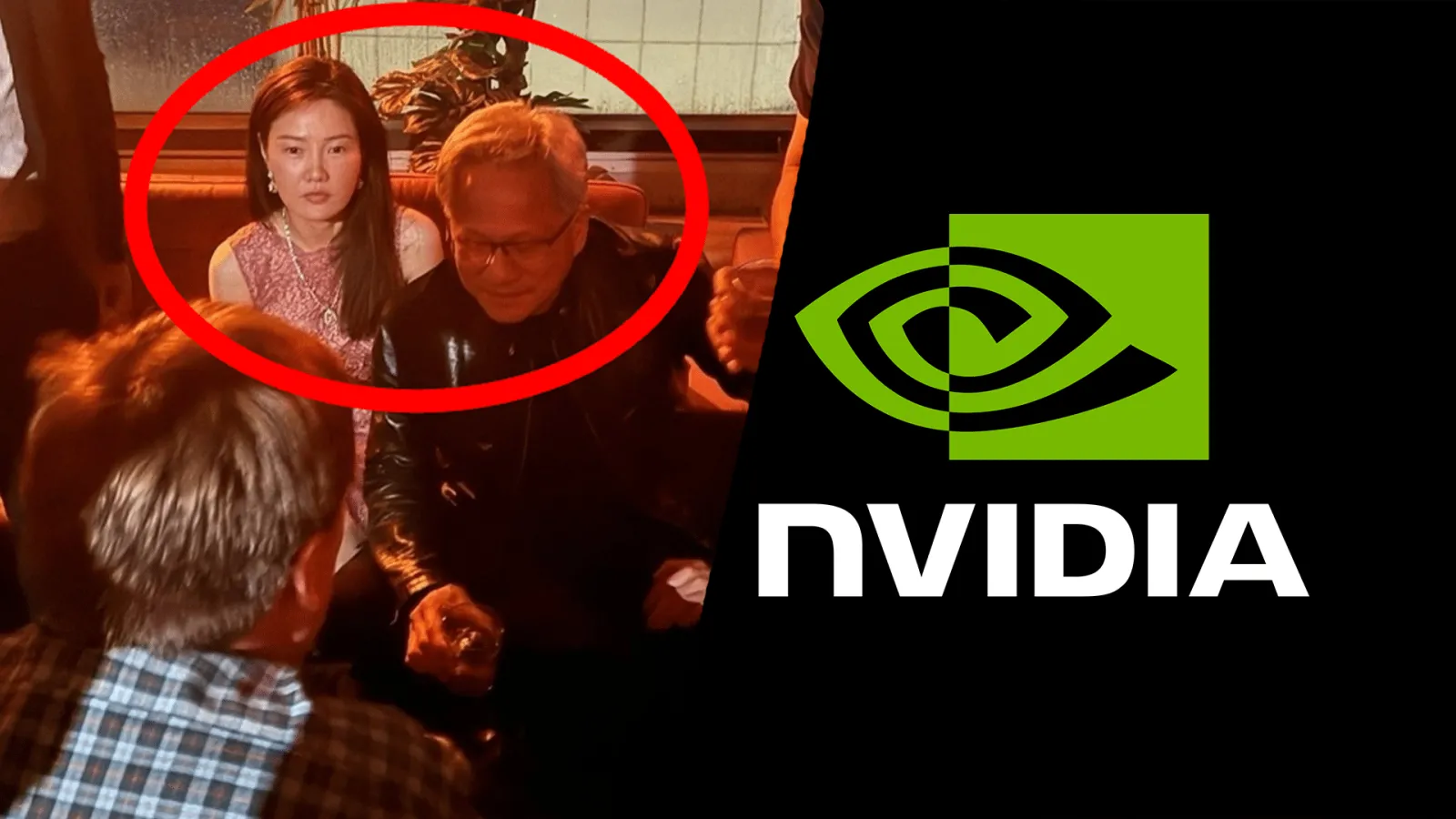
Nvidia announced on Tuesday that an independent investigation has been launched into CEO Jensen Huang after he disclosed to the board that he had an intimate relationship with a business executive identified by U.S. intelligence as a Chinese spy, according to a report by The New York Times.
In a company-wide email titled "A message to our company," Huang admitted he was unfaithful to his wife, took full responsibility for his actions and pledged to cooperate fully with the board's inquiry.
What Huang Said in His Email
The email opened with a personal apology. "I was unfaithful to my wife. My actions hurt her and our children. There is no excuse for what I did. I am deeply sorry," Huang wrote.
He extended the apology to Nvidia colleagues, the board, partners and shareholders, stating they deserve better. "Leading NVIDIA is the privilege of my life," he added.
Addressing the security dimension, Huang said, "Regarding the national security concerns raised in news reports, NVIDIA's Board of Directors has initiated an independent investigation. I support the investigation and will cooperate fully."
He reaffirmed his commitment to protecting Nvidia and supporting America's national security, and asked for privacy for his family. "My family bears no responsibility for my choices. I do. Please give them privacy," he wrote.
Background on Nvidia and U.S.-China Tech Competition
Nvidia, founded in 1993, has become the world's leading designer of graphics processing units (GPUs) and a key supplier of AI accelerators. Its products power data-center workloads, autonomous-vehicle platforms and high-performance computing clusters. Because GPUs are essential for training large language models, Nvidia sits at the centre of the global AI race.
The United States has placed export controls on advanced semiconductor technology that could be used in military applications. In 2022, the U.S. Department of Commerce added Nvidia's most powerful chips to the Entity List, restricting sales to certain Chinese firms. The policy reflects a broader effort to limit China's access to cutting-edge AI hardware.
China has responded by investing heavily in domestic chip design and manufacturing. Companies such as Huawei's HiSilicon and the state-backed Semiconductor Manufacturing International Corporation (SMIC) are accelerating development of alternatives to U.S.-made GPUs. This competitive backdrop makes any security breach involving a senior Nvidia executive a matter of heightened concern for U.S. policymakers.
Details of the Alleged Spy Connection
U.S. intelligence agencies have not publicly identified the business executive involved, but they have classified the individual as a Chinese intelligence operative. The classification suggests the person was engaged in gathering proprietary information or influencing corporate decisions on behalf of the People's Republic of China.
According to the Times report, the board learned of the relationship during a routine background-check that flagged the executive's ties to Chinese intelligence. The board then convened an emergency session, during which Huang disclosed the affair.
What the Independent Investigation Will Examine
The board has retained an external law firm with experience in corporate governance and national-security matters to lead the inquiry. The scope is expected to include:
- Whether any confidential Nvidia data was shared with the individual.
- Whether Huang's personal relationship compromised Nvidia's compliance with U.S. export-control regulations.
- Potential breaches of fiduciary duty under Nevada corporate law.
- Any steps taken by the board to mitigate risk after the disclosure.
The investigation will operate independently of Nvidia's management, and its findings will be reported directly to the board. No timeline has been announced, but similar corporate probes typically run for several weeks to a few months.
Impact on Nvidia's Business and the AI Market
Nvidia's market position is already under pressure in China. Recent earnings releases show a slowdown in sales of its data-center GPUs to Chinese customers, as competitors such as Huawei's Ascend series gain traction. The company's share price has fluctuated in response to trade-policy news, and any perception of a security breach could further erode investor confidence.
Customers in the United States and Europe rely on Nvidia's GPUs for mission-critical AI workloads. If the investigation uncovers evidence of data leakage, partners may reassess contracts, and the U.S. government could consider additional sanctions or licensing restrictions.
Legal and Regulatory Context
Under the Foreign Investment Risk Review Modernization Act (FIRRMA), the Committee on Foreign Investment in the United States (CFIUS) has authority to review transactions that could affect national security. While the current matter does not involve a merger, any proven transfer of sensitive technology could trigger a CFIUS review.
The Securities and Exchange Commission (SEC) also requires public companies to disclose material risks. If the board determines that the affair poses a material risk to Nvidia's operations, a Form 8-K filing may be required.
What Comes Next for Nvidia
The board's investigation will produce a report that may lead to disciplinary action, changes to corporate policy, or recommendations for tighter security protocols. Nvidia's legal counsel has indicated the company will comply with any regulatory requests.
Stakeholders should watch for:
- A formal board statement summarising the investigation's findings.
- Potential SEC filings relating to material risk disclosures.
- Any new guidance from the Department of Commerce on export controls for AI hardware.
- Reactions from major Nvidia customers and partners regarding data-security assurances.
Until the report is released, the situation remains fluid. The company has asked employees and the public to respect the privacy of Huang's family while the board conducts its work.