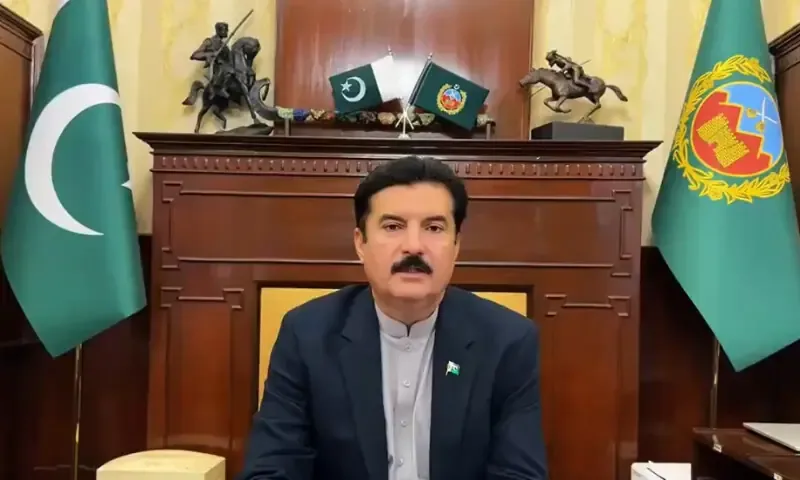
Khyber Pakhtunkhwa Governor Faisal Karim Kundi announced on Sunday that the province's security policy will be decided in Islamabad, not Kabul, and he ruled out any talks with groups that take up arms against the state.
Speaking at a security briefing in Peshawar, Kundi backed intelligence-based operations to restore peace and confirmed that the provincial government has asked for Rs. 160 billion to meet its security needs, a request that the federal government has pledged to support.
Why the Policy Shift Matters
Kundi's statement marks a clear departure from earlier suggestions that provincial security could be coordinated from the provincial capital, Kabul, a reference to the historic name for the region's administrative hub. By moving decision-making to Islamabad, the federal capital, the governor signals a desire for tighter central oversight and a unified national approach to counter-terrorism.
The move also aligns with Pakistan's broader security strategy, which has increasingly emphasized intelligence-led operations rather than purely kinetic responses. Since the 2000s, the country has relied on the Inter-Services Intelligence (ISI) and provincial intelligence agencies to dismantle militant networks, and Kundi's stance reinforces that model for KP.
Background: Security Challenges in Khyber Pakhtunkhwa
Khyber Pakhtunkhwa (KP) has long been a flashpoint for insurgency, cross-border militancy, and sectarian violence. The province shares a porous border with Afghanistan, where militant groups have historically found safe havens. Over the past decade, KP has seen major operations such as Zarb-e-Azb (2014) and Radd-ul-Fasad (2017), which targeted Tehrik-i-Taliban Pakistan (TTP) strongholds.
Despite these operations, sporadic attacks continue, especially in districts bordering the tribal areas. The provincial government has therefore prioritized a mix of hard security measures and community-based initiatives to address the root causes of militancy, including poverty, lack of education, and weak governance.
What the Rs. 160 Billion Budget Covers
The governor's request for Rs. 160 billion is intended to fund several key components:
- Modern weapons and ammunition for police forces.
- Salary increments and hazard pay for frontline personnel.
- Compensation packages for families of officers killed in the line of duty.
- Technology upgrades, including artificial intelligence tools for monitoring social media.
- Infrastructure projects such as District Nerve Centres and Safe City Authorities.
Federal officials have confirmed their willingness to meet the demand, though detailed allocation formulas have not yet been published.
More Support for Police
Kundi said police would receive modern weapons and ammunition, along with better salaries and compensation for the families of personnel killed in the line of duty. The province has already announced higher police salaries and increased compensation for bereaved families.
He emphasized that development projects could only benefit people when their lives were secure, and called for stronger trust between police and citizens. The governor highlighted the need for community policing models that involve local leaders and civil society groups to bridge gaps between law-enforcement and the public.
District-Level Security Plans
Proposed measures include extending the Counter Terrorism Department's operational jurisdiction to all 34 districts, establishing District Nerve Centres and creating a Safe City Authority in 10 districts.
Officials also outlined plans for Smart Front Desks at 406 police stations in major cities. Artificial intelligence tools would be used to counter what officials described as false narratives on social media.
The meeting decided to establish Dispute Resolution Councils and Tribal Liaison Committees across all districts, alongside monthly open courts and regular jirgas.
Explainer: How District Nerve Centres Work
District Nerve Centres are command hubs that integrate data from police, intelligence agencies, and emergency services. They use real-time dashboards to monitor incidents, allocate resources, and coordinate rapid response teams. In other provinces, similar centres have reduced response times by up to 30 percent.
The Safe City Authority model involves installing CCTV cameras, automated license-plate readers, and emergency alert systems across selected districts. These technologies feed into the nerve centre, allowing operators to track suspect movements and issue public warnings.
Impact on Citizens and Businesses
Enhanced security is expected to create a more stable environment for everyday life and commerce. Traders in Peshawar's historic bazaars have long complained about theft and extortion; better-armed and better-paid police could deter such crimes.
Investors in the province's emerging tourism sector, especially in the northern mountainous districts, are likely to view the security upgrades as a positive signal. Safer travel routes could boost domestic tourism revenues, which the provincial government estimates at Rs. 45 billion annually.
What Comes Next: Implementation Timeline
The provincial government has set a 12-month timeline to roll out the new security infrastructure. Within the first three months, the focus will be on salary adjustments and procurement of modern weapons. The next six months will see the establishment of District Nerve Centres and the deployment of Smart Front Desks.
By the end of the year, the Safe City Authority is expected to be operational in the ten designated districts, and the AI-driven social-media monitoring unit will be fully functional.
Regular progress reports will be presented to a joint federal-provincial oversight committee, which will monitor spending and assess the effectiveness of each initiative.
Practical Takeaways for Residents
Citizens should expect to see new police recruitment drives, upgraded equipment at local stations, and the introduction of community-based dispute resolution forums. Those interested in filing complaints or seeking compensation can approach the newly announced Dispute Resolution Councils, which will hold monthly open courts.
Business owners are advised to register with the Safe City Authority's emergency alert system to receive real-time updates on security incidents that could affect supply chains or customer footfall.
Expert Opinions
Security analysts note that the integration of AI tools for social-media monitoring is a relatively new development in Pakistan's counter-terrorism toolkit. While it promises faster identification of extremist propaganda, experts caution about privacy safeguards and the need for transparent oversight.
Former police chief Abdul Haq remarked that "better salaries and modern equipment are essential, but without community trust, any security plan will fall short." His comment underscores the governor's emphasis on building trust between police and citizens.
International observers have welcomed the move to centralize policy decisions in Islamabad, viewing it as a step toward coordinated national security planning.