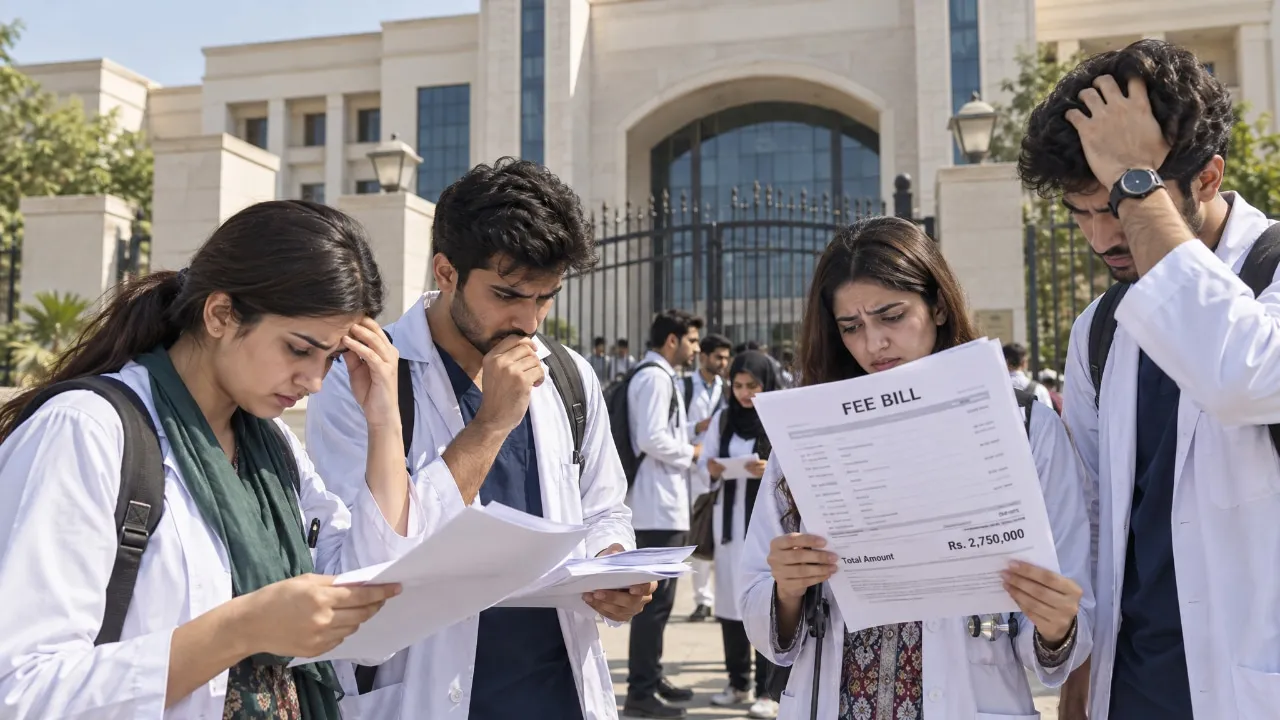
Pakistan's National Assembly Standing Committee on Health learned on Wednesday that 45 private medical colleges are charging students up to Rs600,000 above the fee ceiling set by the Pakistan Medical and Dental Council (PMDC), prompting the regulator to issue show-cause notices to the institutions.
Committee member Dr Shazia Soomro disclosed the excess-fee figures during a meeting chaired by Dr Mahesh Kumar, and the PMDC president confirmed that formal notices had been sent to each college demanding an explanation.
What Triggered the Show-Cause Notices?
The issue surfaced when Dr Soomro presented data indicating that a significant number of private medical colleges were demanding fees well beyond the limits approved by the council. The excess amounts ranged up to Rs600,000 per student, a figure that far exceeds the regulated tuition caps for medical and dental programmes.
In response, the PMDC president announced that the council had already prepared and dispatched show-cause notices to the 45 colleges identified. The notices require each institution to justify the fee structure, provide detailed accounting of fee collections, and submit a corrective plan within a stipulated timeframe.
How Does PMDC Regulate Tuition Fees?
The Pakistan Medical and Dental Council, established under the PMDC Act of 1962, is the statutory body responsible for setting standards for medical and dental education in the country. Among its duties, the council determines the maximum tuition fees that private institutions may charge for accredited programmes. These caps are intended to protect students from exploitative pricing while ensuring that colleges can maintain quality facilities and faculty.
When a college exceeds the prescribed fee ceiling, the PMDC can take administrative action, ranging from issuing warnings to revoking accreditation. Show-cause notices are the first formal step, giving the institution an opportunity to present evidence or corrective measures before any punitive action is taken.
Why Are Excess Fees a Concern for Students and the Health Sector?
Medical education in Pakistan is already costly, and many students rely on loans, scholarships, or family support to afford tuition. Excess fees place additional financial strain on aspiring doctors, potentially discouraging qualified candidates from pursuing a medical career.
Beyond individual hardship, inflated fees can undermine the broader health system. If private colleges prioritize revenue over educational standards, the quality of graduates may suffer, affecting the competency of future physicians and dentists. This risk is especially acute in a country where the doctor-patient ratio remains below World Health Organization recommendations.
What Is the Status of the MDCAT Validity Extension?
During the same committee session, members discussed the delayed implementation of a decision to extend the validity of Medical and Dental College Admission Test (MDCAT) results to three years. Health Minister Mustafa Kamal confirmed that his ministry had approved the proposal and referred it to the federal cabinet for final endorsement.
Currently, MDCAT scores are valid for one year only, forcing candidates to retake the exam if they defer admission. Extending the validity would reduce examination costs for students and ease scheduling pressures for colleges, aligning Pakistan with practices in several neighboring countries.
What Happened in the Heated Exchange Over the PIMS Inquiry?
Another focal point of the meeting was the inquiry into the Pakistan Institute of Medical Sciences (PIMS). Dr Soomro questioned the delay in acting on the inquiry's findings and demanded an audit of the Rs22 billion allocated to the hospital over the past three years.
Minister Kamal replied that the Ministry of Health had already implemented the recommendations of its own inquiry and that any further investigations had been assigned to the Ministry of Interior. The exchange highlighted tensions between parliamentary oversight and executive execution of health-sector reforms.
What Are the Next Steps for the Colleges and the Committee?
Each of the 45 colleges must respond to the show-cause notice within the period specified by the PMDC, typically 30 days. The response should include a breakdown of fee structures, justification for any excess, and a plan to align with the council's limits.
The Standing Committee on Health has requested inspection reports for all private medical colleges covering the last two years. These reports will be examined to verify compliance with fee regulations and to assess whether any systemic issues exist.
If a college fails to provide a satisfactory explanation, the PMDC may proceed to impose sanctions, which could range from fines to suspension of accreditation. Such actions would directly impact the college's ability to admit new students and could affect current enrolments.
Implications for Prospective Medical Students
Students planning to enroll in private medical colleges should closely monitor announcements from the PMDC and the Standing Committee. Institutions found non-compliant may adjust their fee structures, potentially lowering costs for new entrants.
Applicants are advised to request detailed fee breakdowns from colleges, verify that the amounts do not exceed the council's caps, and keep copies of all communications. In cases of doubt, students can file complaints with the PMDC's consumer protection wing.
Broader Impact on Pakistan's Health Education Landscape
The episode underscores growing parliamentary scrutiny of private medical education, a sector that accounts for roughly 70% of medical seats in Pakistan. Strengthening oversight could lead to more transparent fee policies, better resource allocation, and ultimately, higher quality graduates.
Moreover, the discussion on MDCAT validity and the PIMS audit reflects a broader agenda to streamline health-sector governance, improve financial accountability, and reduce bureaucratic bottlenecks that affect both students and public hospitals.
Stakeholders, including the Pakistan Medical Association, student unions, and civil-society health watchdogs, are likely to continue pressing for swift implementation of the committee's recommendations.
As the process unfolds, the PMDC's handling of the show-cause notices will serve as a benchmark for how effectively regulatory bodies can enforce fee caps and protect student interests in Pakistan's rapidly expanding private medical education market.