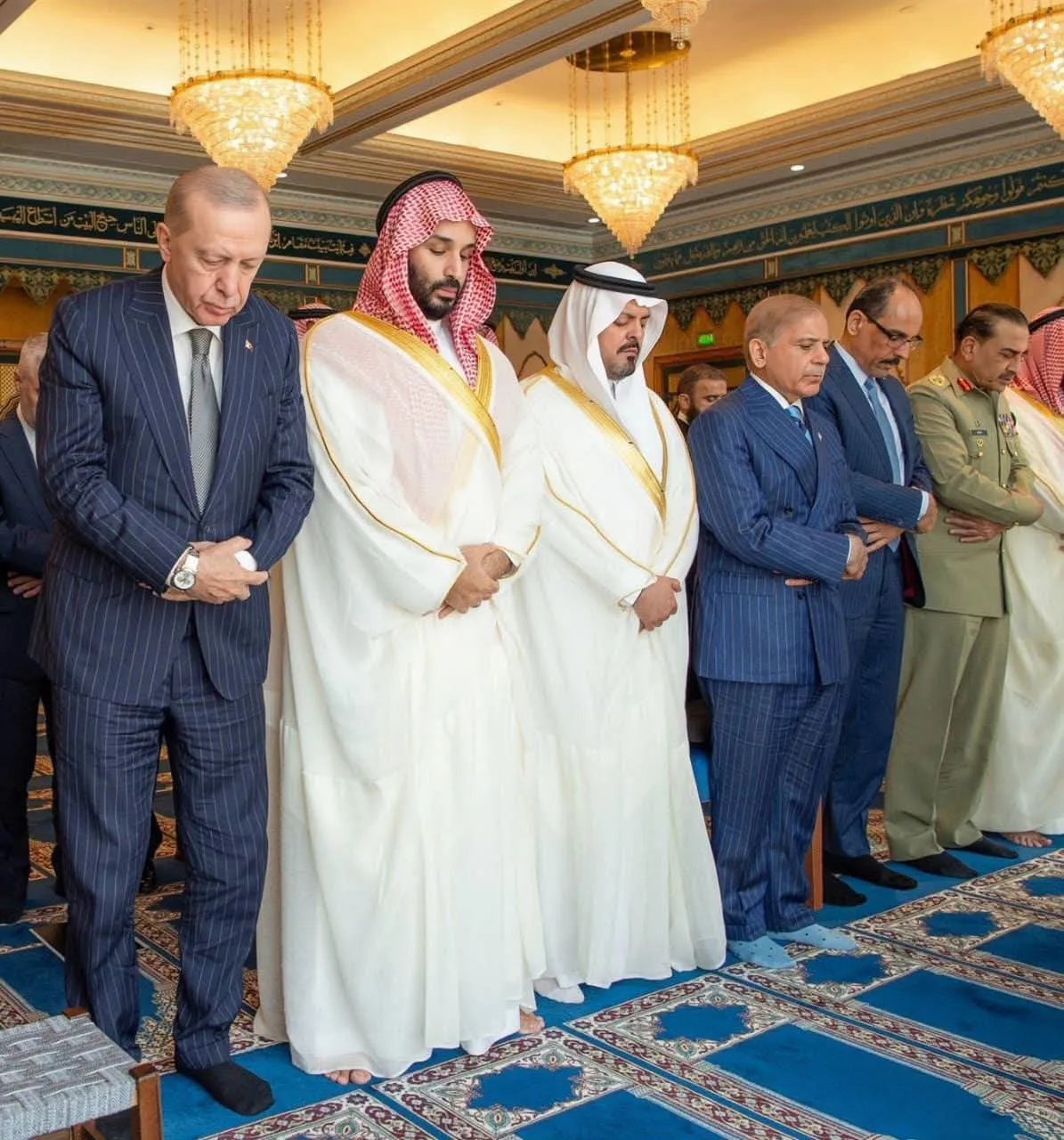
Prime Minister Shehbaz Sharif and Field Marshal Asim Munir Top Global Rankings
Prime Minister Shehbaz Sharif and Field Marshal Asim Munir have achieved a historic recognition by being jointly ranked No. 1 in the 2027 edition of The 500 Most Influential Muslims. They share this top position with Saudi King Salman, Crown Prince Mohammed bin Salman, and Turkish President Recep Tayyip Erdoğan. This announcement marks a significant moment in the publication history of the annual index, highlighting the growing geopolitical coordination between Pakistan, Saudi Arabia, and Türkiye on the international stage.
The annual list is compiled by the Royal Islamic Strategic Studies Centre, a research institute based in Amman, Jordan. Operating as an independent entity, the center has published this comprehensive ranking since 2009 to evaluate the influence and impact of prominent Muslims worldwide across various fields such as politics, academia, culture, and religious authority. Observers note that this year marks the first time the publication has placed more than one name at the very top of its prestigious index, reflecting a collective leadership model that has emerged in the region.
Why the Top Spot Was Shared
According to the Royal Islamic Strategic Studies Centre, the main reason for the historic decision is the Makkah Joint Defence Agreement between Pakistan, Saudi Arabia, and Türkiye. The pact was signed on August 7, 2026, and activated at an emergency summit in Riyadh. This multilateral security arrangement brings together three key regional powers under a formal cooperative framework designed to address emerging defense and security challenges across the Middle East and South Asia.
The alliance combines Saudi Arabia's wealth, Türkiye's technology and manufacturing, and Pakistan's military strength under a one for all, all for one approach to security. The research institute noted that this cooperative military strategy has completely reshaped regional politics. By pooling financial resources, advanced defense manufacturing capabilities, and a vast standing military force, the participating nations have created a new deterrence architecture that alters traditional power dynamics in the Islamic world.
Background of The 500 Most Influential Muslims
Established more than a decade and a half ago, the annual publication by the Royal Islamic Strategic Studies Centre aims to measure the social, ideological, financial, and political influence that specific individuals exert on the global Muslim community. The selection process involves extensive research into the achievements and responsibilities of candidates across fifteen distinct categories, including ruling kings and presidents, scholars, political figures, philanthropists, and artists. The ranking does not imply endorsement of a figure's views or actions by the research institute, but rather measures their capacity to shape opinion and direct events.
Over the years, the publication has tracked shifts in global leadership, noting the rise of figures who command large followings or hold decisive executive authority. The inclusion of individuals from diverse backgrounds, ranging from heads of state to grassroots spiritual leaders and athletes, ensures a broad representation of contemporary Muslim society. The publication serves as a reference document for researchers, journalists, and diplomats seeking to understand the centers of gravity within the global Islamic world.
Six Pakistanis in Top 50
Pakistan maintains a strong presence in the 2027 index, with six names featured in the top 50. Aside from Prime Minister Shehbaz Sharif and Field Marshal Asim Munir holding the joint top position, several prominent religious figures from the country received high rankings. Mufti Taqi Usmani is ranked 7th, reflecting his standing as a leading global authority in Islamic jurisprudence. Maulana Tariq Jamil is placed 32nd, recognized for his extensive religious outreach and preaching efforts.
Further down the list, Tablighi Jamaat Amir Maulana Nazar ur-Rehman is ranked 41st, and Sheikh Muhammad Ilyas Attar Qadiri occupies the 44th position for his widespread organizational and spiritual work. Additionally, former Prime Minister Imran Khan is listed among the honourable mentions in the political category. This robust representation underscores the diverse nature of Pakistani influence spanning both state leadership, scholarly authority, and religious movements.
Other Notable Names in the 2027 Rankings
The wider global rankings feature a diverse array of political leaders, religious authorities, and public figures from various continents. Iran's Supreme Leader Ayatollah Mojtaba Khamenei is ranked 4th, followed by Jordan's King Abdullah II at 5th and Qatar's Emir Sheikh Tamim bin Hamad Al-Thani at 6th. These Middle Eastern leaders continue to play critical roles in regional diplomacy, mediation, and economic policy within the Gulf and neighboring territories.
Other prominent figures include UAE President Sheikh Mohamed bin Zayed Al-Nahyan at 12th, international footballer Mohamed Salah at 39th, and New York City Mayor Zohran Mamdani at 49th. The inclusion of figures outside traditional statecraft, such as sports stars and municipal leaders, demonstrates the broad criteria used by the Amman-based institute. Field Marshal Munir was also among the most influential Muslims in the world in last year's edition, marking his continued prominence in international security affairs.
Understanding the Impact of Regional Defense Pacts
The Makkah Joint Defence Agreement represents a departure from traditional bilateral alliances in the Muslim world by formally linking South Asia and the Middle East through a mutual defense commitment. Analysts point out that combining Saudi financial capital with Turkish defense production and Pakistani troop deployment creates a self-sustaining security ecosystem. This partnership addresses long-standing vulnerabilities faced by member states and provides a unified platform for addressing transnational security threats.
For businesses, citizens, and governments in the region, such pacts signal a shift toward regional self-reliance in matters of defense and strategic planning. The economic implications of combined manufacturing and resource sharing are expected to unfold over the coming years as joint military exercises and technology transfers take place. Observers will monitor how this trilateral framework influences broader diplomatic engagements with external powers in North America, Europe, and Asia.
What to Watch for in Future Global Rankings
As international relations continue to evolve, future editions of The 500 Most Influential Muslims will likely reflect the ongoing implementation of the Makkah Joint Defence Agreement and its tangible outcomes. Researchers at the Royal Islamic Strategic Studies Centre will assess whether the shared leadership model at the top of the index becomes a permanent fixture or a response to a specific geopolitical moment. Readers and analysts tracking these trends should observe upcoming diplomatic summits, joint military drills, and economic integration milestones between Pakistan, Saudi Arabia, and Türkiye.
The publication of the index each year provides a reliable barometer of shifting influence, capturing the intersection of faith, governance, and power. With multiple Pakistani figures maintaining high rankings alongside leaders from the Gulf, Levant, and Western nations, the 2027 list highlights a decentralized network of influence. The ongoing developments surrounding these key individuals will remain central to discussions concerning global stability and international diplomacy.





