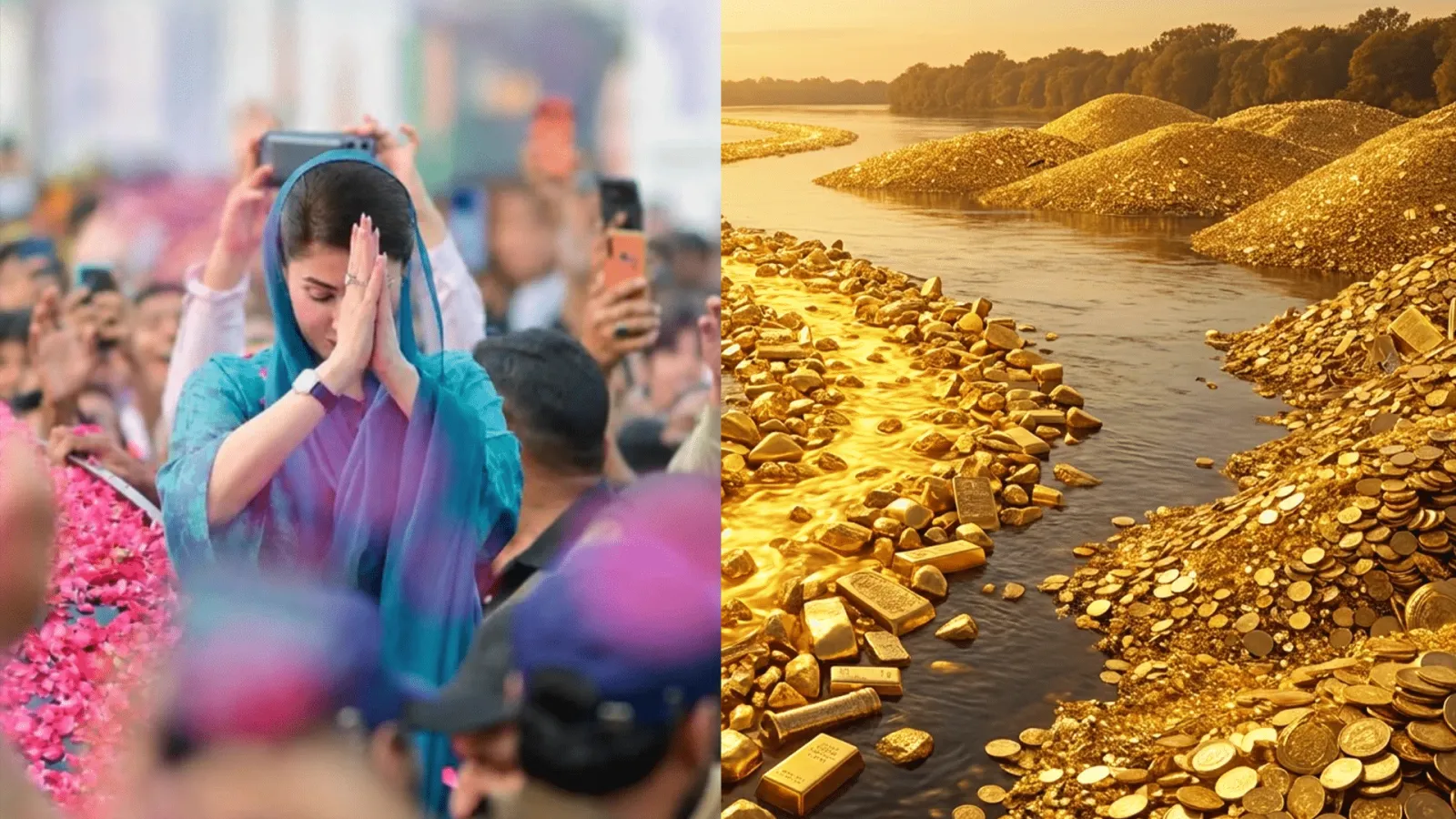
Punjab Chief Minister Confirms Gold Discovery in Five Rivers
Punjab Chief Minister Maryam Nawaz Sharif has said there is evidence of gold deposits in all five rivers of Punjab, particularly in Mianwali and Attock, as the provincial government looks for international investors to develop the resources. Speaking at the Pakistan Minerals Investment Forum 2026 in Islamabad on Thursday, she displayed a sample of gold recovered from river sand and said surveys were underway to determine the quantity of available deposits. She noted that the rivers could contain significant amounts of placer gold, particularly in areas north and south of Punjab. Placer gold is naturally occurring gold that breaks away from rocks through erosion and accumulates in river sand and gravel. She also said the sand and gravel contained rare earth elements and other precious minerals that could have considerable economic value.
The announcement brings renewed attention to the mineral wealth of Pakistan's most populous province. Geological surveys in the region have historically pointed to various mineral deposits, but large-scale commercial extraction has often been limited by technological and financial constraints. By highlighting these finds at a major national gathering, the provincial administration hopes to change the trajectory of local resource management. Experts attending the forum noted that thorough geological assessments will be required to establish whether the deposits exist in concentrations that make commercial mining viable. The revelation places the province at the center of ongoing national discussions regarding resource monetization and industrial growth.
Understanding Placer Gold and River Deposits
Placer gold forms through a natural process spanning thousands of years. Weather and water cause gold-bearing rocks to fracture and erode, releasing tiny flakes, grains, and occasionally larger nuggets into the environment. These heavy particles wash down slopes and tributaries, eventually settling in riverbeds, sand bars, and gravel deposits where water currents slow down. Because gold is exceptionally dense, it sinks beneath lighter sand and gravel, accumulating in specific pockets along river courses. Prospectors and mining companies search for these zones using panning, sluicing, and specialized dredging techniques. In regions like Mianwali and Attock, the terrain and ancient geological formations create favorable conditions for such accumulations. The presence of rare earth elements alongside gold adds another layer of potential value, as these materials are essential for modern electronics, renewable energy technologies, and advanced manufacturing sectors globally.
The identification of these minerals in river sand means that extraction methods might differ from traditional hard-rock underground mining. Placer mining often involves processing surface or shallow underwater sediments, which can require different environmental management strategies. River ecosystems are sensitive to changes in sediment flow and water turbidity. Authorities will need to balance industrial extraction with ecological preservation to protect local water supplies and aquatic life. The government has signaled an awareness of modern standards, emphasizing transparency and structured oversight as it invites outside partners. Clear regulatory frameworks will be vital to ensure that mining operations do not damage the natural environment or disrupt communities living along the riverbanks.
Punjab Seeks Foreign Investment in Gold Mining
The chief minister invited international investors to partner with Punjab in exploring and developing its mineral resources. She said the provincial government was working to bring more transparency and investment into the mining sector. Maryam added that revenue collected by Punjab's Mines and Minerals Department had increased from Rs. 10 billion when she took office to Rs. 40 billion over the following two and a half years. She said the province wanted to turn its mineral resources into economic opportunities through exploration and investment. Attracting foreign capital requires stable policies, secure legal frameworks, and reliable infrastructure, all of which form part of the current provincial pitch to global mining firms.
International mining corporations typically look for clear concession agreements, fair tax structures, and guarantees regarding the repatriation of profits before committing funds to new jurisdictions. The substantial rise in departmental revenue reported by the administration indicates an administrative push to formalize and streamline mineral tracking. By curbing illegal extraction and improving royalty collection, the province has strengthened its fiscal position. Officials believe this improved baseline demonstrates competence and readiness to handle larger, more complex international joint ventures. Transparency initiatives help build trust with foreign partners who want assurance that their investments will operate under predictable rules.
Pakistan Seeks Global Mining Investment
Pakistan is hosting the two-day Pakistan Minerals Investment Forum 2026 in Islamabad to attract international investors and develop its mineral sector. The event brings together government officials, international mining companies, investors, policymakers, and industry experts to discuss investment opportunities. Prime Minister Shehbaz Sharif, Deputy Prime Minister and Foreign Minister Ishaq Dar, and Field Marshal Asim Munir are among the key speakers. The government is organizing the forum in collaboration with the Special Investment Facilitation Council. The event focuses on critical minerals, responsible mining, international partnerships, and investment policies aimed at developing Pakistan's mineral resources.
The gathering serves as a primary platform for presenting geological data and policy reforms to a global audience. Pakistan possesses vast untouched mineral wealth across various provinces, ranging from copper and gold in Balochistan to gemstones in the northern areas and now riverbed deposits in Punjab. Despite this potential, the country's mining sector has historically contributed a relatively small share to the national gross domestic product. High capital expenditure requirements, security considerations in remote regions, and a lack of advanced processing facilities have slowed sector development. The active participation of high-ranking civilian and military leaders at the forum underscores a unified state approach to overcoming these barriers and positioning the mining industry as a pillar of economic recovery.
What the Discovery Means for Local Economies and Communities
The confirmation of gold and rare earth elements in Punjab rivers holds direct implications for regional economies, particularly in districts like Mianwali and Attock. Mineral exploration projects typically stimulate local job creation, ranging from direct employment in surveying and extraction to indirect benefits for transport, hospitality, and service industries. Communities situated near prospective mining sites may see infrastructure improvements, such as better roads, electricity access, and communication networks, as companies and government agencies build out necessary operational facilities. However, local residents also face potential challenges, including concerns over land use rights, environmental impacts on agricultural water sources, and the management of heavy machinery traffic.
Provincial authorities will need to establish clear mechanisms for community consultation and benefit sharing. Ensuring that local populations receive a fair share of economic gains helps prevent social friction and builds local support for industrial projects. Regional educational institutions may also need to adapt, introducing specialized technical training programs in geology, engineering, and environmental science to prepare local youth for skilled jobs within the emerging mining sector. As international investors evaluate the opportunities presented in Islamabad, the ability of local administrations to manage community relations and environmental safeguards smoothly will remain a critical factor in determining the long-term success of these mining initiatives.
Next Steps in the Mineral Exploration Process
Following the announcements made at the investment forum, the provincial government faces a structured path of technical and administrative procedures. Comprehensive geological surveys are already underway to map the exact distribution, volume, and grade of gold and rare earth elements across the five rivers. These scientific studies provide the detailed data required by commercial mining companies before they decide to commit capital. Once survey results are compiled, the Mines and Minerals Department is expected to design competitive bidding processes for exploration and extraction leases, aligning with the administration's stated goals of transparency and increased revenue generation.
Observers will be watching for the release of specific tender documents, regulatory guidelines for environmental compliance, and the formalization of partnerships with international firms. The success of these efforts will depend on how quickly geological assessments can be translated into workable commercial contracts. While initial public interest focuses heavily on the discovery of gold, the long-term economic impact will likely hinge on the broader development of the region's mineral supply chain, including local processing facilities that add value before materials are exported. The coming months will test the government's ability to turn high-level diplomatic and investment presentations into tangible, operational mining projects on the ground.





