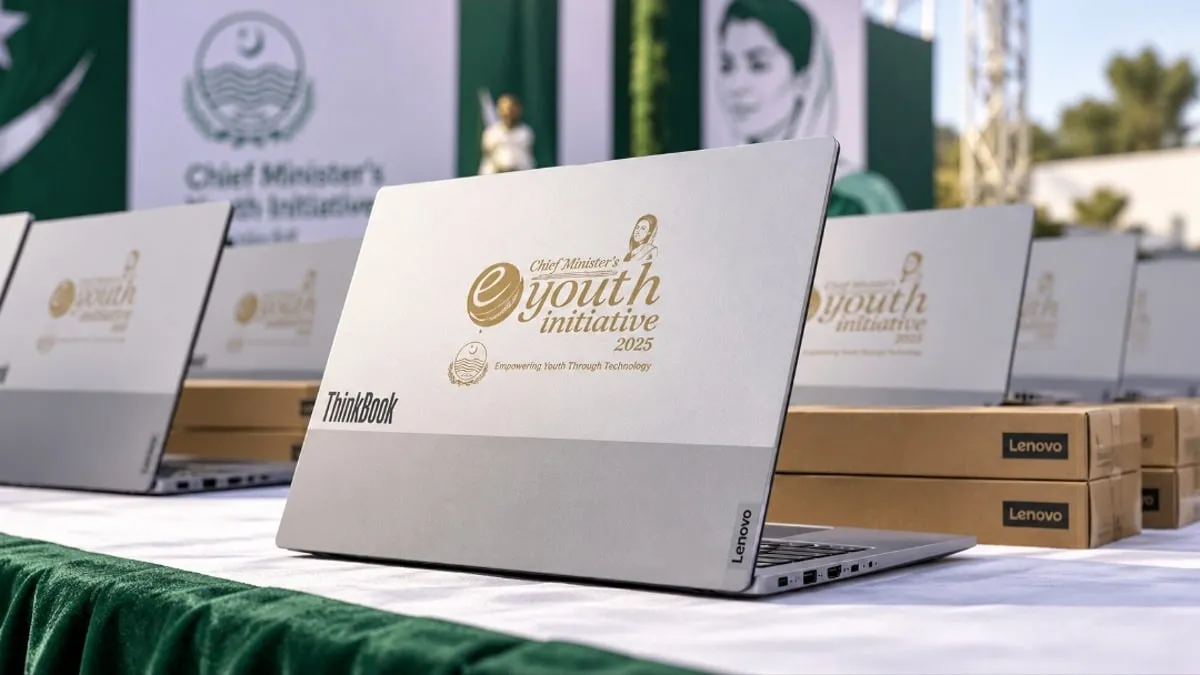
Punjab Distributes 662 Laptops Under CM Scheme at University of Chakwal
Punjab Chief Minister Maryam Nawaz Sharif distributed 662 laptops and 441 Honhaar scholarships among students during a ceremony at the University of Chakwal on November 27, 2026. The distribution event marked a significant gathering of young scholars, academic leaders, and provincial officials aimed at recognizing educational excellence and expanding digital access in the region. The University of Chakwal served as the host institution for this major regional rollout, welcoming students from various disciplines who gathered to receive their awards. The provincial government has placed a strong emphasis on providing modern technological tools to students, ensuring that young people possess the digital resources necessary to compete in a rapidly evolving academic and professional environment.
The distribution event was part of the Punjab government's efforts to support talented students and expand access to higher education through financial assistance and modern technology. Educational experts note that providing personal computing devices directly addresses the digital divide, allowing students in smaller cities and regional campuses to access online research libraries, digital lectures, and collaborative learning platforms. By combining hardware distribution with direct financial support through targeted scholarship programs, the administration seeks to create a comprehensive safety net for ambitious scholars who might otherwise struggle with the rising costs of higher education.
Expanding Scholarship and Laptop Initiatives in Punjab
The latest distribution took place as Punjab continues expanding its laptop and scholarship initiatives across the province. The provincial government has increased its laptop scheme target from 40,000 to 112,000 devices, reflecting a substantial scaling up of resources dedicated to student empowerment. Meanwhile, the Honhaar Scholarship Programme provides financial assistance to deserving students, covering tuition fees and living expenses for high-achieving individuals enrolled in designated degree programs. These twin programs form the backbone of the provincial strategy to invest in human capital and prepare the younger generation for future leadership roles in technology, science, and the humanities.
Academic administrators and education policy planners have long advocated for expanded student aid programs as a catalyst for regional development. By scaling up the distribution targets, the provincial authorities aim to reach remote districts and marginalized communities where students often face severe infrastructural hurdles. The integration of merit-based selection criteria ensures that the devices and financial grants reach individuals who have demonstrated exceptional dedication to their studies, regardless of their background.
Inclusion of Students from Khyber Pakhtunkhwa
Around 500 students from Khyber Pakhtunkhwa also attended the ceremony at the University of Chakwal. Maryam Nawaz said deserving students from other provinces should have equal opportunities, adding that students from KP would also receive scholarships and a share in the provincial laptop scheme. This cross-provincial outreach highlights a broader vision for national integration and educational equity, bridging geographic boundaries to support bright minds across different regional administrations. The presence of the delegation from Khyber Pakhtunkhwa added a collaborative dimension to the event, fostering goodwill and academic exchange between students from diverse cultural and linguistic backgrounds.
Observers point out that extending provincial welfare schemes across administrative borders is a rare policy approach that encourages national unity through shared educational goals. Students from Khyber Pakhtunkhwa who attended the ceremony expressed appreciation for the inclusive stance taken by the Punjab leadership, noting that academic merit should transcend provincial demarcations in a unified national framework.
Chief Minister Maryam Nawaz Sharif on Educational Rights
Addressing the students during the packed ceremony, the chief minister said scholarships and laptops were not government favors but recognition of academic achievement and hard work. She also assured students that financial difficulties should not prevent talented young people from continuing their education. Maryam Nawaz said the government wanted to ensure that every child could access education regardless of their financial circumstances. Her remarks underscored a philosophy of state responsibility toward youth development, framing educational support as a fundamental right rather than a discretionary act of charity.
The speech resonated strongly with the audience of students, faculty members, and parents who have experienced the economic pressures of funding higher education amidst inflation and rising university fees. By emphasizing that hard work forms the sole criterion for receiving these benefits, the administration aims to build a culture of meritocracy where dedication directly translates into tangible institutional backing.
The Mechanics of the Honhaar Scholarship Programme
The Honhaar Scholarship Programme operates as a cornerstone of the financial assistance framework managed by the Punjab government. Designed specifically for high-achieving youth, the initiative targets key academic disciplines including medical sciences, engineering, information technology, and emerging technological fields. Qualified recipients receive comprehensive financial coverage that alleviates the burden of tuition payments, enabling them to focus entirely on their coursework and laboratory research without the distraction of part-time employment pressures.
University officials explain that managing large-scale scholarship disbursements requires rigorous auditing and transparent application portals to prevent administrative bottlenecks. The program relies on verified academic transcripts and stringent merit benchmarks, ensuring that public funds are allocated strictly to deserving candidates who demonstrate consistent scholarly excellence throughout their undergraduate or graduate programs.
Future Outlook for Digital Learning in Regional Universities
As the provincial government works toward fulfilling its expanded target of 112,000 laptops, institutions like the University of Chakwal anticipate further infrastructural upgrades to accommodate digital learning trends. Campuses outside major metropolitan centers stand to gain immensely from these deployments, as reliable personal laptops enable students to participate in hybrid learning models, coding bootcamps, and international online certification courses. The ongoing distribution drives serve as a clear indicator of the administrative direction regarding higher education policy for the foreseeable future.
Education sector analysts will monitor the implementation timeline of the remaining laptop allocations to gauge how effectively logistics are managed across remote districts. Meanwhile, recipients at the University of Chakwal have already begun integrating their new devices into their daily academic routines, marking a practical step forward in the regional push toward a digitally literate student population.