Punjab Launches Modern Food Street Along Canal Road for Residents
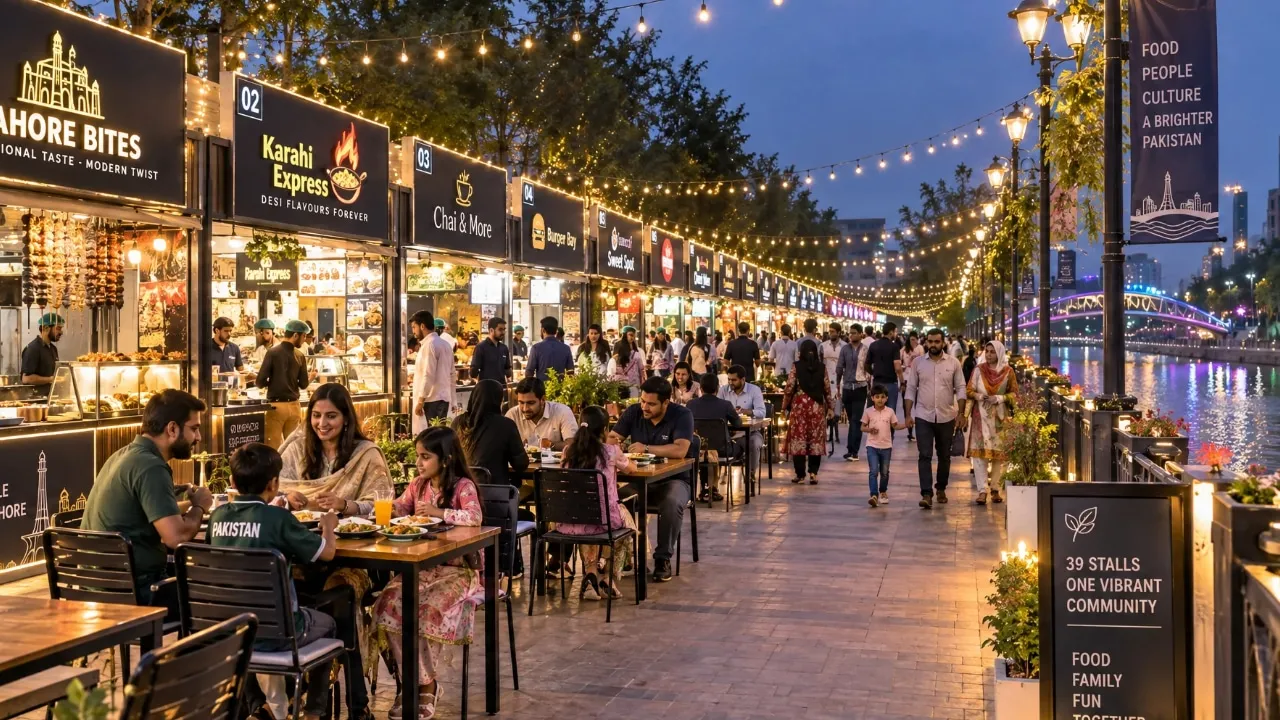
The district administration has established a modern food street along Canal Road, adjacent to the District Council, providing residents with a new recreational facility while creating business and employment opportunities.
This newly developed attraction offers a dedicated space for families and individuals to gather, dine, and enjoy the outdoors in a structured environment. Urban development projects of this nature often serve multiple municipal goals, combining public leisure spaces with commercial growth initiatives to improve overall city infrastructure.
City planners selected Canal Road for its accessibility and central location, making it an ideal spot for a major public venue. The proximity to the District Council also places the food street in a prominent zone of municipal activity, drawing steady foot traffic throughout the week.
How the 39 Food Street Shops Were Allotted
The 39 shops at the food street were allotted to eligible applicants through a transparent balloting process, offering residents a chance to start their own businesses and contributing to commercial activity in the city.
Transparent balloting ensures that local entrepreneurs and citizens have fair access to municipal commercial spaces without favoritism. Applicants went through a vetting procedure to establish their eligibility before entering the random draw for the available units.
Each of these 39 outlets represents a new microenterprise launched by local residents. This direct support for small business owners helps foster grassroots economic development within the district.
Public Response and Evening Gatherings
The facility has attracted a large number of residents and families, particularly in the evenings, with visitors bringing their children to enjoy a variety of food. The project has received a positive response from the public.
Evening outings form a major part of local social life, and finding safe, dedicated spaces for families can often prove challenging in growing urban areas. By concentrating diverse culinary options in one managed location, the food street fills a noticeable gap in local recreational offerings.
Visitors can sample various dishes while children find space to walk and relax outdoors. The strong turnout since the opening indicates high demand for clean, family-friendly public venues in the region.
Job Creation and Economic Impact
Deputy Commissioner Muhammad Ikram Malik said the food street was intended not only to provide a recreational space but also to promote economic activity.
He said the 39 shops had provided business opportunities to as many families, while each outlet was expected to employ an average of four workers, creating additional jobs.
Employment generation remains a core focus of municipal development strategies. When small businesses hire staff for cooking, serving, cleaning, and management, the financial benefits spread across the community, supporting households and increasing local purchasing power.
Food Quality and Hygiene Monitoring Standards
The deputy commissioner said the district administration had formed a special team to monitor food quality and hygiene at the facility.
The team would visit the food street daily, inspect food items and ensure that vendors followed the prescribed standards.
Public health protection is essential in open-air dining areas where multiple vendors operate in close proximity. Daily inspections help prevent foodborne illnesses and maintain consumer confidence in the safety of the meals served.
Cleanliness and Security Arrangements
Special arrangements had also been made for cleanliness and security to provide visitors with a safe and comfortable environment, he added.
Municipal sanitation crews maintain regular waste collection schedules to keep the public areas tidy despite heavy evening crowds. Security personnel monitor the grounds to prevent disturbances and ensure that families feel secure during their visits.
The deputy commissioner said the administration was taking steps to improve recreational facilities, create business opportunities and generate employment.
These ongoing administrative efforts point toward a broader strategy of urban improvement. Local authorities continue to evaluate public needs to identify other areas where similar commercial and recreational hubs might succeed in the future.





