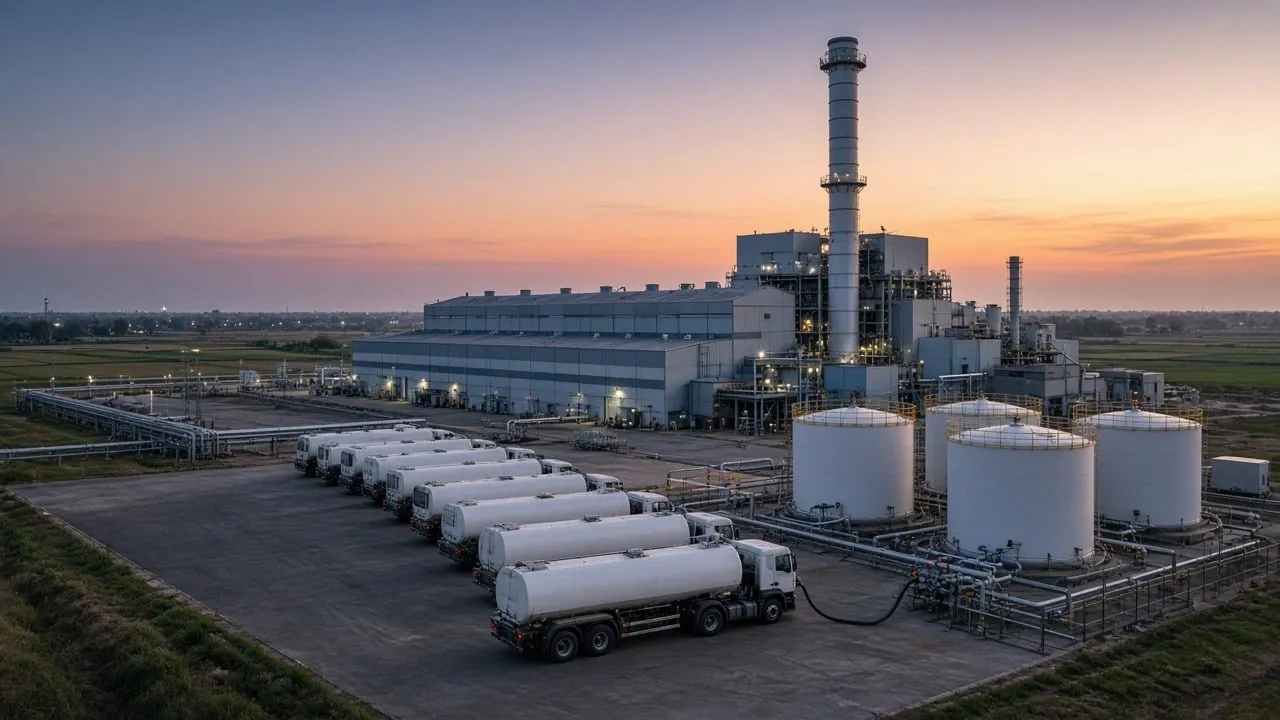
The Punjab government's 1,180 MW Bhikki power plant is lining up high-speed diesel (HSD) supplies, and at today's diesel price, electricity made from it could cost around Rs. 74 per unit.
Quaid-e-Azam Thermal Power (Private) Limited (QATPL), the Punjab government-owned company that runs the plant in Sheikhupura, has invited oil marketing companies to pre-qualify for supplying diesel to the plant, according to its tender notice.
What the Tender Says
The plant normally runs on imported re-gasified liquefied natural gas (RLNG), with diesel kept as its backup fuel.
The supply contract will run for three years, with an annual performance review, and diesel will be supplied on an as-needed basis.
Applications must be submitted only through the Punjab e-Procurement System by 11:00 AM on November 24, 2026. They will be opened 30 minutes later.
Why Diesel Procurement Matters for Punjab's Power Sector
Diesel now costs Rs. 395.20 per litre after the latest revision, down from Rs. 402.96 and the Rs. 401 mark crossed last week. At this rate, rough estimates put the fuel cost of each unit generated on diesel at about Rs. 74.
That is far costlier than gas-based power. According to CPPA-G's fuel data for September 2026, published by NEPRA, diesel-based electricity cost Rs. 62.14 per unit in fuel alone, against Rs. 39.74 for RLNG.
Fuel costs are passed on to consumers through monthly fuel charge adjustments. So the more expensive diesel power reaches the grid, the higher the pressure on electricity bills.
Background of the Bhikki Power Plant
The Bhikki plant began commercial operations in May 2018. It is a combined-cycle facility that can switch between RLNG and diesel, giving Punjab a flexible generation asset. QATPL claims the plant achieves an efficiency of over 61 % in combined-cycle mode on RLNG, making it one of the country's most efficient large-scale power stations.
When the plant was commissioned, Punjab faced chronic power shortages and relied heavily on imported fossil fuels. The decision to build a high-efficiency RLNG plant was part of a broader strategy to reduce load-shedding and limit dependence on costly coal imports.
How Diesel Supply Contracts Work in Punjab
Punjab's e-Procurement System is a digital platform that publishes tenders, receives bids, and conducts transparent opening of applications. The current tender requires pre-qualification, meaning oil marketing companies must demonstrate financial stability, storage capacity, and compliance with safety standards before they can submit a price proposal.
Once pre-qualified, suppliers will be invited to submit detailed quotations for HSD deliveries. The three-year contract will be reviewed annually, allowing the government to adjust quantities or pricing based on actual plant demand and market movements.
Impact on Electricity Consumers
Electricity tariffs in Punjab are regulated by the Punjab Electricity Regulatory Authority (PERA). While the regulator sets a base tariff, utilities recover fuel cost fluctuations through a monthly fuel adjustment clause. When diesel is used, the higher per-unit cost translates into a larger fuel surcharge, which appears on household and commercial bills.
For a typical residential consumer paying a monthly bill of Rs. 3,000, a shift of just 10 % of the plant's output to diesel could add roughly Rs. 150 to the bill, assuming the current diesel-derived cost of Rs. 74 per unit. Industrial users, whose consumption is higher, would feel a proportionally larger impact.
Because diesel is a backup fuel, its use is expected to be intermittent, primarily during RLNG supply disruptions or peak-load periods. Nevertheless, the tender signals that the government wants to keep diesel readily available, which may encourage more frequent use if RLNG prices rise.
What Comes Next: Timeline and Next Steps
The tender deadline is 11:00 AM on November 24, 2026. After the 30-minute opening window, the evaluation committee will assess pre-qualification documents and publish a shortlist within two weeks.
Shortlisted firms will then be invited to submit price proposals. The final award is expected by late December 2026, with the first diesel deliveries slated for January 2027. The three-year supply window will run until the end of 2029, subject to the annual performance review.
Stakeholders, including consumer groups and industry associations, have called for the government to publish the final contract terms, especially the price escalation clauses, to ensure transparency.
Practical Takeaways for Readers
- Diesel price is currently Rs. 395.20 per litre; electricity generated from diesel could cost about Rs. 74 per unit.
- The Bhikki plant can run on RLNG at roughly Rs. 39.74 per unit, making diesel roughly 86 % more expensive on a fuel-only basis.
- The tender for diesel supply closes on November 24, 2026, with contracts lasting three years.
- Higher diesel use will likely raise monthly electricity bills through fuel adjustment charges.
- Consumers should monitor PERA's quarterly fuel surcharge notices for any changes linked to diesel usage.
In summary, Punjab's move to secure diesel supplies reflects a precautionary approach to energy security, but the higher cost of diesel-generated power will inevitably filter through to end-users. The upcoming tender process will determine which oil marketing companies become the state's diesel partners and how much the province will pay for this backup fuel over the next three years.