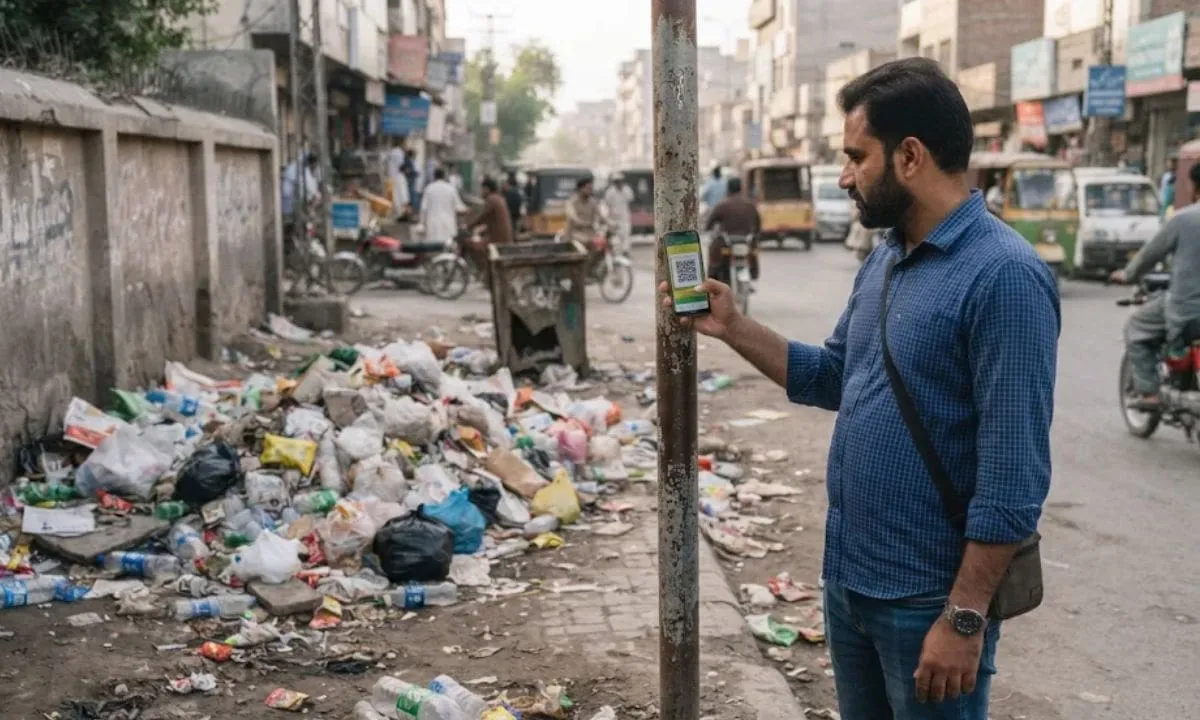
Punjab Introduces QR Code System for Cleanliness Complaints
The Punjab government has launched a QR code-based system for the first time, allowing citizens to lodge complaints and give feedback on sanitation services under the Suthra Punjab programme. This digital integration marks a notable shift in how public service grievances are handled across the province, bridging the gap between municipal authorities and the general population.
Citizens can scan QR codes displayed at various locations to view details of sanitation workers deployed in their areas and register complaints about cleanliness issues. The system will also allow authorities to collect public feedback on sanitation services, ensuring accountability and transparency in municipal operations.
Chief Minister Reviews Suthra Punjab Programme Progress
Chief Minister Maryam Nawaz Sharif reviewed the initiative at a special meeting and directed officials to resolve sanitation complaints within a few hours. The administrative push aims to streamline waste management and improve response times for urban and rural residents alike.
During the briefing, officials presented data on various districts regarding personnel and equipment availability. The deployment of personnel and equipment was reviewed in Gujranwala, Sialkot, Narowal, Gujrat, Mandi Bahauddin, Hafizabad, Multan, Vehari, Lodhran, Khanewal, Faisalabad, Jhang, Chiniot, and Toba Tek Singh.
Further updates covered Dera Ghazi Khan, Rajanpur, Layyah, Muzaffargarh, and Kot Addu. According to the briefing, more than 93,000 sanitation beats have been established across Punjab, creating a massive operational network.
Expanding Waste Management Across Urban and Rural Areas
The provincial administration is placing equal emphasis on both city centers and countryside settlements. Maryam Nawaz said urban and rural areas should receive equal attention, describing sanitation as one of the most visible indicators of public service delivery.
Cleanliness operations in villages are to be carried out at least twice a week. Authorities have also identified over 51,000 vacant plots and cleared garbage from about 30,000 of them, while salaries have been paid to all Suthra Punjab workers across the province.
To combat waterlogging and blockages, cleaning operations have covered 8,376 drains with a combined length of 7,843 kilometres. Modern machinery is to be deployed to remove weeds and bushes along roadsides, and anti-littering squads are to be set up in every district.
Infrastructure Upgrades and Rural Waste Disposal
Physical infrastructure is receiving a major overhaul to support the new sanitation targets. Maryam Nawaz ordered waste bins to be installed at suitable locations across the province and called for greater efforts to encourage rural residents to dispose of garbage in designated containers.
More designated waste disposal points are to be established, and commercial markets and roadside vending areas must be equipped with sufficient dustbins and waste containers. Authorities were also told to fine people who repeatedly dump garbage in streets and drains to enforce compliance.
The chief minister instructed officials to ensure adequate sanitation workers and machinery across Punjab, with a daily deep-cleaning operation in one tehsil. She also directed authorities to achieve door-to-door waste collection as soon as possible.
Inspections and Administrative Oversight
Administrative enforcement relies on regular field checks and direct ministerial oversight. Maryam Nawaz called for frequent surprise inspections to check cleanliness standards, workers attendance, and the condition of machinery.
She directed the provincial Local Government Minister to personally oversee these inspections. This rigorous monitoring structure ensures that field units maintain high operational readiness and that resources allocated to the Suthra Punjab programme translate into clean public spaces.