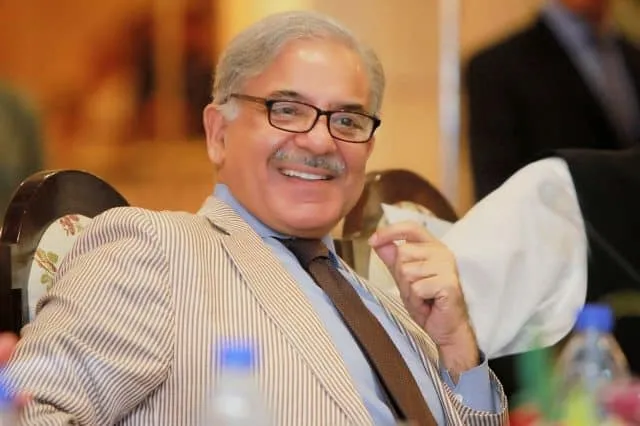
Prime Minister Shehbaz Sharif announced a Rs. 1,000 billion target for cheap housing loans under the Apna Ghar Program, to be achieved within the next six months.
The announcement was made at a ceremony in Islamabad that marked the program's crossing of Rs. 100 billion in loan disbursements, and the PM said a second ceremony will be held once the new target is reached.
What Has Been Disbursed So Far?
According to the Prime Minister, Rs. 100 billion was disbursed for the construction of 18,500 houses during the program's first six and a half months. Total disbursements have since risen to Rs. 112 billion, while loans worth Rs. 500 billion have been approved.
The new target of Rs. 1,000 billion is nearly nine times the amount already disbursed and twice the amount of loans approved to date, indicating that both approvals and disbursements will need to accelerate sharply.
How the Apna Ghar Program Works
Apna Ghar is a government-backed scheme that offers low-income families subsidised housing loans. Eligible applicants can receive up to Rs. 10 million at a 5 % markup for the first ten years, after which the rate reverts to market levels. The subsidy is intended to make monthly repayments affordable for families earning modest incomes.
The program originally set a goal of building 150,000 homes by June 2027. With the new Rs. 1,000 billion target, the government signals an intention to exceed that figure, potentially reaching 500,000 homes or more, as the Prime Minister stated there will be no cap on the number of houses built for low-income families.
Why Banks Are Being Named 'Ambassadors at Large'
The Prime Minister announced that the five banks currently participating in Apna Ghar will be given the status of "Ambassadors at Large" for the initiative. He also proposed issuing blue passports to the banks, with owners and CEOs deciding who receives them.
He explained that banks were initially reluctant to join because they were not accustomed to taking the type of risk the scheme entails. By designating them as ambassadors, the government hopes to embed the program into the banks' core business models, encouraging faster loan approvals and tighter coordination with the Ministry of Housing.
He directed banks to approve loans at "lightning speed" and warned that political interference would not be tolerated. The Prime Minister also said no applicant had been asked about political affiliation, underscoring an effort to keep the scheme merit-based.
Historical Context of Housing Finance in Pakistan
Housing finance has long been a challenge for low-income families in Pakistan. Traditional commercial banks typically require large down-payments and charge high interest rates, making homeownership out of reach for the majority of the population. Earlier government schemes, such as the Naya Pakistan Housing Programme launched in 2020, focused on land allocation and construction subsidies but faced criticism for slow implementation and limited loan availability.
Apna Ghar, launched in early 2023, was designed to address those gaps by providing direct loan subsidies and partnering with private banks to expand credit flow. The program's first six months saw a rapid rollout, with Rs. 100 billion disbursed for 18,500 houses, a pace that outstripped earlier initiatives.
Impact on Low-Income Families and the Construction Sector
The expanded loan target is expected to benefit millions of low-income households. With subsidies capping the interest markup at 5 % for a decade, families can plan long-term budgets without fear of sudden rate hikes. The increased loan flow also promises to stimulate the construction sector, which has been recovering from pandemic-related slowdowns.
Builders, material suppliers, and local contractors stand to gain from a higher volume of housing projects. In regions where informal housing has proliferated, the program could shift construction toward formal, regulated developments, improving safety standards and access to utilities.
Procedural Steps for Applicants
Applicants must meet income eligibility criteria set by the Ministry of Housing, typically defined as households earning below a certain threshold relative to the national median income. They must also provide proof of land ownership or a land allocation certificate, as the loan is intended for construction rather than land purchase.
Once an application is submitted, the designated bank reviews the file, conducts a credit assessment, and, if approved, issues a loan agreement outlining the 5 % subsidised markup for the first ten years. Disbursement is staged, with initial funds released for foundation work and subsequent tranches tied to construction milestones.
What Comes Next?
The Prime Minister indicated that a second ceremony will be organised once the Rs. 1,000 billion target is achieved, suggesting a public accountability mechanism. In the meantime, the Ministry of Housing will monitor loan approvals and disbursements weekly, and banks have been instructed to report any bottlenecks.
Stakeholders are watching for the issuance of the proposed blue passports, which could become a visible marker of a bank's commitment to the scheme. The government has not disclosed a specific timeline for the passport rollout, but it is expected to coincide with the next quarter's banking regulatory updates.
Analysts recommend that prospective borrowers keep documentation ready and stay in contact with participating banks to benefit from the accelerated approval process. For banks, the ambassador status may bring reputational benefits and potential incentives tied to loan volume targets.
Overall, the Rs. 1,000 billion target marks an ambitious scaling of a program that has already shown the capacity to move large sums quickly. The success of the initiative will depend on the coordination between the government, banks, and the construction industry, as well as the ability to maintain the subsidised interest rate without fiscal strain.