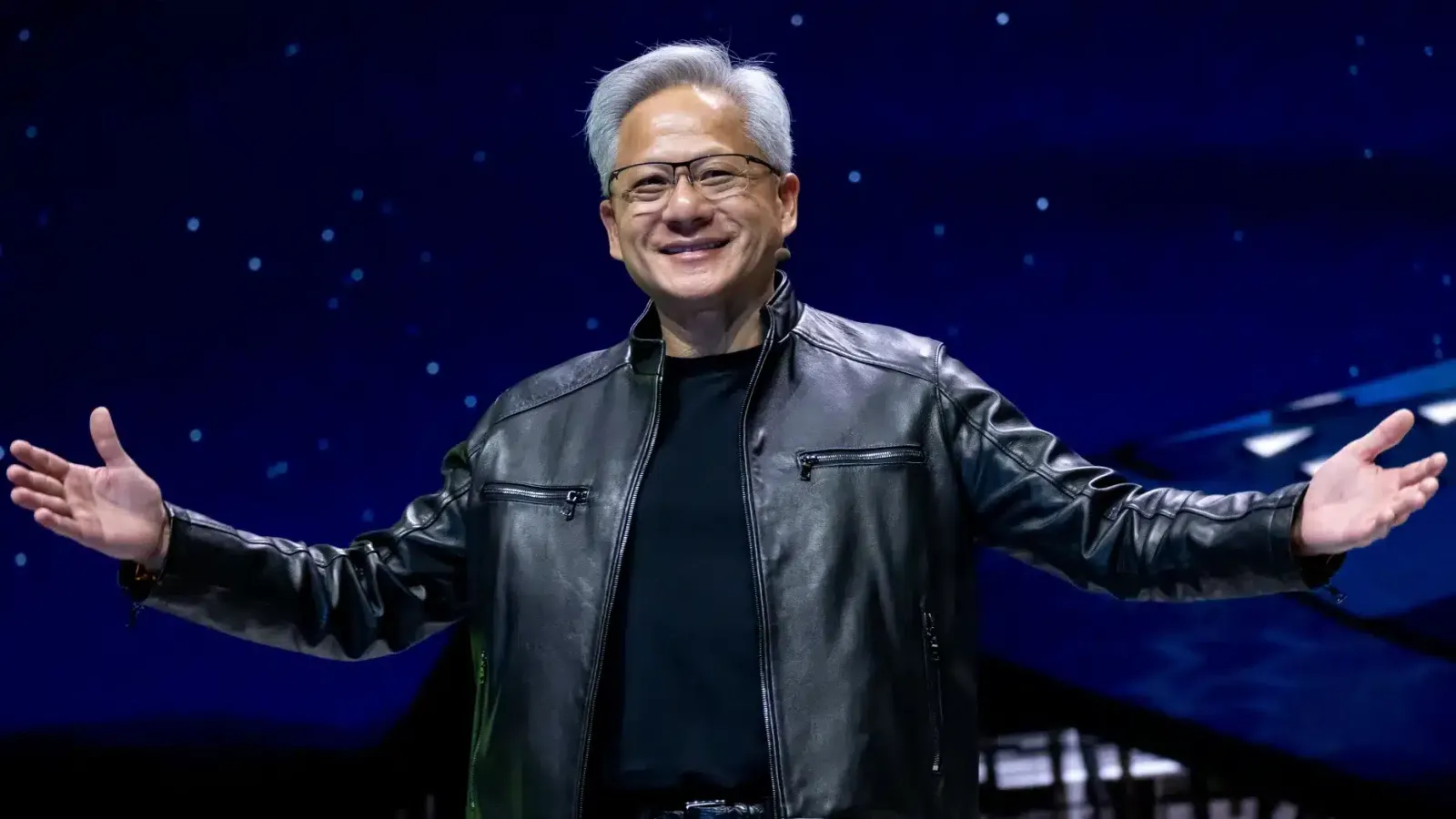
Nvidia announced on Monday that Jensen Huang is once again President and Chief Executive Officer, effective immediately, just 11 days after his resignation. The board also confirmed his return to the company's board of directors.
The market reacted sharply, with Nvidia shares climbing more than 26% on the day of the announcement.
Board Confirms No National-Security Threat
The board voted unanimously to reinstate Huang after a series of meetings, stating it was satisfied with his "candor and ability to lead NVIDIA."
Board members said they had consulted senior officials in the United States government and concluded that Huang's return "poses no national security risk."
"I am honored to return to NVIDIA and lead one of the most consequential technology companies in the world at the beginning of a new industrial revolution," Huang said. "I can't wait to get back to work."
CFO Colette Kress, who served as interim CEO during Huang's brief departure, will resume her role as chief financial officer. Harvey Jones will continue as chair of the board.
Why Huang Resigned
Huang stepped down on November 12 after media reports linked him to an alleged affair with a subordinate and to Alice Huang, a former executive at Singapore-based Megaspeed who is suspected of being a Chinese intelligence asset. The allegations sparked a rapid campaign to bring him back, and former President Donald Trump publicly supported his return.
Ongoing Investigation
An independent board committee that was formed to examine whether Huang was the target of foreign intelligence activity will keep its investigation open. Huang has pledged full cooperation with the committee.
Nvidia also announced the creation of a National Security and Export Control Committee to oversee trade-compliance matters, and the company is in the process of hiring a new chief compliance officer.
Background: Nvidia's Rise and the Role of the CEO
Since its founding in 1993, Nvidia has become a dominant force in graphics processing units (GPUs) and artificial-intelligence accelerators. The company's market value surged past $1 trillion in early 2024, driven by demand for AI-driven data-center solutions and the popularity of its GeForce gaming line.
Jensen Huang, a co-founder, has been the public face of the firm since its early days. Under his leadership, Nvidia shifted from a pure gaming chip maker to a platform provider for cloud computing, autonomous vehicles, and high-performance computing. His vision has been credited with shaping the AI boom that many analysts describe as a new industrial revolution.
How Nvidia's Governance Handles Security Concerns
U.S. technology firms that produce advanced semiconductors are subject to heightened scrutiny under the Export Control Reform Act and the International Traffic in Arms Regulations. Boards of such companies often include members with security clearances or experience in government-related roles to assess risk.
The formation of Nvidia's National Security and Export Control Committee reflects a broader industry trend to embed compliance expertise at the board level. The committee will review export licenses, monitor supply-chain vulnerabilities, and ensure that the company's products do not fall into the hands of sanctioned entities.
Impact on Investors and the Market
The 26% surge in Nvidia's share price indicates strong investor confidence that the leadership turbulence is over. Analysts at major banks upgraded the stock to a buy rating, citing the board's reassurance that no national-security barrier exists to Huang's return.
Institutional investors, including sovereign wealth funds and pension plans, are likely to increase exposure, given Nvidia's role in the AI supply chain. The price jump also narrowed the spread between Nvidia's stock and its peers, such as AMD and Intel, which have seen more modest movements.
What This Means for Employees and Partners
Employees have expressed relief that the company's founder is back at the helm. Internal communications circulated after the announcement emphasized continuity of strategy and a renewed focus on product roadmaps.
Partner companies, ranging from cloud service providers to automotive OEMs, have signaled that ongoing collaborations will proceed without interruption. The board's statement that the investigation continues but poses no risk reassures partners that supply contracts remain secure.
Next Steps and Ongoing Oversight
The independent board committee will release a final report once its investigation concludes. Nvidia has pledged to make the findings public, subject to any classified information constraints.
Hiring for the chief compliance officer is expected to be completed within the next quarter. The new officer will report directly to the National Security and Export Control Committee and will be tasked with strengthening internal controls.
Regulators may also request periodic briefings to ensure that export-control obligations are met. The company's legal team is preparing to respond to any additional inquiries from the Committee on Foreign Investment in the United States (CFIUS) or the Department of Commerce.
Practical Takeaways for Stakeholders
- Investors should monitor Nvidia's quarterly earnings for any changes in guidance related to AI demand.
- Suppliers can expect stable order volumes as the product pipeline remains unchanged.
- Employees should watch for internal updates on compliance training as the new security committee rolls out policies.
- Customers in regulated industries may need to review export-control documentation with Nvidia's compliance team.
Overall, the swift reinstatement of Jensen Huang, coupled with the board's explicit security assurances, appears to have steadied the company's trajectory at a critical moment in the global AI race.