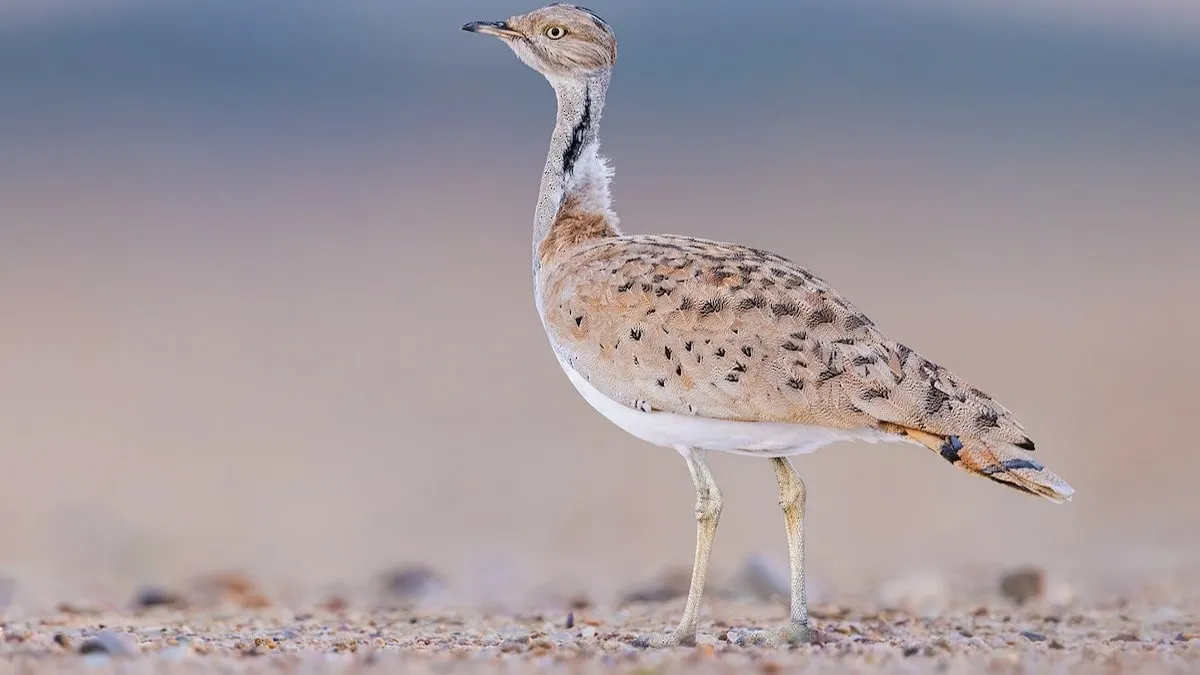
Punjab Government Approves Houbara Bustard Hunting Relaxation
The Punjab government has approved a two-month relaxation in legal protections for the migratory Houbara bustard this winter, allowing limited falconry hunting by visiting Arab dignitaries during the 2026-27 hunting season, The News reported.
This decision arrived during the 42nd meeting of the Standing Committee of Cabinet on Legislative Business and Privatization. Punjab Finance Minister Mujtaba Shuja-ur-Rehman chaired the session where officials cleared the temporary suspension of year-round conservation rules.
The policy shift opens specific desert tracts in the region for traditional falconry practices. Authorities intend to accommodate foreign guests who traditionally travel to the area during the colder months.
Role of the Punjab Wildlife and Parks Department
The Punjab Wildlife and Parks Department had proposed temporarily removing the year-round protection granted to the bird to facilitate the hunting season for Arab sheikhs. Wildlife officials drafted the necessary administrative changes to accommodate the annual diplomatic visits.
Under existing provincial law, the Houbara bustard is listed in the Third Schedule and remains protected throughout the year. Its transfer to the First Schedule under Section 45(i) of the relevant Act, through an official gazette notification, allows regulated hunting during a specified period.
This legal mechanism allows the provincial administration to adjust species categorisation temporarily without permanently stripping the bird of its conservation status. Once the designated two-month window closes, the standard year-round prohibitions return into full legal effect.
Winter Migration Patterns of the Houbara Bustard
Arab dignitaries traditionally visit desert areas of South Punjab during the winter migration of Houbara bustards from Central Asia. Several have also established residences in the region to support their seasonal stays.
The birds breed in the cold steppes of Central Asia and Siberia before flying south to escape harsh freezing conditions. Arid zones across Pakistan provide a favorable winter habitat where the species finds adequate foraging grounds.
Local ecosystems in South Punjab experience an influx of these large desert birds every autumn. Conservation groups historically monitor these migration routes to track population numbers and study environmental pressures on the species.
Coordination with Federal Foreign Affairs Ministry
The decision comes ahead of expected hunting area allocations in Punjab by the Federal Ministry of Foreign Affairs for Arab dignitaries during the 2026-27 hunting season. Federal authorities coordinate closely with provincial departments to assign specific geographic sectors to visiting delegations.
Diplomatic falconry has a long history in the region, involving high-level international relations between Pakistan and Gulf states. The Ministry of Foreign Affairs manages the formal invitations and territorial assignments to prevent overlapping claims among visiting parties.
Provincial wildlife staff work alongside federal agencies to ensure that hunting parties adhere to designated boundaries and bag limits. The administrative alignment ensures that local law enforcement and wildlife rangers can monitor activities in remote desert sectors.
Legal Framework Governing Wildlife Protection in Punjab
Wildlife management in the province operates under strict legislative acts that classify animals based on their conservation urgency. Species requiring absolute protection sit within restrictive schedules that prohibit any form of harm or capture.
Modifying these schedules requires formal cabinet approval and an official notification published in the provincial gazette. This regulatory step provides transparency while granting the executive branch flexibility to handle diplomatic requests.
Critics and conservation advocates often scrutinize these regulatory shifts, pointing to the vulnerable status of migratory birds. Provincial authorities maintain that regulated allocations help manage diplomatic relations while maintaining broader wildlife preservation laws.