Rawalpindi Police Register Case Over Nine Lions Kept in Residence
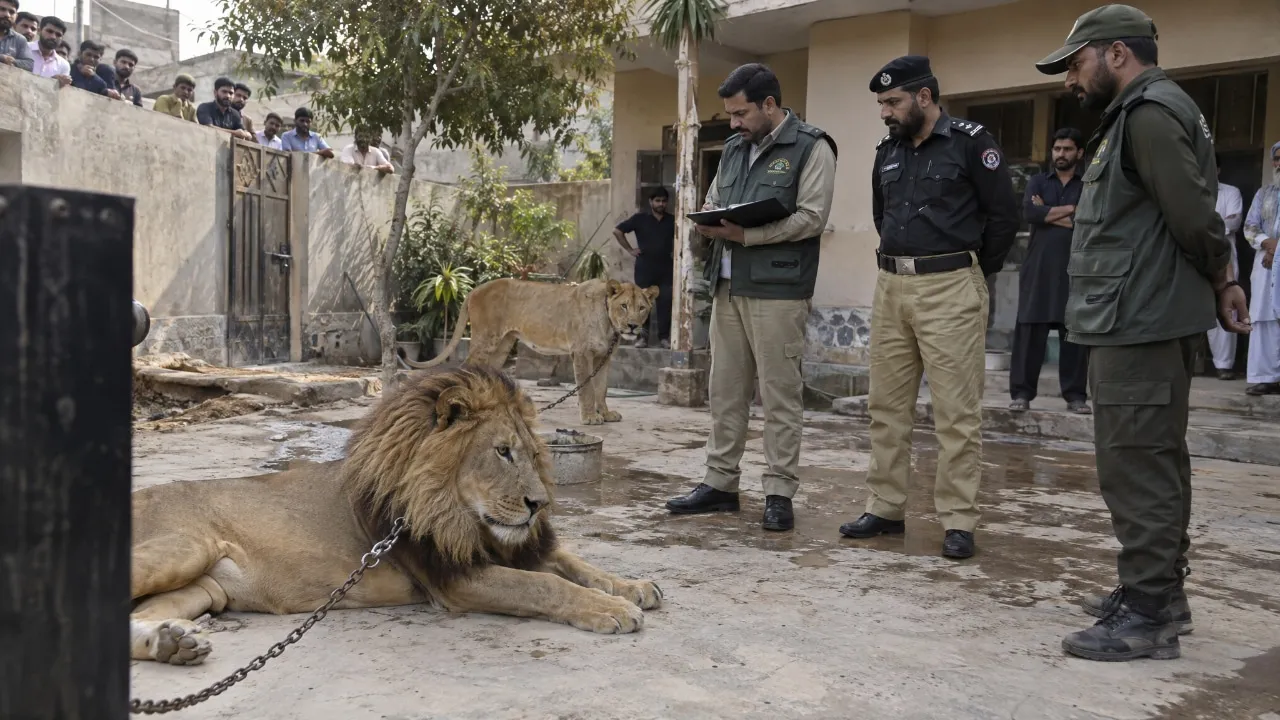
Law enforcement authorities in Rawalpindi have taken formal legal action against three individuals accused of illegally housing nine lions in unsafe conditions at a residential property. The investigation began after authorities reviewed digital footage circulating widely online, prompting a swift intervention by municipal and wildlife protection agencies. The property in question is situated in the Jhatta Pyal area along Chak Beli Road, a semi-urban locality where large wild animals are certainly not permitted to be kept in domestic dwellings.
The formal legal proceedings began following an official complaint lodged by Aamir Raza, who serves as the senior wildlife ranger and tehsil in-charge for Rawalpindi. Officials acted swiftly after the digital recording surfaced, showing the large predators kept in close proximity to human habitation without the necessary permits or secure containment infrastructure. The involvement of senior wildlife personnel highlights the gravity with which local authorities view the unauthorized possession of apex predators within residential neighborhoods.
How the Illegal Lion Operation Was Discovered
The discovery of the nine lions came to light purely through digital media channels when a video clip showing the animals began spreading across various platforms. The footage quickly grabbed the attention of online users and eventually reached the screens of local wildlife officials who monitor compliance with animal protection laws. Investigators quickly traced the source of the video to the residential property on Chak Beli Road, leading to the immediate dispatch of inspection teams to verify the contents of the viral recording.
According to the official first information report, the physical reality inside the property matched the disturbing scenes captured in the digital footage. Rangers and police officers found that the animals were subjected to conditions that violated every standard of animal welfare and municipal safety code. The reliance on digital evidence has become an increasingly common pathway for authorities to uncover wildlife crimes that are otherwise concealed behind private residential walls.
Details of the First Information Report and Violations
The first information report filed by the senior wildlife ranger outlines multiple severe infractions committed by the three accused individuals. Investigators documented that the lions were not kept in secure cages, which is a mandatory requirement for housing dangerous wild animals. Instead, the predators were left out in the open air while heavily restrained with chains, severely limiting their movement and causing acute distress.
Furthermore, the official document notes that the visual evidence captured one of the lions actively attacking a human being in the viral video. This alarming detail transformed the investigation from a routine regulatory check into a critical public safety inquiry. The FIR explicitly states that the accused parties have prima facie violated established Wildlife Department rules and regulations by failing to secure the animals properly.
Beyond the immediate physical dangers posed by the setup, the report highlights additional legal breaches associated with the digital circulation of the footage. The FIR notes that spreading videos of wild animals kept under such illicit conditions can also constitute a separate violation of wildlife laws and departmental regulations. Authorities are examining how the video was produced and distributed to determine the full scope of liability for those involved in the operation.
Public Safety Threats and Animal Cruelty Concerns
The decision to register a case was heavily influenced by the immediate danger the situation posed to the surrounding community. Keeping large predators outside secure, reinforced enclosures creates an unacceptable threat to public safety, with the clear potential to result in the loss of human life. Residents living near the Chak Beli Road property were unknowingly exposed to extreme hazards due to the presence of nine adult lions kept in such precarious restraints.
In addition to human safety risks, the physical state of the animals formed a central pillar of the criminal complaint. Wildlife experts and enforcement officers stressed that keeping wild animals chained in unsuitable conditions constitutes severe cruelty under the law. Lions require specialized diets, vast spaces, and rigorous veterinary care that cannot be provided in a standard residential home. The physical restraint by chains further compounds the psychological and physical trauma inflicted upon these apex predators.
Regulatory Framework and Next Steps in the Rawalpindi Investigation
The wildlife laws governing the Rawalpindi region strictly prohibit private citizens from keeping dangerous wild animals without explicit licensing and specialized infrastructure. The Wildlife Department maintains rigorous oversight to prevent the illegal trade, possession, and exploitation of protected species. Unauthorized private menageries present a persistent challenge for enforcement agencies, requiring constant vigilance and rapid response to community reports and digital evidence.
As the legal process moves forward, investigators are working to locate the three accused individuals and determine the current whereabouts of the nine lions. Municipal and wildlife teams coordinate to ensure that confiscated animals are transferred to authorized rehabilitation facilities or zoos equipped to handle large predators safely. The case serves as a stern warning against the unauthorized keeping of exotic wildlife within residential areas across the region.





