Production at Pakistan's Reko Diq copper-gold project could be postponed by two years to 2030, investors said, as they await improvements in Balochistan's security climate and a de-escalation of Middle-East tensions, Dawn reported.
The ongoing conflict in neighboring Iran and continuing security challenges in Balochistan have led investors to reconsider the original 2028 start date. Canadian miner Barrick Mining plans to restart full-scale development by mid-2027 after an internal review, though no formal statement has been issued yet.
Project management has kept all 700 permanent staff and about 2,000 contract workers on site, while allowing some third-party service contracts to lapse.
Workforce and Site Activity
All 700 permanent employees and roughly 2,000 contractual workers remain employed, with certain third-party service agreements allowed to expire. Research, administrative tasks and community-development initiatives continue on schedule.
Nearly $1 billion has been invested so far. The venture is deemed technically viable and stays a strategic priority for both Barrick and the government. External factors could cause further delays, but the project's fundamentals are unchanged.
Barrick Chairman John L. Thornton will travel to Pakistan later this month to attend the Pakistan Minerals Investment Forum 2026 in Islamabad.
Cost Impact of Delay Under Review
Financial impact estimates differ. One study forecasts an $8 billion to $10 billion cost escalation if work restarts within a year, with worsening security or delays beyond two years potentially making the project prohibitively expensive. A proposal also suggests a consortium of local firms acquire a minority stake.
Another estimate puts the delay-related cost rise at about 10 percent, or roughly $450 million to $900 million, noting a recent improvement in sentiment. Concerns were raised that only 30 to 35 percent of copper-gold output might be processed in Pakistan, with the balance shipped to the operator's Australian facility, limiting domestic value addition.
Barrick's Review Timeline
Barrick began a formal review of Reko Diq in February 2026, announcing a slowdown and extending its assessment through early 2027. At the Mining Forum Americas last month, the chief executive did not give a new construction schedule, saying security improvements were required before committing to a full build-out.
Barrick Mining holds a 50 percent stake. The other half is equally divided among the Balochistan provincial government and three state-owned Pakistani entities: Pakistan Petroleum Limited, Oil and Gas Development Company, and Government Holdings Private Limited.
Project Costs Rise to $9.1 Billion
Phase 1 investment has risen from $4 billion to $5.6 billion, while Phase 2 is expected to need another $3.5 billion, bringing total capital outlay to about $9.1 billion, up from earlier estimates of roughly $7 billion.
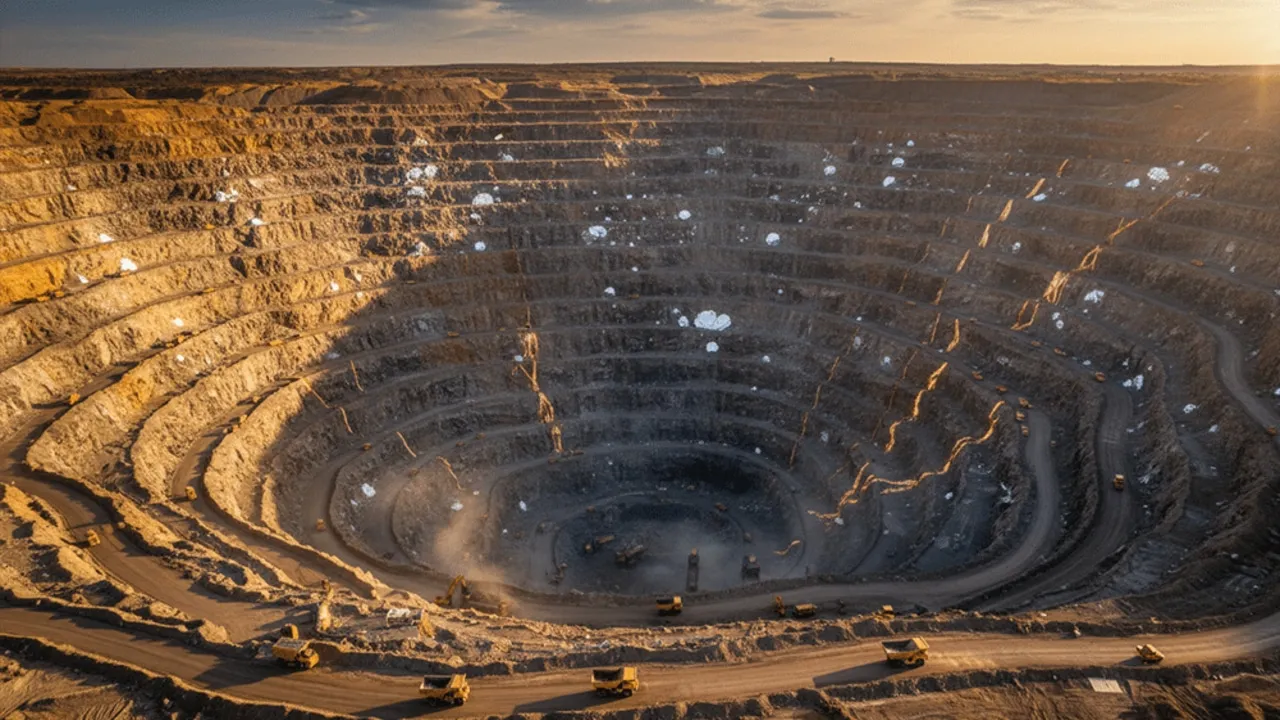
The design calls for a conventional open-pit mine and processing plant, producing high-grade copper-gold concentrate. Initial capacity is set at 45 million tonnes of ore per year, slated to double to 90 million tonnes after Phase 2.
The mine was originally planned for a 40-year life, but a revised feasibility study now estimates 37 years, accounting for higher throughput. Ongoing exploration could extend the lifespan to as much as 80 years.
Beyond export earnings and government revenue, the project is expected to create 7,500 jobs during peak construction and sustain around 4,000 permanent positions once operating. Assuming long-term commodity prices, projected free cash flow over 37 years is about $74 billion.