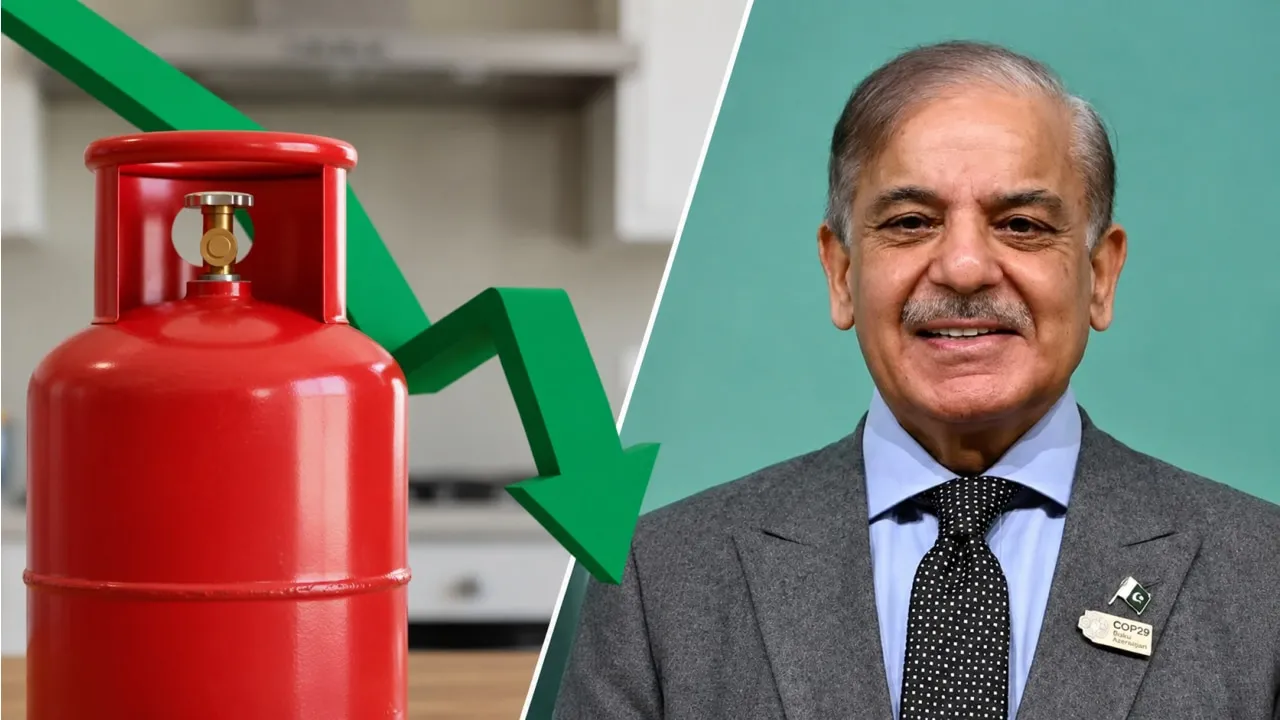
Pakistan is set to replace the current government-controlled LPG pricing system with a market-driven model that bases prices on import costs, while reserving financial aid for low-income users.
The proposal, now awaiting Cabinet approval, would stop OGRA's monthly price notices for both domestic and imported LPG from 1 November 2026. Under the new scheme, state-owned firms would handle bulk LPG imports and set a monthly base price.
Participants would include Pakistan State Oil (PSO), SSGC LPG Limited (SLL), PARCO Pearl Gas Limited (PPGL) and Pakistan LNG Limited (PLL). Their rates would reflect the actual cost of bringing the fuel into the country rather than OGRA's capped price.
The suggested formula would incorporate the Saudi Aramco Contract Price, import premiums, freight, insurance, incidental costs and applicable import taxes paid by PSO and/or SLL in the preceding month.
LPG Pricing to Shift to Import Parity
The Petroleum Division says the existing fixed-cost LPG pricing no longer matches import economics.
Today, OGRA determines maximum prices for producers, marketers and consumers using the Saudi Aramco contract price on an FOB basis plus a fixed margin of Rs. 35,000 per metric ton.
The division argues that this formula omits extra costs tied to imported LPG, such as premiums over the Saudi benchmark, shipping, insurance, port handling, terminal fees and other incidental charges. The regulator extended the mechanism, originally meant for locally produced LPG, to imports in June 2023, which the ministry says widened the gap between official prices and real import costs.
The proposal also highlights a fixed margin unchanged since 2018, despite diesel prices rising about 205 percent and the rupee losing roughly 155 percent of its value.
This gap has pushed market prices well above OGRA's ceiling. Between January and July 2026, average LPG prices at filling plants were Rs. 60 to Rs. 79 per kilogram higher than the official consumer price, peaking at Rs. 158 per kilogram in March, with premiums of 11 to 70 percent over the notified limit.
The Petroleum Division says consumers already pay market-reflective prices but lack protection from an enforceable regulatory framework.
New Fund to Support Low-Income LPG Consumers
A key element of the plan is the creation of a Producer-Price Differential Fund in the Public Account, which will collect the gap between the import-parity base price and the Saudi Aramco-linked producer price.
The monthly producer price will stay tied to the current Saudi Aramco CP on an FOB basis, adjusted for the propane-butane ratio. Domestic producers will receive this price, while the difference to the import-parity base price will be deposited into the fund.
Refineries and producers will collect and deposit the differential under the Public Financial Management Act, 2019, with audits by the Auditor General of Pakistan.
The accumulated amount is intended for targeted subsidies aimed solely at vulnerable LPG users. Households qualifying under the Benazir Income Support Programme (BISP) or the government-approved poverty-means-test (PMT) cut-off will be eligible.
The Petroleum Division will draft operational guidelines for the fund within a month, consulting the Finance Ministry and BISP, and will review the subsidy framework each year.
The arrangement seeks to separate commercial LPG pricing from social protection, letting market prices mirror import costs while providing aid to eligible families.
LPG Companies to Set Marketing Margins
Guidelines would let LPG importers and marketers decide their own marketing margins and freight charges, opening the downstream segment to competition.
The Competition Commission of Pakistan and OGRA would oversee prevention of collusion and other anti-competitive behaviour. Petroleum Levy, Federal Excise Duty, sales tax and other applicable taxes and levies will remain in force.
The proposal also calls for dissolving the LPG Pricing Committee, formed by the Federal Cabinet in 2017 to set prices later notified by OGRA. The committee's membership was expanded after a Lahore High Court order in March 2018 to include LPG trade association representatives and the Consumer Rights Commission of Pakistan.
The Petroleum Division believes the import-parity mechanism, based on published benchmarks and actual landed costs, makes the committee unnecessary. Its duties will shift to OGRA, while the ministry's role will be limited to announcing LPG product specifications for summer and winter each year.