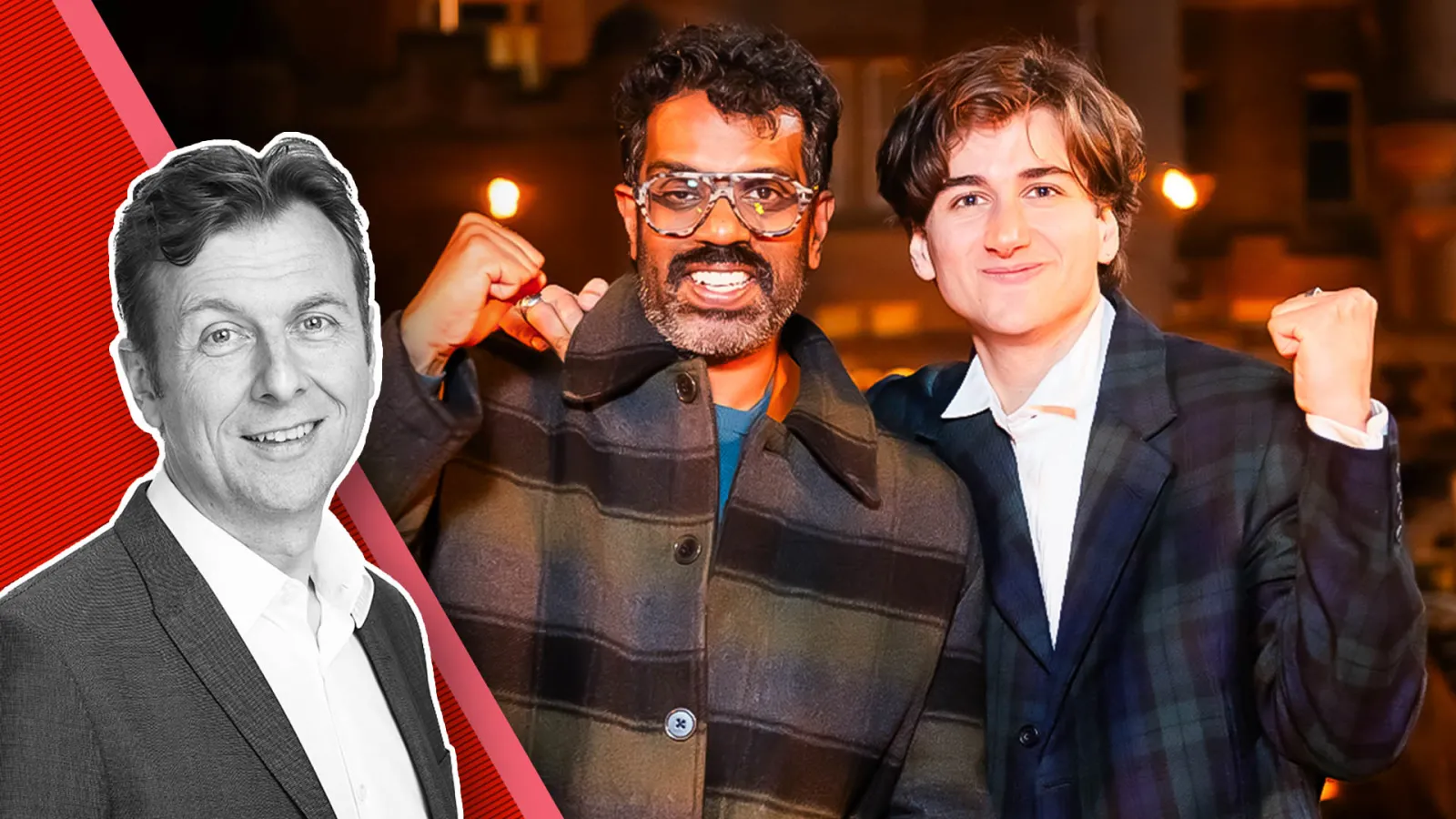
Romesh Ranganathan, joint winner of the Celebrity Traitors final, announced that his £41,500 prize will be given to Choose Love, a charity that supports refugees and displaced people, predominantly queer refugees.
The announcement came after host Claudia Winkleman asked contestant Sebastian Croft, "Who were you playing for?" Croft replied, "It's going to Choose Love," and added, "The money will be going to refugees and displaced people . . . Predominantly queer refugees and displaced people."
Ranganathan's response sparked immediate criticism from viewers who described the donation as "another £41,500 of taxpayers' money vanished into the arms of the anti-Israeli lobby." Critics argue that Choose Love, despite its charitable name, is a politically driven organisation that should not benefit from a licence-fee funded game show.
What Is Choose Love and Why Is It Controversial?
Choose Love is a UK-based charity that provides emergency accommodation, legal advice and mental-health support to refugees, with a focus on LGBTQ+ asylum seekers. The charity has publicly opposed the policies of the Israeli government and has campaigned for boycotts of Israeli products. This political stance has led some commentators to label it an "anti-Israeli lobby."
The controversy stems from the fact that the prize money comes from the BBC licence fee, a public charge paid by households across the United Kingdom. Critics argue that public funds should not be directed to organisations that take explicit political positions, especially those that could be seen as hostile toward a foreign government.
How Licence-Fee Funding Works for TV Game Shows
BBC licence-fee revenue finances a wide range of public-service broadcasting, including entertainment programmes such as Celebrity Traitors. When a contestant wins a cash prize, the amount is paid out of the programme's budget, which is ultimately sourced from licence-fee contributions.
There is no statutory requirement for prize-money recipients to donate to charities, but many celebrities choose to do so as a personal gesture. The choice of charity is left to the individual winner, and the BBC does not vet or endorse the selected organisation.
Public Reaction and Media Commentary
Social media users expressed disappointment, describing the moment as "the climax to The Celebrity Traitors final ... half the country groaning with despair." Some viewers accused the programme of a "political hijacking" after Myha'la Herrold raised concerns about unconscious bias and racism on the show, a point later echoed by host Ed Gamble.
Other commentators highlighted the broader issue of celebrity-driven charity selections on licence-fee funded programmes, questioning whether such donations align with the BBC's impartiality guidelines.
Background on the Celebrity Traitors Format
Celebrity Traitors is a reality-competition series in which celebrity contestants complete challenges and vote each other out. The final episode featured joint winners Romesh Ranganathan and Sebastian Croft. The series, filmed against a Highland backdrop, has been noted for its "jaunty air of adventure" but also for moments of "paranoid, narky contestants" as described by critics.
The show's format includes a dedicated welfare team for participants, a point that some critics called "demeaning" when juxtaposed with the political controversy surrounding the charity donation.
Implications for Future Licence-Fee Funded Charity Donations
The incident raises questions about whether the BBC will introduce stricter guidelines for prize-money charities. The corporation's editorial guidelines require impartiality, but they do not currently restrict personal charitable donations made by contestants.
Watch for statements from the BBC Trust or Ofcom regarding the handling of politically active charities in future programmes. Any policy change would likely be announced in the BBC's annual report or during a parliamentary hearing on broadcasting standards.
Practical Takeaways for Viewers
- If you disagree with the choice of charity, you can contact the BBC to raise concerns about impartiality.
- Licence-fee payers can monitor how their contributions are used by reviewing the BBC's annual financial statements, which detail spending on entertainment programming.
- Charities receiving high-profile donations may experience increased public scrutiny; donors should be aware of the political implications of their support.
While the debate continues, the £41,500 donation to Choose Love will proceed as announced, and the charity will allocate the funds according to its existing programmes for queer refugees and displaced people.