Roy Keane Defends Elliot Anderson After Marc Cucurella Clash
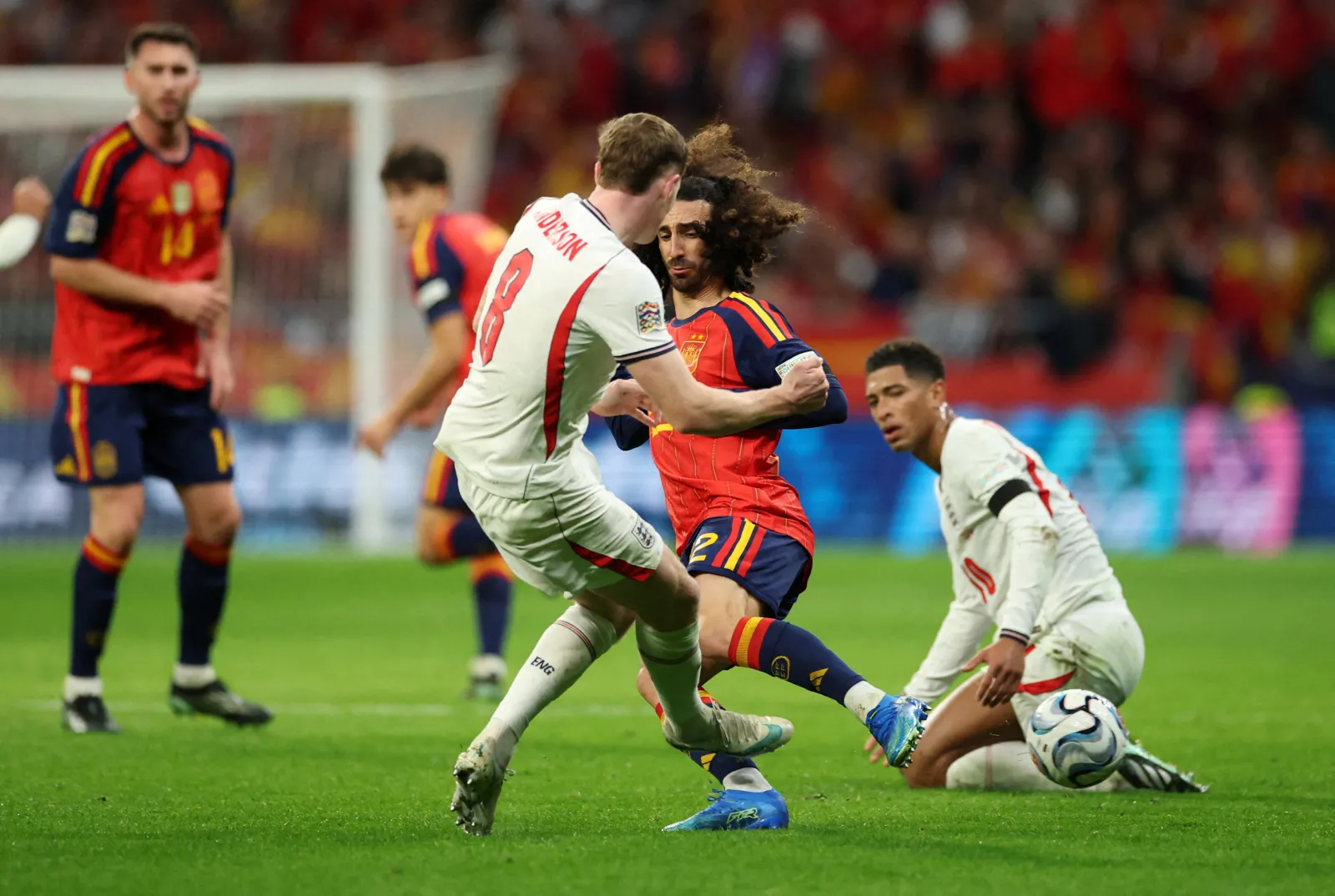
Manchester United legend Roy Keane saw Elliot Anderson live out his dream as England faced Spain in a high-stakes international fixture. The Manchester City midfielder played a superb ball to Harry Kane, who later won and converted a penalty to help drive his team forward. However, the passage of play drew intense scrutiny when VAR checked Anderson's follow-through, which took him directly into Spain full-back Marc Cucurella.
The incident sparked fierce debate among pundits and supporters alike regarding the physical nature of modern international football. While some viewed the contact as an unnecessary and aggressive collision, others defended the natural mechanics of executing a high-powered pass on the global stage. The debate highlighted contrasting views on physicality between former professionals.
Pundits Divided Over Follow-Through Incident
The clash between Elliot Anderson and Marc Cucurella triggered a sharp divide on television coverage as analysts reviewed the footage. Ian Wright stepped up to defend the midfielder during ITV's half-time coverage, arguing that the contact was an unavoidable byproduct of distributing the ball with sufficient force. The Arsenal icon pointed out the sheer distance of the pass and the required exertion.
Ian Wright said on ITV's half-time coverage: "Look how far he's passed that ball." He added: "He's got to put power into it so there's gonna be a little bit of follow-through." Despite this perspective, the studio remained split as other analysts offered a much more cynical interpretation of the midfield collision.
Roy Keane Claims Anderson Knew What He Was Doing
Roy Keane offered a characteristically blunt assessment of the incident, disagreeing entirely with the notion that the contact was purely accidental. The former Manchester United captain suggested that elite competitors often seize subtle opportunities to assert themselves physically against opponents during tight matches.
He said: "Anderson, he knows what he's doing." He further explained his viewpoint on the physical realities of top-flight competition, stating: "Sometimes in football you have a chance to make a pass but also put one on someone." This viewpoint resonated with fans who appreciate the combative edge of the sport.
Fan Reaction and the Role of VAR in International Fixtures
The Spain full-back was branded pathetic by England fans for his attempt to win a free-kick following the physical challenge. Supporters on social media and in the stands voiced frustration over how players react to minor contact, contrasting it with the historic physicality of the game championed by analysts like Roy Keane. The video assistant referee review added to the tension inside the stadium as officials checked whether the follow-through warranted further disciplinary action.
Ultimately, the match continued after the review, allowing the action to resume without altering the immediate outcome of the sequence. The incident served as a talking point throughout the remainder of the fixture, emphasizing the fine margins and heightened emotions involved when top European nations collide in competitive tournaments.
Background on International Rivalries and Midfield Battles
Fixtures between powerhouse nations like Spain and England invariably feature intense tactical battles across the pitch. Midfielders are tasked with dictating the tempo while simultaneously neutralizing opposing creative threats through disciplined positioning and physical presence. Incidents involving follow-throughs on passes frequently ignite controversy because referees must distinguish between legitimate momentum and deliberate intent to impede an opponent.
The evolution of video review technology has increased the scrutiny on every challenge, ensuring that off-the-ball contact or trailing legs receive immediate attention from match officials. Players operating in high-pressure environments must navigate these strict parameters while maintaining the competitive intensity demanded at the highest level of international competition.