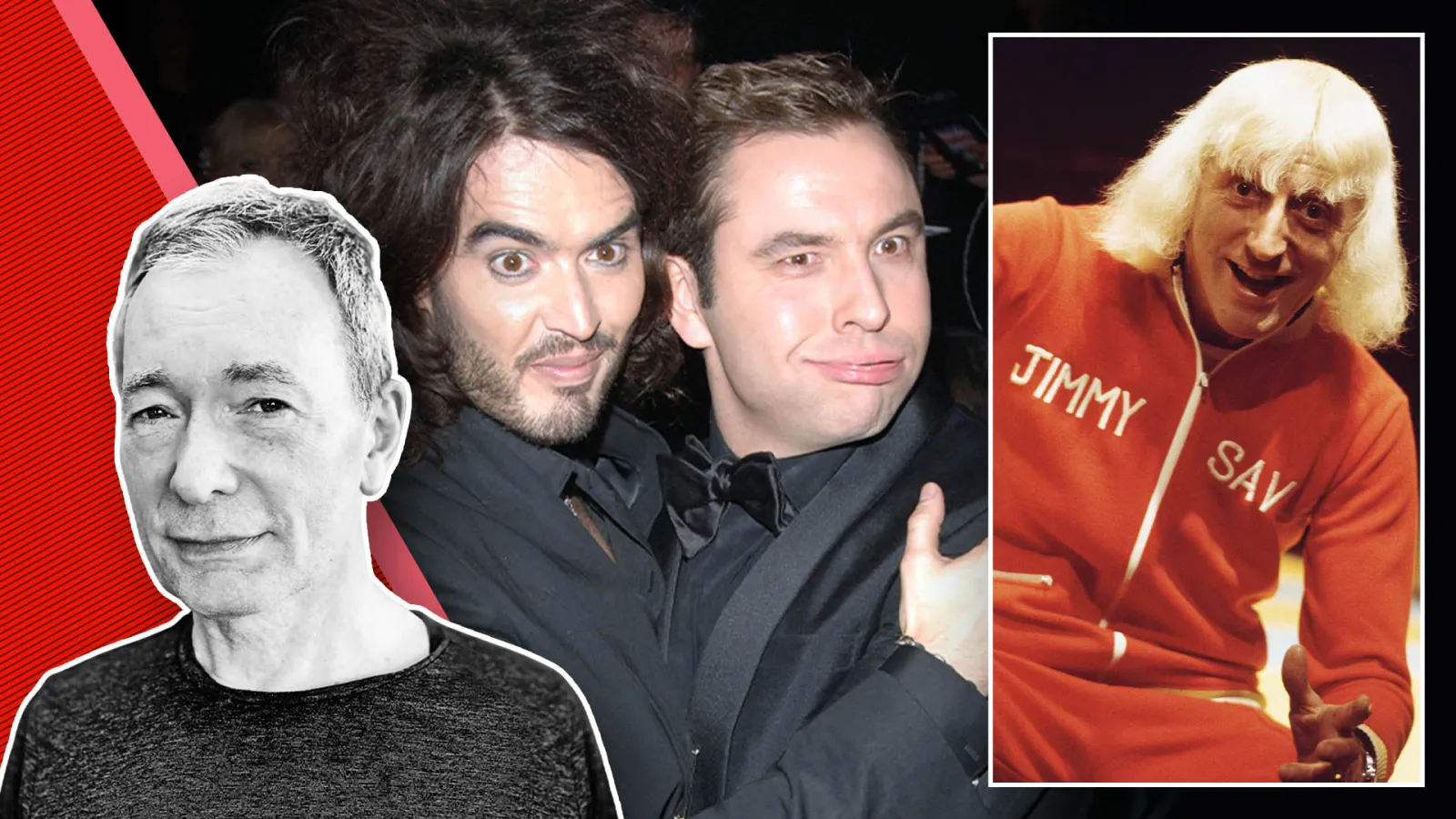
Russell Brand and David Walliams are being portrayed as modern-day equivalents of Jimmy Savile, with the author alleging a pattern of sexual misconduct and institutional protection that has now begun to unravel.
The piece argues that both entertainers have long histories of alleged predatory behaviour, that they were shielded by media organisations, and that recent legal and publishing actions signal a shift toward accountability.
What Allegations Are Made Against Russell Brand?
The author recalls several public confrontations involving Brand. In 2004, Bob Geldof allegedly called Brand a "c***" at the NME Awards, and later that year Rod Stewart reportedly challenged Brand at the GQ Men of the Year Awards for boasting about an encounter with his daughter Kimberly. The article quotes Stewart saying, "I never touched that girl," after Brand's claim that he had taken her out for an evening.
According to the author, Brand's conduct extended beyond these incidents. The piece cites a TV panel joke in which Brand allegedly referenced a ten-year prison term for rape, and mentions a 2008 incident where Brand and Jonathan Ross purportedly made harassing phone calls to actor Andrew Sachs about a fictitious sexual relationship with Sachs's granddaughter.
Finally, the author states that Brand is currently serving a ten-year sentence for rape and sexual assault, describing this as "a ten-year stretch for rape and sexual assaults."
What Allegations Are Made Against David Walliams?
The article links Walliams to Savile by noting that Walliams once placed a letter to "Jim'll Fix It" on the back page of his autobiography, and that he has been rumored to be a "hunter of under-age girls." The author also claims that Walliams's books are being withdrawn by his publisher and that he is unlikely to appear in the changing rooms of "Britain's Got Talent" anytime soon.
Walliams is described as having a "preference for girls of tender years," and the piece suggests that his charitable work masks a darker predatory pattern.
How Does the Author Connect Both Men to Jimmy Savile?
The author argues that both Brand and Walliams share a "Savile-style" trajectory: early fame, alleged abuse of vulnerable people, and protection by powerful media institutions such as the BBC. The piece cites a post-mortem report on Savile that said he "hid in plain sight" and used his celebrity status to gain "uncontrolled access to vulnerable people across six decades."
According to the author, the BBC and other broadcasters "looked the other way" when Brand, Walliams, and Savile were "demonstrating to the world how vile they were," allowing them to continue their alleged misconduct.
What Recent Developments Are Highlighted?
The article points to two concrete outcomes: Brand's alleged imprisonment for a ten-year term and the withdrawal of Walliams's books by his publisher. It also notes that a "handful of brave women" have come forward to share their experiences, despite threats and legal pressure.
The author emphasizes that these women's testimonies are making it easier for other victims to be heard, suggesting a growing momentum toward accountability for the alleged offenders.
Why Does the Author Believe This Matters?
The piece argues that the alleged protection of Brand and Walliams by media executives mirrors the historic shielding of Jimmy Savile, and that exposing this pattern is essential to prevent future abuse. The author contends that the public, broadcasters, and the legal system must no longer tolerate such behaviour.
By drawing parallels between Brand, Walliams, and Savile, the author seeks to highlight systemic failures and to call for continued scrutiny of powerful entertainers who may exploit their platforms.
What Are the Next Steps According to the Article?
The author suggests that the legal process for Brand is ongoing, with the ten-year term indicating a severe penalty. For Walliams, the withdrawal of his books signals a potential decline in his commercial standing, and the author implies that further professional repercussions are likely.
Beyond the individual cases, the article calls for broader cultural and institutional change, urging media organisations to stop "looking the other way" and to hold high-profile figures accountable.
Overall, the author frames the situation as a turning point where "the sons of Savile will not go unpunished," urging continued vigilance and support for survivors.