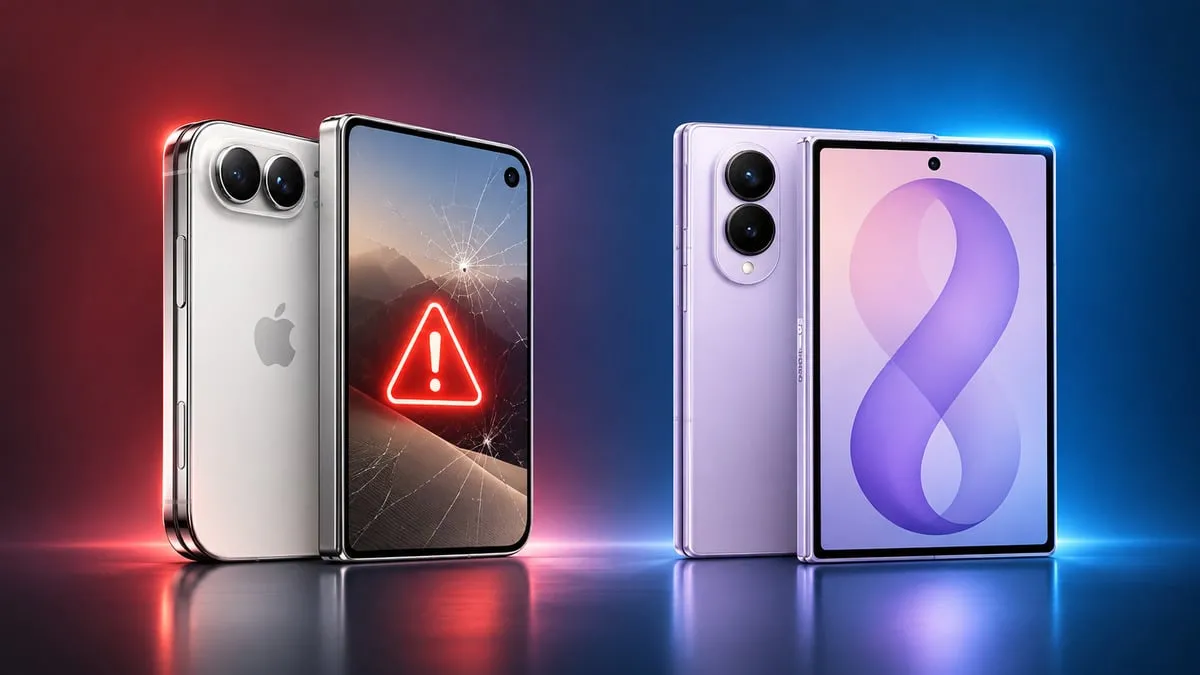
Samsung experienced a notable market shift in South Korea as consumer interest moved toward its foldable devices. Galaxy Z Fold8 sales increased by more than 20% in South Korea during the week following the launch of Apple's first foldable smartphone, the iPhone Duo. Industry watchers noted that the timing coincided with consumer discussions surrounding early hardware complaints.
According to reports from South Korea, the increase came as some iPhone Duo buyers reported problems with the device's inner folding display, raising concerns about its durability. While market observers pointed to these hardware troubles as a factor for the shift, official confirmation remains limited regarding consumer motivations. Industry sources suggest that these issues may have encouraged some potential buyers to choose Samsung's foldable instead. However, there is no confirmed evidence directly linking the reported display problems to Samsung's sales increase.
Why iPhone Duo Display Problems Caused Concern
Apple entered the foldable device sector with high expectations, but early hardware performance drew immediate scrutiny from technology analysts. Apple started shipping the iPhone Duo on October 23, but some early buyers reported cracks and bright lines appearing on the inner display. Such structural flaws are particularly sensitive for foldable screens, which rely on flexible glass and complex hinge mechanisms to withstand repeated bending.
The company acknowledged that a small number of devices were affected and offered replacements to customers who experienced hardware failures. Reports also suggested that Apple had relaxed some quality assurance requirements to increase production ahead of the launch. These manufacturing adjustments reportedly contributed to the initial batch of defective screens reaching consumers in the retail market.
How Galaxy Z Fold8 Sales Responded in South Korea
The domestic market reaction in South Korea provided immediate financial relief to Samsung during a competitive period. The Galaxy Z Fold8's sales in South Korea increased by more than 20% between October 23 and 29 compared with the previous week. This rapid growth demonstrated strong local demand for mature foldable technology when rival products faced early criticism.
Samsung had already recorded a similar increase in September, when Galaxy Z Fold8 sales rose approximately 10% week over week following Apple's announcement of the iPhone Duo. The two devices compete in the foldable smartphone market, although Samsung's model is considerably cheaper in South Korea. The latest reports suggest that some consumers who had delayed purchasing a foldable phone while waiting for Apple may now be considering Samsung's alternative.
Samsung Extends Its Foldable Phone Upgrade Program
To capitalize on the momentum shift, leadership adjusted corporate retail strategies to capture undecided shoppers. Samsung is extending enrollment in its New Galaxy AI Subscription Club until November 30, one month beyond its original deadline. The program allows customers to purchase eligible Galaxy foldable phones and receive a guaranteed portion of their original value when upgrading after one, two, or three years.
The subscription framework covers multiple high-end models currently available to the public. It covers the Galaxy Z Fold8, Galaxy Z Fold8 Ultra, and Galaxy Z Flip8. Customers choosing the one-year plan can receive a guaranteed buyback value of 50% of Samsung's reference price when returning an eligible device. The two-year plan guarantees 40%, although Galaxy Z Flip8 customers can receive 50%. Meanwhile, the three-year plan provides a guaranteed residual value of 25%.
Trade-in Incentives and Automated Kiosks
Retail operations expanded beyond traditional storefronts to make hardware transitions easier for existing smartphone users. Samsung is also offering additional trade-in benefits through automated Mintit ATM kiosks. Eligible customers who return their old smartphones through these kiosks during November can receive an additional $75 in trade-in value. This allows customers to return their devices without visiting a traditional retail store.
These automated stations handle device diagnostics and immediate valuation without requiring staff assistance. By reducing friction in the trade-in process, the manufacturer encourages owners of older handsets to upgrade before the calendar year concludes. The promotion works in tandem with the subscription club to lower the financial barrier of adopting expensive folding screens.
Samsung Announces Additional Year-End Offers
Marketing efforts extended past trade-ins into broader retail campaigns designed to capture holiday shoppers. Samsung is also running its Galaxy End of the Year Fiesta promotional campaign until December 31. The campaign includes additional in-store shopping benefits and other incentives for customers purchasing eligible Galaxy devices. The company is using these offers to attract more customers during the final months of the year.
These seasonal promotions target retail buyers who traditionally purchase consumer electronics during the winter holiday period. Bundle discounts and financing incentives complement the core product lineup to maintain sales volume against competing technology brands. Retail analysts monitor these year-end figures to gauge long-term consumer adoption rates for flexible display hardware.
Global Sales Performance and European Growth
Beyond the domestic market in South Korea, international sales figures indicate steady demand for Samsung hardware. Samsung's foldable smartphones have also recorded stronger sales in Europe. According to an earlier report, combined sales of the Galaxy Z Fold8 and Galaxy Z Fold8 Ultra were 45% higher than those of the previous-generation Galaxy Z Fold7. The latest figures suggest Samsung is maintaining demand for its foldable devices despite Apple's entry into the market.
However, market analysts advise caution when interpreting regional data points. The reported 20% increase applies specifically to Galaxy Z Fold8 sales in South Korea during one week. It does not represent worldwide sales growth. It also remains unclear how much of the increase resulted from concerns about the iPhone Duo, Samsung's lower pricing, or its promotional offers.