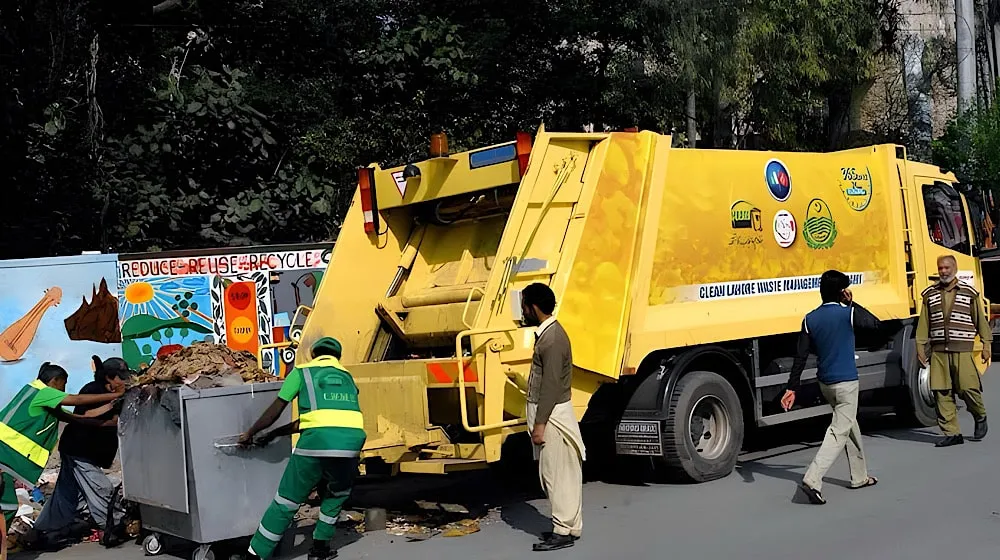
Surprise inspections of the Suthra Punjab Programme by the Punjab Chief Minister Inspection Team led to the discovery of major operational and administrative flaws at the Lahore Waste Management Company, with officials advising a special audit to review fuel use, vehicle mileage, and spending on machinery repairs.
The inspection document filed by the CMIT pointed out gaps in vehicle upkeep logs, clashes between workshop paperwork and the vehicle tracking network, and a high count of broken-down vehicles.
These discoveries led the Punjab chief minister to instruct the administrative department to fix the problems and implement corrective measures, focusing heavily on a special audit of LWMC.
The Auditor General of Pakistan reportedly requested the swift deployment of an audit crew to inspect the firm's fuel usage, mileage, and maintenance costs.
Discrepancies in Vehicle Tracking Raise Questions
A primary finding in the inspection report involves contradictions between the vehicle tracking network and paperwork kept at LWMC workshops.
While visiting the firm control room, the inspection crew checked live locations of multiple vehicles, including loaders, compactors, containers, washers, and mechanical sweepers.
Units that were reportedly parked at workshops for repairs for around 15 days appeared as nonreporting on the tracking network for roughly two months, according to sources.
Inspectors could not get an explanation for the gap between the stated workshop stay and the tracking duration, leading the CMIT to demand a reconciliation of both record sets.
Vehicles Remain Nonfunctional for Months
The inspection crew also reviewed units parked at workshops and the Outfall Road and Thokar parking yards, discovering that certain vehicles stayed broken down for months.
The Deputy Chief Executive Officer of LWMC told the crew that the firm handled its own vehicle servicing and repairs.
The document also notes that multiple unserviceable vehicles sat in workshops and parking yards.
LWMC representatives explained that the prior firm, Al Burak, handed over most of these vehicles in 2021.
The Deputy CEO added that the predecessor firm removed Electronic Control Modules, making the units inoperable.
LWMC staff told the inspection crew that 291 vehicles had been suggested for auction. They stated that court cases involving global contractors previously delayed the auction, but the issue was recently resolved.
The inspection report advises speeding up the sale of written-off vehicles. Keeping unserviceable machinery for a long time also brings up questions about financial impacts, asset values, repair costs, and storage circumstances.
Maintenance Records Still Being Kept Manually
Another issue noted by the CMIT concerns the lack of a computerized network to log and track vehicle upkeep.
While checking workshops and parking yards, the crew discovered that paperwork regarding repairs, servicing, and engine oil changes was handled by hand.
No digital or computerized vehicle upkeep tracking network existed.
The lack of a central digital file could complicate efforts to verify complete upkeep histories for individual units, compare repair bills, spot recurring mechanical problems, and check spending against actual work completed.
Given these flaws, the CMIT advised setting up a central Vehicle Maintenance Management System to track unit-specific logs for repairs, servicing, oil changes, spare parts, and related expenses.
Fuel Consumption and Repair Bills Under Scrutiny
The suggested special audit serves as the main administrative proposal from the inspection.
The CMIT explicitly requested a review of LWMC mileage, fuel use, and spending on repairs and upkeep.
Along with the special audit and a digital upkeep network, the CMIT advised the Suthra Punjab Authority to set up an active monitoring system to prevent potential fuel theft and check spending on vehicle repairs.
Sources informed ProPakistani that the chief minister instructed the administrative department to resolve the findings and advice in the inspection document and take required steps to fix the noted flaws.