State authorities in Pakistan are setting up a $2.25 billion lithium-ion battery production plant in Rawalpindi. A factory operated by the military-affiliated Margalla Heavy Industries Limited should start output within six to eight months after state approval of a dedicated sector policy.
Chinese producers and a domestic private investor participate in the venture, and workers have already finished building the plant and installing machinery. Engineering Development Board chief executive Hamad Ali Mansoor stated that the plant waits on state clearance before manufacturing begins.
The planned production site sits at Heavy Industries Taxila within Rawalpindi district. Margalla Heavy Industries Limited builds military hardware alongside drones, electric buses, two-wheelers, and battery energy storage units at this location.
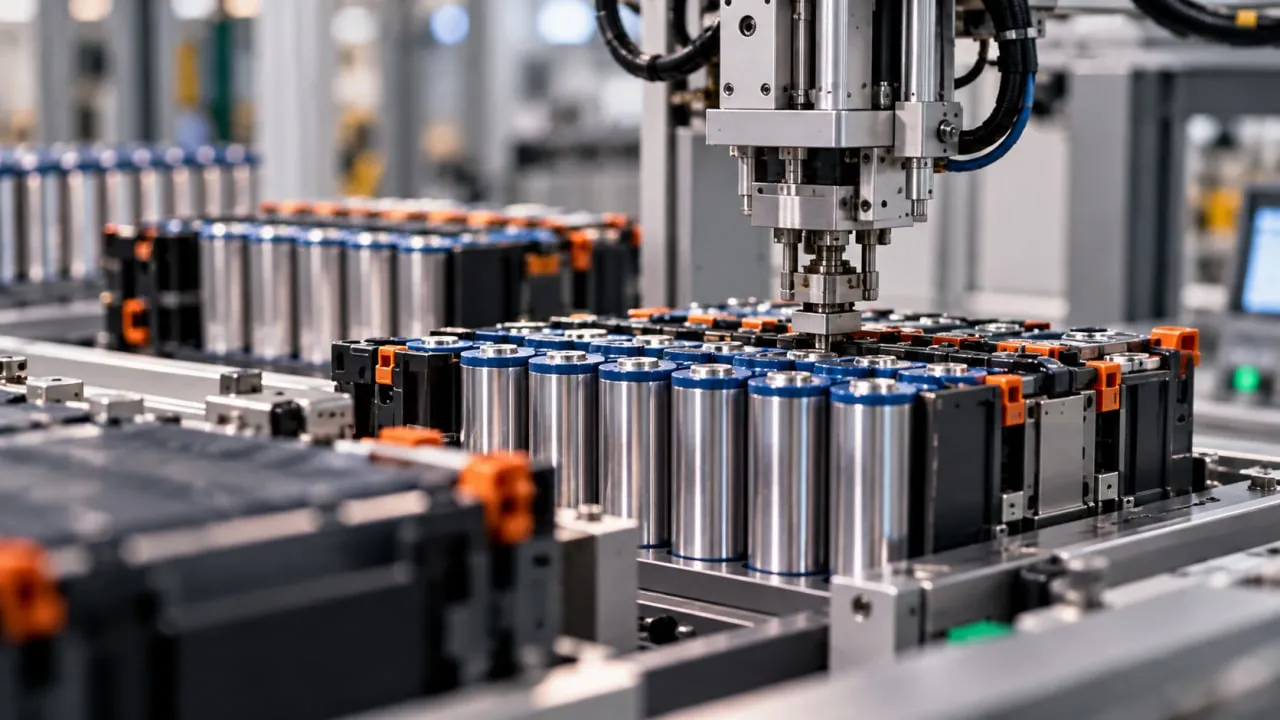
Agreements for the initiative were finalized in July with a major Chinese firm and a local backer. Mansoor explained that the plant will build lithium-ion cells, starting at an output level of 200 to 300 megawatts before expanding to an annual goal above 1,000 megawatts.
Battery Demand Could Reach 100,000 MW
Pakistan aims to establish domestic battery production as needs for electric transport and energy storage grow. The Engineering Development Board calculates that requirements for battery energy storage units might hit 100,000 megawatts by June 2030, based on economic expansion rates.
Mansoor noted that a 5 percent economic growth rate or higher pushes demand to 100,000 megawatts, whereas growth under 3 percent restricts requirements near 80,000 megawatts. Homes, businesses, factories, and electric vehicles including two-wheelers, buses, and trucks make up this anticipated need.
Pakistan Plans Four to Five Gigafactories
Board projections show grid stabilization alone demands 3,000 to 5,000 megawatts of battery storage. Satisfying total national requirements could demand four to five gigafactories, where each facility runs between $1 billion and $1.25 billion in costs.
Officials drafted a lithium battery production policy, sending it to the Ministry of Industries in March while it waits for authorization. The strategy outlines four primary plants, with three placed across Punjab in Lahore, Faisalabad, and Rawalpindi divisions, plus another in Karachi.
Government Policy Awaits Approval
The draft policy mandates that battery makers export a set portion of their output, though Mansoor withheld specific targets prior to official policy endorsement. He mentioned the framework adopts global safety and operational benchmarks.
This initiative follows Prime Minister Shehbaz Sharif endorsing the Automotive and Auto Parts Manufacturing Policy 2026 to 2031. That broader framework currently awaits International Monetary Fund review regarding tax breaks and possible revenue effects. The board anticipates the vehicle policy will boost storage demand as the nation transitions from foreign fuel to electric transport.
Pakistan Seeks to Replace Imported Components
Mansoor reported that Pakistan presently assembles roughly 3,000 to 4,000 megawatts of batteries and associated parts like motors, controllers, and chargers. Even so, the nation relies on foreign imports and wants to build domestic fabrication lines to lower expenses and build up the engineering sector.
Mansoor stated that authorities intend to handle full manufacturing of these parts domestically by next year. The scheduled battery plants should aid domestic output for electric cars and power storage while opening doors for selling manufactured cells abroad.