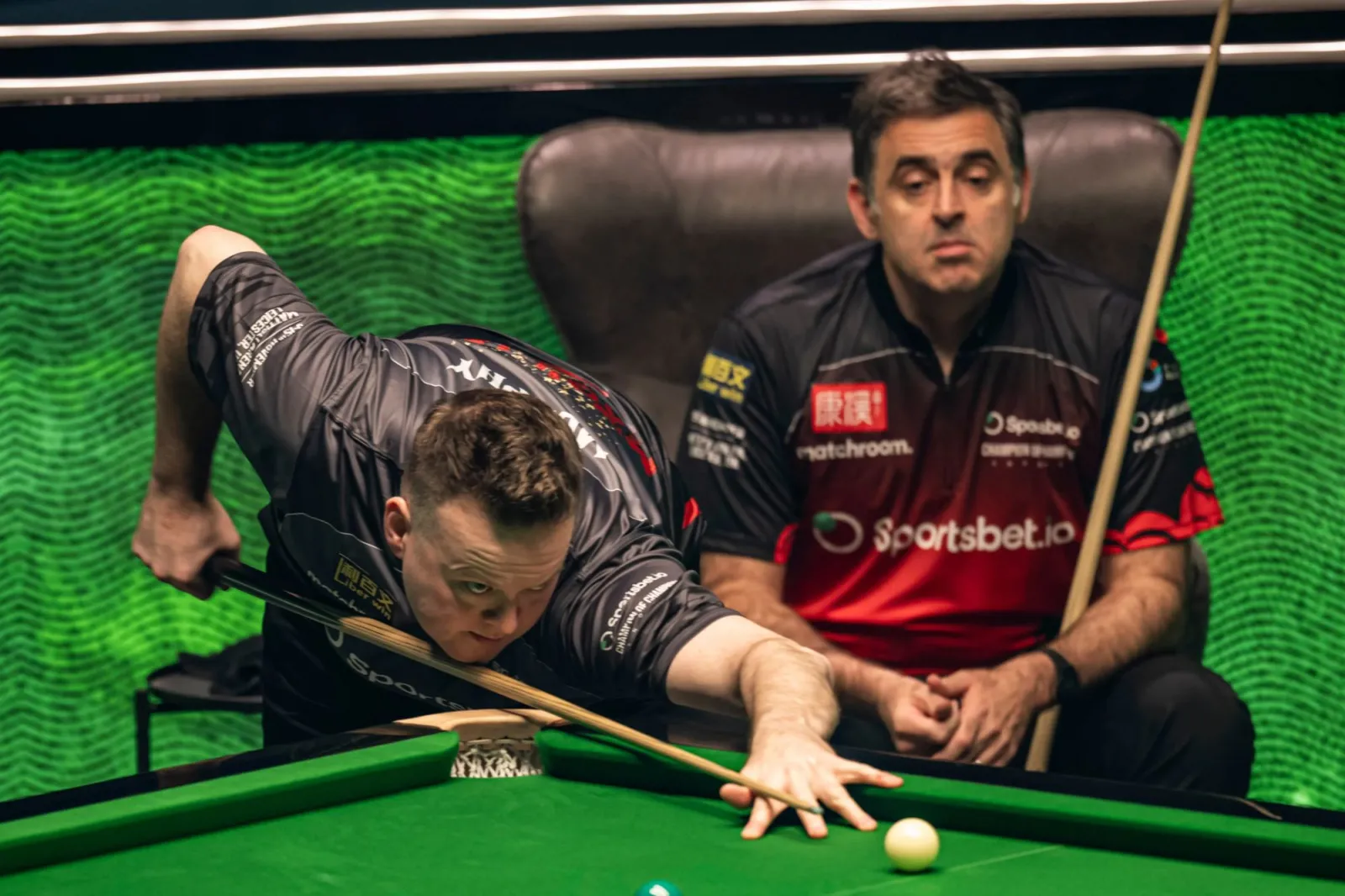
Shaun Murphy has revealed his theory as to why Ronnie O'Sullivan may have lost his fear factor.
What Happened at the Champion of Champions in Leicester?
The Rocket, a seven-time world snooker champion and the most famous man to take to the felt, was beaten by Murphy in the group stage of the Champion of Champions in Leicester yesterday. The Harlow potter completed an astounding whitewash of O'Sullivan as he ran out a 4-0 winner. Murphy's highest break of the match was only 68, but it was enough to outdo a struggling O'Sullivan.
How Does Their Head-to-Head Record Compare?
Murphy still trails the Rocket in their head-to-head record by 5-15 since their first face-off in 2005. The long-standing rivalry has seen O'Sullivan dominate most encounters, but the recent result adds a new dimension to the narrative, suggesting that the balance of power may be shifting.
Why Is O'Sullivan Struggling This Season?
O'Sullivan has struggled to hit his usual heights with the cue this season. His best finish was a run to the semi-finals in the Wuhan Open when he was beaten 6-3 by eventual tournament winner Chang Bingyu. Analysts note that his scoring average has dipped and his safety play has become less consistent, factors that younger opponents can exploit.
Murphy's Theory: A Generational Shift
Murphy believes that O'Sullivan may have lost some of his fear factor on the snooker circuit due to the influx of fresh talent. He said: "I think if there's any fear factor gone, I think it's probably a generational thing.
"I think maybe for the younger kids who haven't experienced the pain of what he can do to you, I think that might be the case.
"I think if you've not experienced that, if you're one of the new young kids, you go: 'Oh, there's Ronnie O'Sullivan, that's great, but come on, let's get on for a match'.
"Players of my generation, and a few floating around since, have had some good hidings off Ronnie O'Sullivan over the years and you never forget a good hiding.
"Even in that match, you're conscious that he's missed a couple of balls over distance, but he could spark into life.
"It's only while he adapts to the table and, as the other player, you've got to go: 'Right, I've got a chance here while he's not adapted to the playing conditions'.
"I need to strike while the iron's hot."
Background: O'Sullivan's Legacy and the Rise of New Talent
Ronnie O'Sullivan turned professional in 1992 and quickly became known for his rapid playing style and prolific break-building. Over three decades he amassed seven world titles, 39 ranking titles and a reputation for intimidating opponents with his sheer skill. Historically, younger players have spoken of the "O'Sullivan factor" - the psychological edge he held simply by being on the table.
In recent years, the professional tour has seen a surge of younger players from Asia, Europe and the UK breaking through. The Wuhan Open, for example, highlighted the emergence of Chinese talent such as Chang Bingyu, who defeated O'Sullivan in the semi-finals. This influx has increased competition for ranking points and created a more dynamic environment where established stars must constantly adapt.
How the Champion of Champions Tournament Works
The Champion of Champions is an invitational event that gathers winners of major tournaments from the previous season. It is played in a group-stage format followed by knockout rounds. Matches are best of seven frames in the group stage, making a 4-0 whitewash a decisive result. The tournament is held annually in Leicester, England, and carries significant prize money and prestige, often influencing player confidence heading into the season's ranking events.
Impact on the Snooker Community
The result and Murphy's comments resonate with several stakeholder groups:
- Young professionals: The suggestion that the "fear factor" is waning may embolden emerging players to play more aggressively against veterans.
- Veteran players: Established stars may need to re-evaluate their mental preparation and adapt to a landscape where reputation alone no longer guarantees psychological dominance.
- Fans and broadcasters: A shift in power dynamics can increase viewership interest, as matches become less predictable.
- Coaches and academies: Training programmes may place greater emphasis on mental resilience and adaptability rather than relying on the intimidation factor of legendary opponents.
What Comes Next for O'Sullivan and Murphy?
O'Sullivan has not publicly responded to Murphy's theory, but his upcoming schedule includes the World Grand Prix and the UK Championship, where he will face a mix of seasoned and rising players. Murphy, meanwhile, will look to build on his Leicester performance as he prepares for the upcoming ranking events, hoping to convert the confidence from a 4-0 win into deeper tournament runs.
Practical Takeaways for Readers
For casual fans, the key point is that snooker is entering a phase where legacy and reputation are being tested by a new wave of talent. For aspiring players, Murphy's comments underline the importance of studying opponents' recent form rather than relying on historic reputation.
For bettors and analysts, the diminishing "fear factor" suggests that odds on matches involving O'Sullivan may need recalibration, especially when he faces younger, in-form opponents.
Overall, the sport's evolution reflects broader trends in professional competition: talent pipelines, globalisation, and the ever-present need for mental agility.
SUN VEGAS WELCOME OFFER: GET UP TO £100 BONUS





