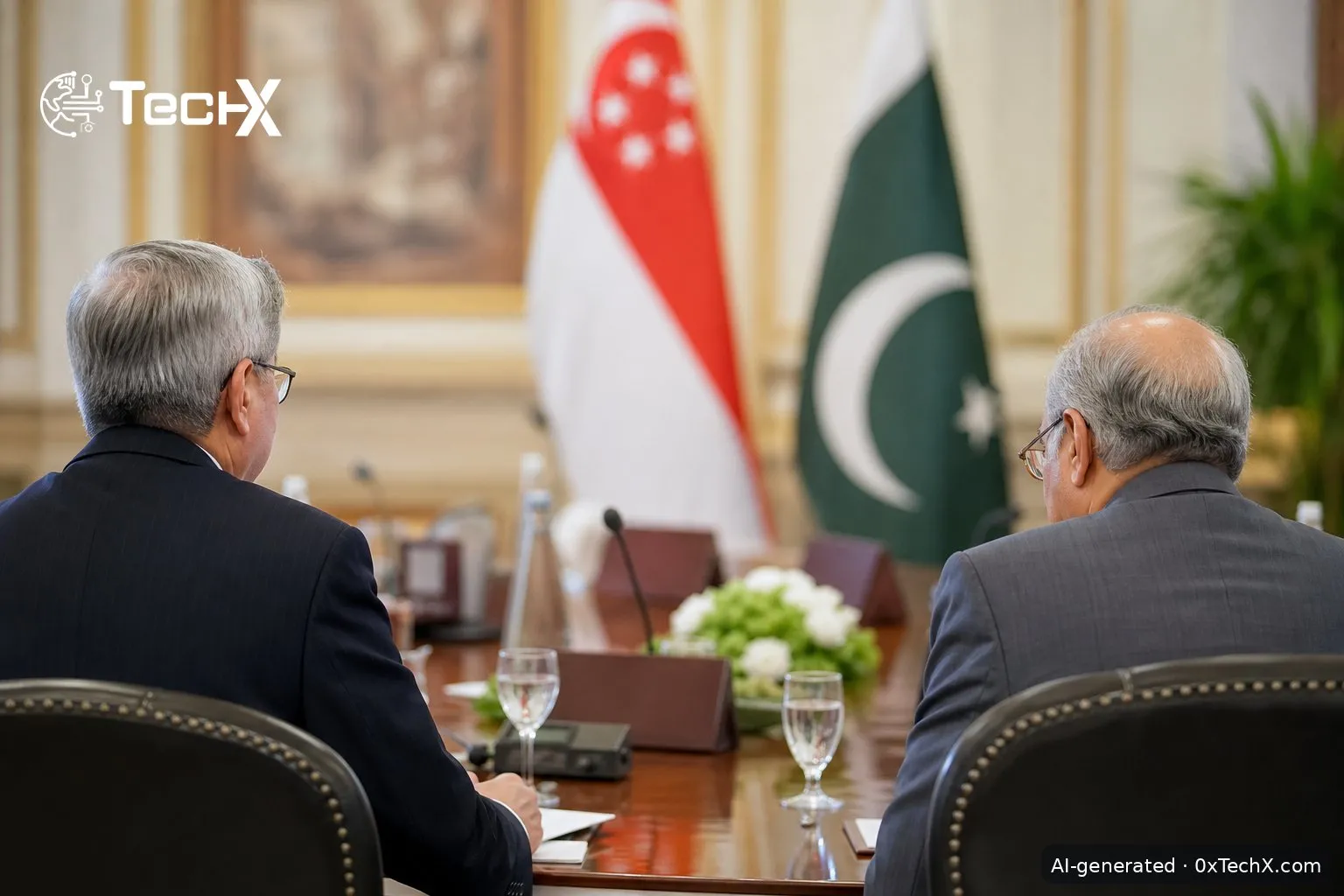
Singapore Foreign Minister Dr Vivian Balakrishnan traveled to Islamabad on 30 October 2026 for high-level discussions with Deputy Prime Minister and Foreign Minister Ishaq Dar. This marked the initial visit by a Singaporean foreign minister to Pakistan in over twenty years, with both nations committing to expand commercial and investment ties between their corporate sectors.
Sixty Years Of Diplomatic Relations
Both countries are celebrating six decades of diplomatic ties, though historical economic exchange has lagged behind political goodwill, and past negotiations for a free trade agreement failed to yield a pact. This trip aimed to alter that dynamic.
Dar conceded that economic collaboration has not matched the strength of bilateral diplomacy, noting that economic diplomacy has remained a top priority since he took office at the Foreign Office, and voiced optimism that tighter integration could elevate relations.
Despite strong diplomatic ties, bilateral commerce figures stayed below their true capacity, prompting both sides to agree on the necessity of substantial growth.
Digital Economy And Fintech Priorities
The tech sector saw its most promising development when both governments placed the digital economy and financial technology firmly on the agenda. Officials evaluated methods to boost reciprocal commerce and investment while broadening cooperation into infrastructure, logistics, small and medium-sized enterprises, and services.
Singapore stands out as a premier global fintech center, hosting numerous digital finance firms and an open regulatory framework. Meanwhile, Pakistan maintains a rapidly expanding yet underserved digital banking market, where the State Bank of Pakistan has cleared five digital retail banks with three currently operational. Closer collaboration with Singapore could supply capital and expertise to speed up this growth.
Both nations reviewed prospects in financial technology, the digital economy, and food commerce, with Pakistani businesses having joined the Singapore Fintech Festival, while officials pointed to halal products as another avenue for growth.
For local startups and digital banks, official backing provides a clear channel for Singaporean venture capital and established firms to view Pakistan as a viable market. Pakistani companies have also engaged with the Pakistan Stock Exchange regarding fintech listings.
Artificial Intelligence And Skills
Discussions extended past financial markets. Dar mentioned that both parties explored avenues for joint work in education, research, digital technology, and artificial intelligence, while also committing to advance human resource development, agriculture, and climate initiatives.
Balakrishnan stressed the importance of linking small and medium-sized enterprises across South Asia and Southeast Asia while reviewing sectors like carbon markets, with both governments agreeing to foster joint ventures in artificial intelligence, digital technologies, farming, and skills training.
Skills transfer represents another key area, as both administrations urged the swift finalization of agreements between Singapore's Institute of Technical Education and Pakistan's National Vocational and Technical Training Commission regarding skills training. Pakistan features a large base of young tech talent but restricted access to advanced vocational instruction, making partnerships with Singaporean institutions valuable.
Direct Flights And Connectivity
A practical measure that could aid Pakistani businesses involves potential air links. The leaders talked about resuming direct flights between Pakistan and Singapore to ease business travel and personal connections. Travel currently requires a stopover, raising costs and time for cross-border commerce.
Trade Office Reopening
A concrete action was announced as Dar confirmed the reopening of Pakistan's Trade and Investment Office at the High Commission in Singapore, highlighting Islamabad's focus on business-to-business relations. This branch will act as a primary contact point for Singaporean investors targeting Pakistan and local exporters aiming for the Singapore market.
Dar proposed that Pakistan's Board of Investment collaborate with its Singaporean counterpart to pinpoint investment targets and foster corporate partnerships.
The ASEAN Dimension
Broader strategic goals were also addressed, including multilateral cooperation and Pakistan's deeper involvement with ASEAN, specifically regarding Singapore's upcoming chairmanship of the block in 2027.
ASEAN comprises ten Southeast Asian economies with a collective gross domestic product near $3.6 trillion. Pakistan has sought closer ties with the bloc to diversify exports and draw investment, positioning Singapore as a key partner for Islamabad.
For Pakistan's tech industry, ASEAN connectivity offers entry to a consumer base of 680 million people already accustomed to mobile payments and digital commerce. Access through a Singaporean bridge presents significant potential.
Memorandum Of Understanding
The sole formal pact signed during the trip addressed disaster management, involving a memorandum of understanding between Pakistan's National Disaster Management Authority and the Singapore Civil Defence Force. This continues a tradition of Singaporean assistance during crises, following relief provided after the 2022 floods and donations from the Temasek Foundation during the pandemic.
Fintech, digital economy, and artificial intelligence initiatives remain under discussion without formal agreements signed yet, though the high-level meeting signals a readiness from both administrations to proceed.
Frequently Asked Questions
What did Singapore and Pakistan agree on in the October 2026 Islamabad talks?
Both countries agreed to strengthen bilateral cooperation in trade, investment, the digital economy, fintech, AI, logistics, SMEs, skills development, and disaster management. They also discussed the possible return of direct flights and the reopening of Pakistan's Trade and Investment Office in Singapore.
Why does Singapore matter for Pakistan's fintech sector?
Singapore is Asia's leading fintech hub, with a highly developed regulatory environment, strong venture capital presence, and deep connections across Southeast Asian markets. Closer ties give Pakistani fintech startups and digital banks better access to investment, partnerships, and a gateway into the broader ASEAN region of 680 million people.
What is the Pakistan Trade and Investment Office in Singapore?
It is an office within Pakistan's High Commission in Singapore that serves as a formal channel for promoting business-to-business ties. It was recently reopened to signal Pakistan's serious interest in building trade and investment links with Singapore and the wider Southeast Asian market.