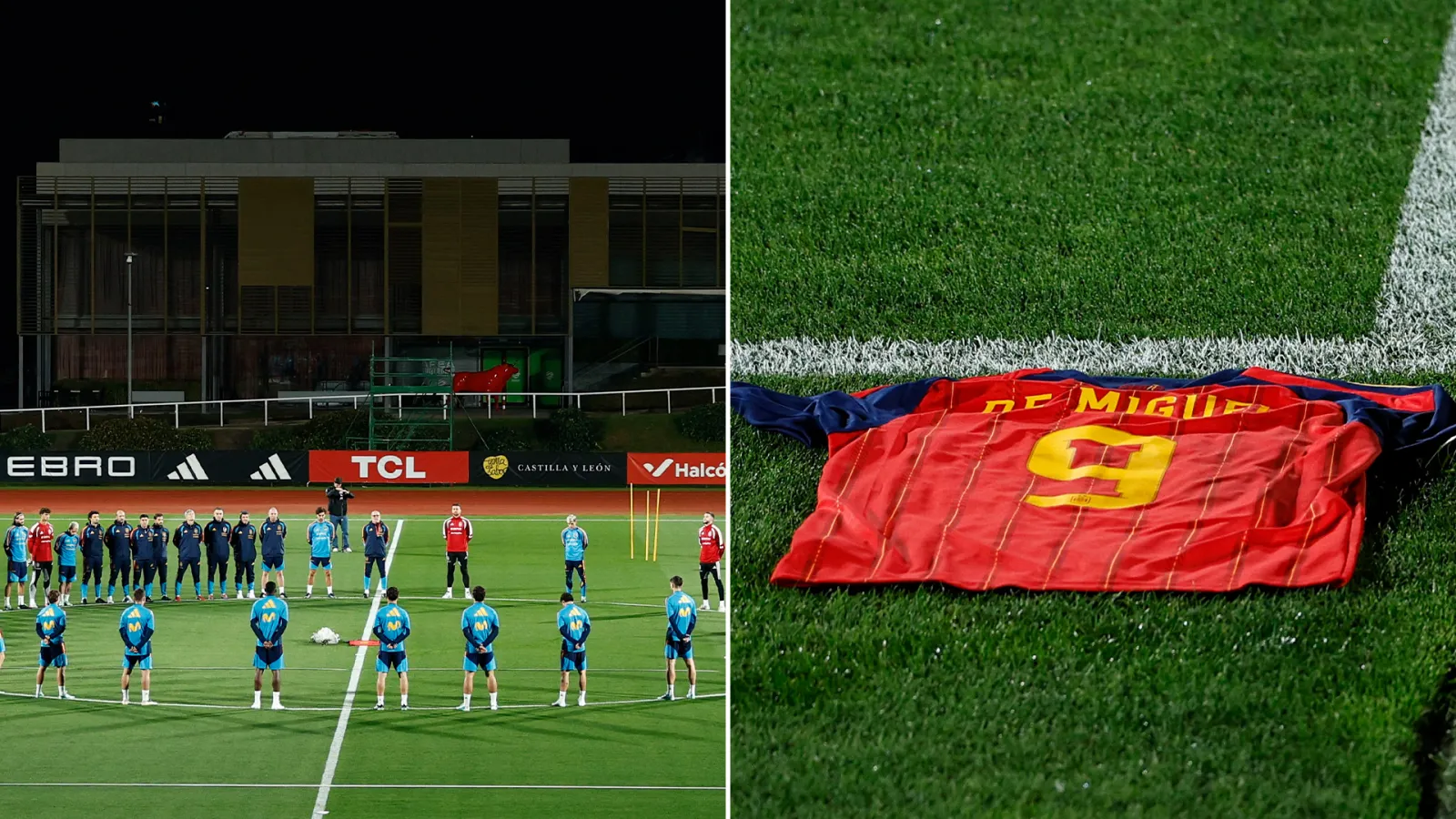
Spain paid an emotional tribute to Tenerife's late star Jesus de Miguel after his tragic death on the pitch before the world champions' first training session ahead of the clash with England.
What Happened on the Field?
De Miguel passed away at the age of 30 after a freak accident with FC Andorra goalkeeper Jesus Owono during last week's Spanish Segunda Division game at the Heliodoro Rodriguez Lopez Stadium.
Owono, 25, was sent off in the closing stages of the second half when his knee collided with the striker's head and chest as he ran out to clear a long ball during a dangerous counter-attack with the score at 2-2.
The Spaniard was left motionless after the impact and medics rushed to the scene as players were left in tears before the referee abandoned the game in the seventh minute of stoppage time.
According to Marca, De Miguel suffered a cardiac arrest on his way to hospital and was resuscitated by paramedics.
The Madrid native was admitted to intensive care, where his condition was described as "stable but serious" by Tenerife that same night.
But tragedy struck as his health deteriorated and he was pronounced dead the next morning.
La Selección Española guarda un emotivo minuto de silencio como homenaje a Jesús de Miguel antes de su primer entrenamiento.
— ElDesmarque (@eldesmarque) November 9, 2026
Unai Simón y Ferran Torres dejaron en el círculo central una camiseta y un ramo de flores.
Imagen ElDesmarque. pic.twitter.com/DapWe4jjTV
Background on Jesus de Miguel and His Career
Jesus de Miguel began his professional career in the youth ranks of CD Leganés before moving to Tenerife in 2018. Over three seasons he became a regular starter, scoring 28 goals in 84 Segunda División appearances. His physical presence, aerial ability and work ethic made him a fan favourite in the Canary Islands.
Born in Madrid in 1994, de Miguel moved to the islands at age 22 to pursue regular first-team football. He helped Tenerife reach the promotion playoffs in 2021 and was widely regarded as a potential candidate for a La Liga move before his untimely death.
Who Is Jesus Owono and What Were the Immediate Consequences?
Jesus Owono, a 25-year-old goalkeeper from Equatorial Guinea, joined FC Andorra in 2022 after a spell in the French lower leagues. He had earned a reputation as an aggressive shot-stopper, often coming off his line to intercept crosses.
During the incident, Owono's knee struck de Miguel's head and chest while the striker was attempting to finish a counter-attack. The referee showed Owono a red card for serious foul play, and the match was halted after 92 minutes of play, including seven minutes of stoppage time.
FC Andorra released a statement expressing deep sorrow for the loss of a fellow professional and pledged full cooperation with the league's investigation into the incident.
How Spanish Football and the National Team Responded
Within hours of the news, the Spanish national team gathered in Madrid for their first training session ahead of the Nations League match against England. Unai Simon and Ferran Torres, accompanied by manager Luis de la Fuente, placed a shirt bearing de Miguel's name and a bouquet of white lilies in the centre circle of the training pitch.
The squad then observed a minute's silence, with staff and a handful of fans joining in. The gesture was broadcast live on Spanish television and shared widely on social media, prompting an outpouring of condolences from former players, clubs, and supporters worldwide.
Reactions from Tenerife Fans and the Local Community
In the hours after the match was abandoned, Tenerife supporters gathered at the Heliodoro Rodriguez Lopez Stadium. Fans laid flowers, candles, and handwritten letters around the spot where de Miguel fell. The club's supporters' group, "Los Piratas," organized a vigil that lasted through the night, with chants of "¡Jesús, siempre contigo!" echoing across the stadium.
The city of Santa Cruz de Tenerife declared a day of mourning, lowering municipal flags to half-staff. Local businesses displayed black ribbons, and a moment of silence was observed in schools and public offices throughout the Canary Islands.
What the Incident Means for Player Safety Regulations
The Spanish Football Federation (RFEF) announced an immediate review of medical protocols for on-field collisions. While head-injury protocols have been strengthened in recent years, the fatal outcome of a collision involving a striker's chest and head has raised questions about the adequacy of current emergency response times.
RFEF President Luis Rubiales said, "We will examine every aspect of the incident, from the referee's decision to the speed of medical intervention, to ensure that such a tragedy does not happen again." The federation plans to commission an independent medical panel to assess whether additional protective equipment or rule changes are required for high-impact situations.
Upcoming Fixtures and the Road Ahead for Spain
Spain are set to visit the Czech Republic on Thursday before hosting England on Sunday in the Nations League. The team's schedule will include a brief international break, after which they will resume their qualifying campaign for Euro 2028.
Coach Luis de la Fuente confirmed that the squad will continue its preparation as planned, while also offering psychological support to players who were directly affected by the tragedy.
Practical Takeaways for Fans and Players
Fans are encouraged to respect the ongoing investigations and to refrain from speculation on social media. The RFEF has set up a dedicated hotline for witnesses to provide statements.
Players are reminded of the importance of immediate medical assessment after any head or chest impact. Clubs across Spain have been asked to review their emergency action plans and ensure that defibrillators are readily available at all training facilities.
While the football community mourns, the incident has sparked a broader conversation about player welfare, emergency response, and the emotional support needed after traumatic events on the pitch.