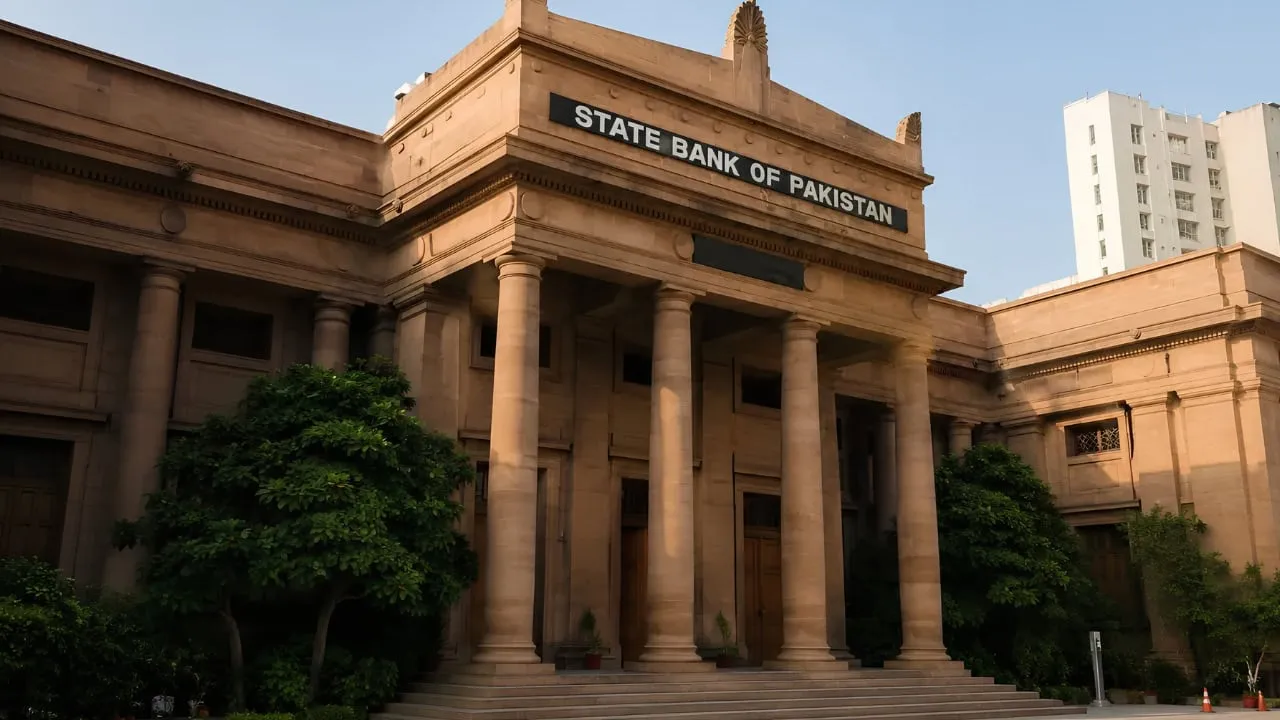
The State Bank of Pakistan (SBP) has directed commercial banks to increase women's representation in their workforce from the current 17% to 22% by December 2028 under its Banking on Equality Policy 2026. The move aims to improve gender diversity, expand career opportunities for women, and strengthen their representation across the banking sector.
What the New Directive Requires
SBP's order asks each bank to submit an action plan that spells out recruitment targets, timelines and measurable milestones. The plans must show how banks will reach the 22% threshold while maintaining merit-based hiring standards. In addition, banks are told to prioritize posting female staff at branches and in cities of their choice, wherever possible, to ease mobility constraints and improve staff retention.
Beyond hiring, the central bank insists on merit-based promotion policies that will lift more women into supervisory and senior management roles. Banks must also set up mentorship, coaching and training programmes that focus on professional development for female employees.
How the Policy Affects Specific Banking Functions
SBP has singled out several lending categories for greater female involvement. Banks are required to appoint more women as financing officers in micro-finance, agriculture, small and medium-sized enterprises (SMEs), housing and sustainable finance. The intention is to give women borrowers better access to credit and to ensure that loan products reflect women's needs.
Workplace safeguards are also part of the directive. Banks must comply fully with existing workplace harassment laws and must provide maternity, miscarriage and iddat leave as prescribed by applicable regulations. To support working mothers, banks are asked to arrange daycare facilities or allowances.
Progress So Far: Numbers That Matter
According to SBP data, women's share of the banking workforce rose from 13% in 2021 to 17% in 2025. The sector now employs nearly 50,000 women, with about 17,500 women joining the workforce over the last four years. Despite this growth, women remain under-represented in senior management and decision-making positions.
The central bank also highlighted advances in women's financial inclusion. Women now hold more than 78 million bank accounts, including over 45 million active accounts. Active accounts held by women have increased by 116% compared with the 2021 baseline.
In the credit arena, nearly 377,000 women in agriculture have received financing worth Rs. 105 billion, while around 2.8 million women have obtained micro-credit amounting to Rs. 152 billion. Women-operated branchless-banking agent outlets have surpassed 23,000, marking a 114% increase from the 2021 baseline.
Background: The Banking on Equality Initiative
The Banking on Equality initiative was launched in 2021 to address gender gaps in the financial sector and to encourage banks to design services that meet women's needs. Since its inception, the programme has helped narrow the gender gap in financial inclusion from 39% in 2021 to 29% in 2025. The latest directive builds on that foundation by turning inclusion targets into staffing targets.
Why the New Target Matters for the Economy
Increasing the share of women in bank workforces can have a multiplier effect. Research from the World Bank and other institutions shows that gender-balanced teams tend to produce more innovative products, improve customer satisfaction and reduce turnover. In a country where women hold a majority of bank accounts, having more women staff can enhance communication with female clients, especially in rural and underserved areas.
Moreover, appointing women as financing officers in agriculture, SMEs and sustainable finance aligns with Pakistan's broader development goals. Female farmers and entrepreneurs often face higher barriers to credit; a female officer can better assess their needs and build trust, potentially expanding credit volumes to women-led businesses.
Implementation Challenges and How Banks Can Respond
Banks will need to address several practical hurdles. First, recruitment pipelines must be expanded in regions where women's labor participation is low. Partnerships with universities, vocational institutes and women-focused job portals can widen the talent pool.
Second, promotion pathways require transparent criteria and regular performance reviews. Setting gender-balanced promotion committees and tracking promotion ratios can help meet the merit-based requirement.
Third, the demand for childcare support may vary across banks. Some institutions may find it more cost-effective to provide allowances rather than on-site daycare, while others could partner with local providers.
What Comes Next: Monitoring and Compliance
SBP has said it will review the submitted action plans annually and will request progress reports from each bank. Non-compliance could trigger supervisory actions, although the exact penalties have not been disclosed. Banks are therefore expected to embed the targets into their human-resource strategies and to allocate budget for mentorship, training and workplace facilities.
Stakeholders will be watching the first mid-term review, scheduled for December 2025, to see whether banks are on track to meet the 22% goal by the 2028 deadline. The outcome of that review will likely shape future policy adjustments.
Practical Takeaways for Bank Employees and Applicants
Female professionals in the banking sector can anticipate new mentorship and training programmes, as well as clearer promotion pathways. Prospective applicants should highlight any experience in micro-finance, agriculture or SME lending, as banks will be looking for women to fill financing-officer roles in those areas.
Employees with caregiving responsibilities can expect their institutions to consider daycare allowances or facilities, in line with the new directive. Awareness of workplace harassment policies and the expanded leave entitlements will also become more prominent in internal communications.
Overall, the SBP's directive represents a structured effort to embed gender equity into the core operations of Pakistan's banking system, with measurable targets, monitoring mechanisms and supportive workplace measures designed to sustain the change.