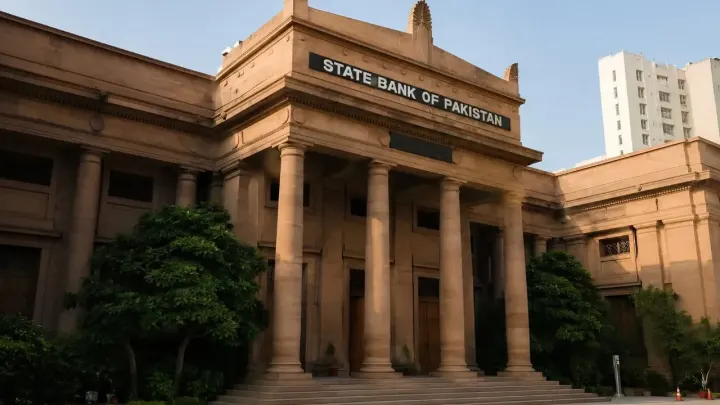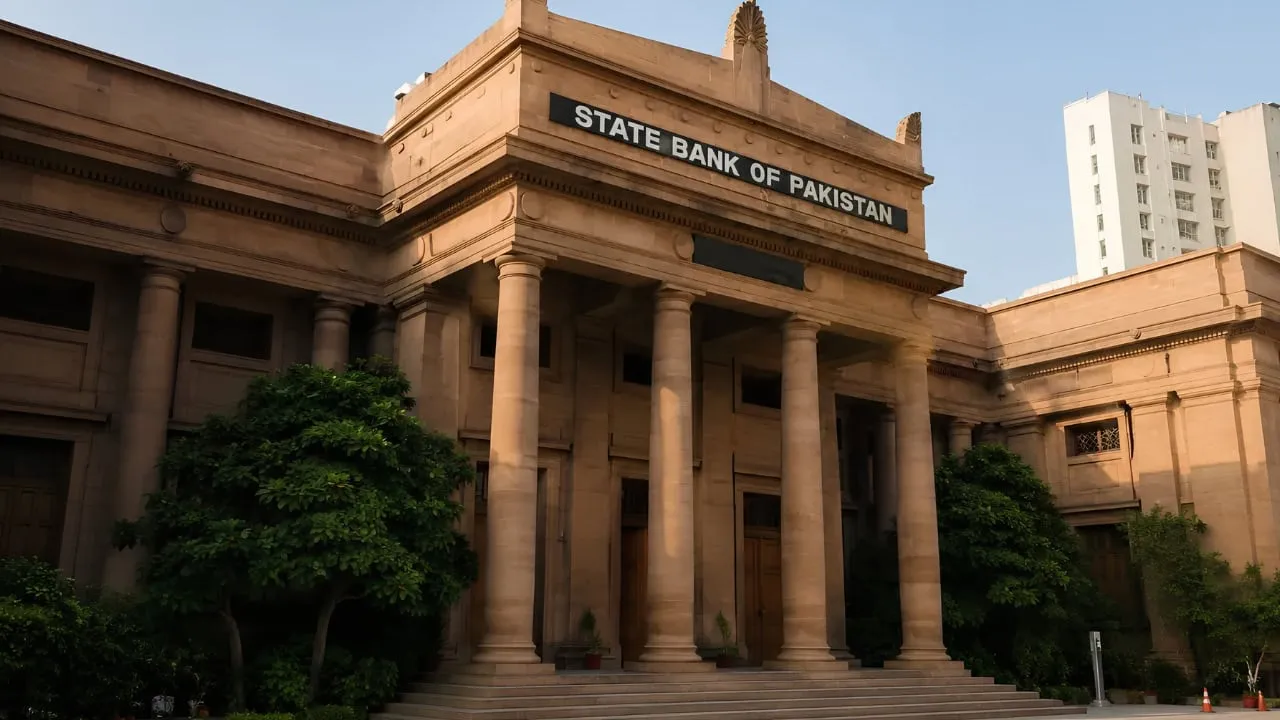
The State Bank of Pakistan (SBP) raised Rs. 586.71 billion through its Market Treasury Bills (MTBs) auction on November 11, 2026, accepting bids against total offers worth Rs. 2.19 trillion across four tenors.
The auction covered 1-month, 3-month, 6-month and 12-month Treasury Bills, with settlement scheduled for November 12.
How the Treasury Bills Auction Works
SBP conducts regular MTB auctions to manage short-term liquidity and to fund government borrowing. Investors submit competitive bids, specifying the yield they are willing to accept, and non-competitive bids, where they accept the average yield determined by the auction. The central bank aggregates all bids, ranks them from lowest to highest yield, and accepts them until the desired amount is reached. Accepted bids become the issued Treasury Bills, payable at maturity.
Bid Volume and Distribution by Tenor
The 12-month tenor attracted the highest bids at Rs. 676 billion, followed by the 3-month bills with Rs. 666.31 billion. Investors submitted Rs. 494.75 billion for 1-month bills and Rs. 355.50 billion for 6-month bills.
SBP accepted competitive bids worth Rs. 232.46 billion and non-competitive bids worth Rs. 354.25 billion. The 3-month tenor recorded the highest total acceptance of Rs. 300.78 billion, while the 12-month bills saw acceptance of Rs. 231.49 billion.
Yield Movements Compared With the October 28 Auction
All four tenors posted lower cut-off yields than the previous auction. The 1-month yield fell by 22.17 basis points to 11.8838%, the 3-month yield dropped by 42.62 basis points to 11.9999%, the 6-month yield decreased by 46 basis points to 12.19%, and the 12-month yield recorded the largest decline of 48 basis points to 12.41%.
These lower yields indicate stronger demand for short-term government securities, allowing the central bank to borrow at cheaper rates.
Background: Treasury Bills in Pakistan's Monetary Framework
Since the early 2000s, Treasury Bills have been a core instrument for Pakistan's fiscal and monetary policy. The government issues them to meet short-term financing needs, while the central bank uses the auction mechanism to absorb excess liquidity, influence short-term interest rates, and signal monetary stance.
SBP typically conducts weekly MTB auctions, with the volume and tenor mix reflecting prevailing market conditions, fiscal requirements, and the central bank's policy objectives. The auction on November 11 followed an auction on October 28 that posted higher yields, suggesting a shift in market sentiment.
Impact on Different Market Participants
Banking institutions, primary dealers, and large corporate treasuries are the main participants in MTB auctions. Lower yields benefit the government by reducing borrowing costs, while investors receive a lower return on short-term cash placements.
For commercial banks, the auction outcome influences their liquidity management. A lower yield environment often translates into lower funding costs, which can be passed on to borrowers through marginally lower loan rates.
Foreign investors, who monitor Pakistan's yield curve for risk-adjusted returns, may view the decline in yields as a sign of improving confidence in the country's short-term fiscal stability.
What Comes Next: Upcoming Auctions and Policy Outlook
SBP is expected to continue its weekly MTB schedule. The next auction is likely to be held on November 18, with a similar tenor structure. Market participants will watch the cut-off yields closely, as they serve as a barometer for short-term monetary conditions.
The central bank has not announced any change to its policy rate, but the lower yields could provide room for a future rate cut if inflation pressures ease. Analysts will also monitor the government's fiscal deficit, as larger deficits may require higher auction volumes, potentially affecting yields.
Practical Takeaways for Readers
- Investors can expect lower short-term returns on Treasury Bills until market demand shifts.
- Borrowers may benefit indirectly from reduced funding costs for banks.
- Monitoring weekly MTB auction results offers insight into the central bank's liquidity stance.
Overall, the November 11 auction demonstrates robust demand for government securities and a favorable environment for the State Bank of Pakistan to manage liquidity at reduced cost.