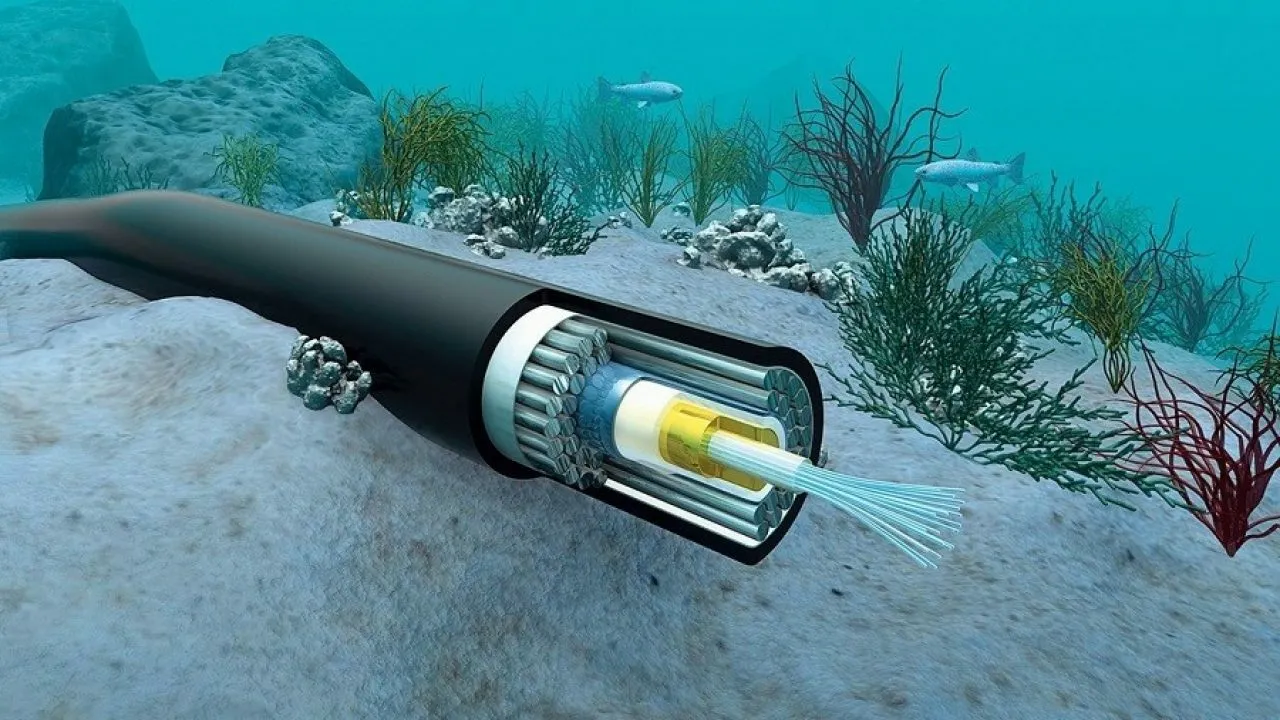
One of the international submarine cable systems, the SEA-ME-WE 5 (SMW5), has reported a fault about 11 km from Pakistan's shore, potentially causing intermittent connectivity issues and a decline in service quality for some internet users.
Transworld Associates (TWA) is coordinating with the SMW5 Consortium to identify the root cause of the fault and determine the Estimated Time for Restoration (ETTR). In the meantime, internet traffic is being rerouted through alternative international links to minimise the impact and ensure service continuity to the greatest extent possible.
The Pakistan Telecommunication Authority (PTA) is in close coordination with the concerned stakeholders and will continue to monitor the situation to facilitate the earliest possible restoration of normal internet services across the country.
What Is the SEA-ME-WE 5 Cable and Why Is It Important?
The SEA-ME-WE 5 (South East Asia–Middle East–Western Europe 5) is a 20,000-kilometre submarine fibre-optic system that links 17 countries from Singapore to France via the Middle East, India, and Pakistan. Launched in 2016, the cable provides a combined capacity of 24 terabits per second, handling a large share of international data traffic for the region.
For Pakistan, SMW5 is one of three major submarine cables that connect the country to the global internet backbone. The other two are the SEA-ME-WE 3 (SMW3) system and the newer Pakistan-Japan cable. Together, these cables carry the bulk of outbound and inbound traffic for telecom operators, internet service providers (ISPs), and large enterprises.
How Submarine Cable Faults Occur
Submarine cables are laid on the ocean floor and are vulnerable to a range of hazards. Common causes of faults include:
- Anchor drags from commercial vessels that inadvertently snag the cable.
- Fishing trawlers that pull on the cable with their nets.
- Seismic activity or undersea landslides that physically damage the cable sheath.
- Gradual wear and tear of repeaters and power feeding equipment.
When a fault occurs, the affected segment is isolated, and traffic is automatically switched to alternative routes. Repair ships are dispatched to the fault location, where technicians splice a new fibre segment or replace damaged repeaters.
Immediate Response by Transworld Associates and the SMW5 Consortium
Transworld Associates, Pakistan's primary carrier for SMW5, activated its fault-management protocol within minutes of the alert. The company is working directly with the SMW5 Consortium, a partnership of 16 telecom operators and infrastructure providers, to pinpoint the exact nature of the break.
The consortium's standard operating procedure includes:
- Running diagnostic tests from both ends of the cable to locate the fault.
- Deploying a survey vessel equipped with remotely operated vehicles (ROVs) to visually inspect the seabed.
- Arranging a repair ship, typically a vessel such as the Cable Laying Vessel, to conduct the splice.
- Providing an Estimated Time for Restoration (ETTR) to all stakeholders.
While the exact ETTR has not yet been announced, the consortium has confirmed that traffic is already being rerouted through SMW3, the Pakistan-Japan cable, and satellite links to preserve service levels.
Impact on Pakistani Internet Users
Because SMW5 carries a substantial portion of high-speed traffic, any degradation can manifest as slower page loads, buffering video streams, and occasional time-outs for cloud-based applications. The impact is felt most acutely by:
- Businesses that rely on real-time data exchange, such as financial services and e-commerce platforms.
- Educational institutions using remote learning tools.
- Individuals in urban centres who consume high-definition video and gaming content.
Rural areas, which already depend heavily on satellite or limited terrestrial links, may notice less of a change because they are less reliant on SMW5 capacity.
Regulatory Oversight by the Pakistan Telecommunication Authority
The Pakistan Telecommunication Authority (PTA) monitors the health of national broadband infrastructure under the Pakistan Telecommunication (Re-organization) Act 1996. In situations like this, PTA works with carriers to ensure that:
- Alternative routes are activated promptly.
- Quality of Service (QoS) metrics remain within the thresholds set by licensing agreements.
- Consumers receive timely public information about service disruptions.
PTA's spokesperson confirmed that the authority is in "close coordination with the concerned stakeholders" and will continue to track restoration progress.
What Steps Are Being Taken to Prevent Future Faults?
Long-term resilience of submarine cables involves both technical and policy measures. The industry is investing in:
- Enhanced seabed mapping to avoid high-traffic fishing zones.
- Stricter enforcement of maritime anchoring regulations in cable corridors.
- Deployment of newer, more robust cable designs that can withstand greater mechanical stress.
- Regular maintenance inspections using autonomous underwater vehicles (AUVs).
Pakistan's government is also reviewing existing maritime laws to better protect critical infrastructure, a move that could reduce the frequency of anchor-related incidents.
What to Watch for in the Coming Days
Stakeholders and the public should monitor official updates from Transworld Associates, the SMW5 Consortium, and PTA. Key indicators of progress include:
- Publication of a precise ETTR.
- Confirmation that the repair vessel has reached the fault location.
- Reports of restored full-capacity traffic on SMW5.
- Any regulatory notices regarding compensation or service-level adjustments for affected customers.
Until repairs are complete, users can mitigate disruption by:
- Switching to alternative DNS servers.
- Using VPN services that may route traffic through unaffected pathways.
- Contacting ISPs for information on local fallback options.
Overall, the coordinated response aims to limit the outage to a short window, preserving the integrity of Pakistan's digital economy.