Pakistan Army Conducts Successful Test of Fatah-3 Supersonic Missile
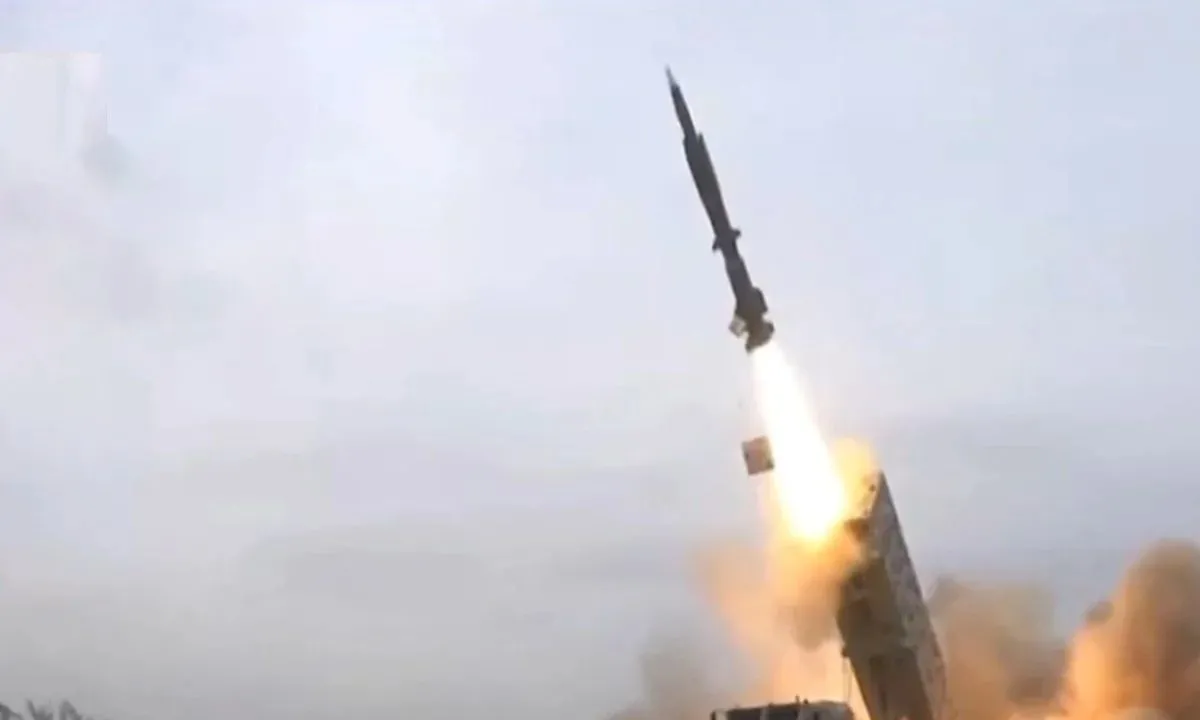
The Pakistan Army has successfully test-fired the Fatah-3 supersonic cruise missile, marking another development in the country's conventional defence capabilities. According to the Inter-Services Public Relations (ISPR), the missile is equipped with advanced navigation and propulsion systems, enabling it to strike targets at long range with high precision and supersonic speed.
Military officials, defence scientists, and engineers gathered to witness the trial of this advanced weapon system. The successful test represents a technical milestone for the national defence sector, reflecting ongoing efforts to modernise military hardware and maintain regional deterrence through indigenous technological progress.
Role of the Army Rocket Force Command
The Fatah-3 is expected to enhance the operational flexibility and strike range of the Pakistan Army's Army Rocket Force Command. This specialised branch of the military handles precision long-range rocket and missile systems designed to support ground operations and provide strategic depth.
Integrating supersonic weaponry into the Rocket Force Command allows military planners to address complex tactical scenarios with greater speed and accuracy. The test launch was witnessed by the Commander of Army Rocket Force Command, senior military officers, scientists and engineers.
Top Leadership Commends Scientists and Military Personnel
Following the successful test, President Asif Ali Zardari, Prime Minister Shehbaz Sharif, Chief of Army Staff and Chief of Defence Forces Field Marshal Asim Munir, and the services chiefs congratulated the military personnel, scientists and engineers involved in the development of the missile.
Messages from civilian and military leaders emphasised the dedication of the technical teams who designed and tested the propulsion and navigation systems. National leaders noted that such achievements reflect the high technical proficiency of domestic defence institutions.
Technical Specifications and Advanced Capabilities
Supersonic cruise missiles like the Fatah-3 travel at speeds exceeding the speed of sound, making them difficult for standard air defence systems to intercept. The inclusion of advanced navigation systems ensures that the projectile maintains pinpoint accuracy across extended distances.
Engineers and scientists working within the national defence production network have focused on improving propulsion efficiency and guidance accuracy. These technological upgrades allow the armed forces to engage high-value targets from safer standoff distances during conventional operations.
Background of Pakistan's Guided Weapon Programmes
Pakistan has maintained a steady focus on developing indigenous missile technology to support its conventional defence posture. Over the past two decades, defence research laboratories and military production facilities have introduced various short and long-range systems.
The evolution of these programmes relies heavily on local engineering talent and collaboration between military research wings and public sector industrial units. Successes in supersonic technology build upon earlier test milestones achieved by the armed forces in previous years.
Impact on National Defence and Strategic Stability
The introduction of the Fatah-3 into the military inventory affects operational planning by providing field commanders with rapid response options. Enhanced strike ranges and precision guidance reduce collateral risk while ensuring high target destruction rates.
Defence analysts view these developments as a standard measure by state military apparatuses to keep pace with modern warfare requirements. The ability to produce and test advanced propulsion and navigation systems domestically also reduces reliance on foreign military imports.
Future Outlook for Pakistan's Missile Development
Following this successful trial, military institutions will likely review telemetry data and performance metrics to refine future production batches. Engineers and scientists will continue research into materials, guidance software, and fuel efficiencies to support subsequent defence projects.
Observers will monitor further announcements from the Inter-Services Public Relations regarding the operational deployment of the Fatah-3 within the Army Rocket Force Command and related training exercises.