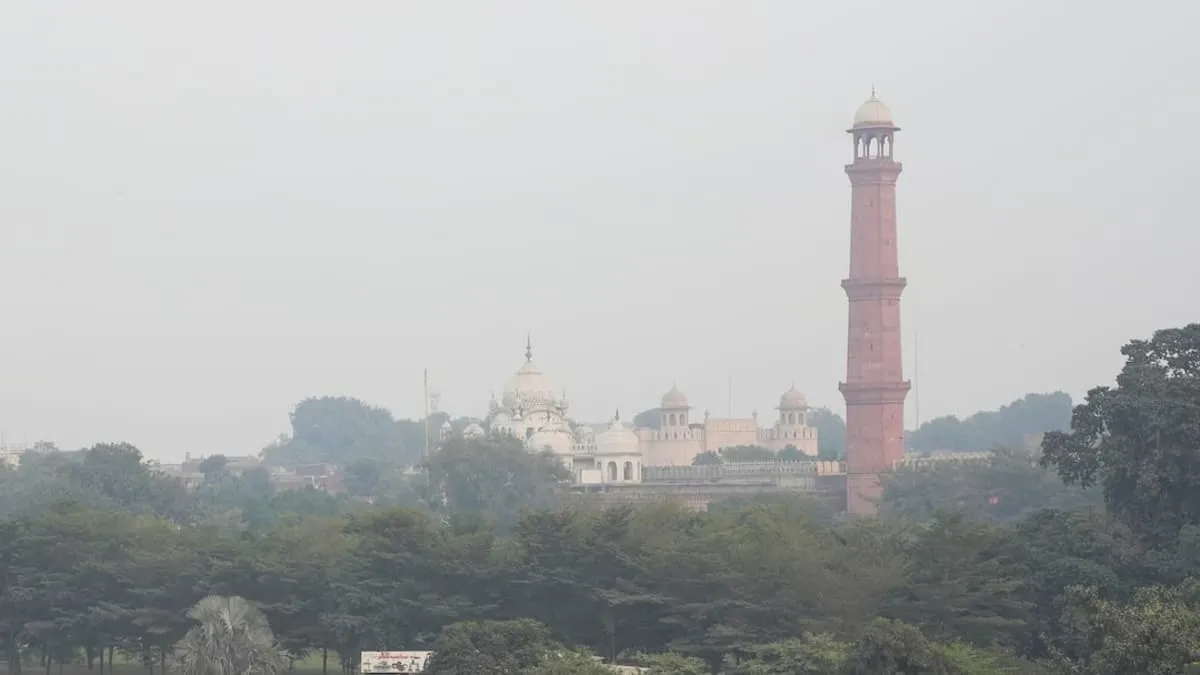
Suparco Warns of Worsening Smog in Punjab Over Next 3 Days
The Pakistan Space and Upper Atmosphere Research Commission, known as Suparco, has issued an official warning stating that smog conditions across Punjab are likely to worsen over the next three days. This alert follows satellite observations that detected 690 active fire incidents in Punjab and adjoining areas. The findings highlight a severe environmental challenge facing the region during the winter transition period, affecting millions of residents across multiple districts.
According to Suparco's November 17 smog assessment, satellites detected 386 fires in Punjab and 304 in neighboring areas during the previous 24 hours. The comprehensive assessment covered 36 districts using advanced VIIRS and MODIS satellite data. These remote sensing tools allow scientific agencies to track pollution sources, monitor atmospheric transparency, and measure particulate matter spread over large geographic expanses without relying solely on ground stations.
How Satellite Monitoring Tracks Punjab Smog
Satellite technology plays a central role in modern environmental monitoring, particularly for tracking large-scale air pollution events like the annual winter smog in South Asia. Instruments such as the Visible Infrared Imaging Radiometer Suite and the Moderate Resolution Imaging Spectroradiometer capture thermal anomalies that point directly to agricultural burning and industrial emissions. By scanning 36 districts in Punjab, the monitoring system tracks the spread of smog, identifies fire hotspots, and assesses atmospheric conditions across the province on a continuous basis.
The recent assessment revealed that seven districts, specifically Jhang, Narowal, Sheikhupura, Sialkot, Hafizabad, Gujranwala, and Dera Ghazi Khan, were identified as having high or severe smog conditions. These areas experience heavy concentrations of air pollutants due to local weather patterns, regional wind flows, and agricultural practices. The concentration of fires in specific zones correlates directly with the severity of the particulate matter hanging over local towns and agricultural fields.
Understanding Atmospheric Aerosols and Pollutant Levels
Scientific assessments of air quality rely heavily on specific metrics, including aerosol optical depth, which serves as an indicator of atmospheric aerosol concentration. During the recent assessment, the mean aerosol optical depth stood at 0.25, with the highest levels recorded in Chiniot, Jhang, and Faisalabad. Higher aerosol optical depth values mean that dust, smoke, and other tiny particles are blocking sunlight and reducing visibility in the lower atmosphere.
Interestingly, nitrogen dioxide levels were 21% below the 2019-2025 average for this time of year. Nitrogen dioxide typically originates from vehicle exhaust, power plants, and industrial combustion. While this specific pollutant showed a reduction compared to historical averages, it did not prevent the accumulation of thick smog because other particulate sources, such as crop residue burning and dust, remained very high.
Future Projections and Ground Level Realities
Despite the lower nitrogen dioxide levels, Suparco warned that atmospheric conditions could deteriorate over the next three days. The Copernicus Atmosphere Monitoring Service projected PM2.5 concentrations of 51 to 71 micrograms per cubic meter for the region. PM2.5 refers to fine particulate matter with a diameter of 2.5 micrometers or smaller, which can penetrate deep into human lungs and cause serious health issues.
Suparco cautioned that these satellite-based estimates are generally lower than ground-based readings during winter. Ground-level monitors often capture higher pollutant concentrations because surface inversions trap emissions directly where people breathe, whereas satellites measure the entire column of air from the ground up to space. Atmospheric dispersion was also rated very poor, indicating that pollutants could remain trapped close to the ground with little wind to blow them away.
Background on Punjab Air Quality Challenges
Air quality in Punjab deteriorates significantly every year as winter approaches, creating a seasonal crisis that impacts public health, transportation, and daily economic activity. The combination of drop in temperatures, low wind speeds, and temperature inversions creates a thermal lid that holds pollution near the surface. Meteorological factors prevent vertical mixing of the air, allowing smoke from crop residue burning, brick kilns, vehicular traffic, and industrial units to accumulate over weeks.
Government agencies and scientific institutions have increasingly relied on space-based observations to map pollution sources because traditional ground networks can have coverage gaps. By identifying specific districts with high fire counts and severe smog indices, authorities gain actionable data for targeted interventions. Past policy responses have included restrictions on industrial operations, traffic management measures, and educational campaigns aimed at reducing agricultural burning, though enforcement remains a complex challenge across rural and urban divides.
Impact of Severe Smog on Citizens and Communities
The ongoing smog crisis affects millions of residents across Punjab, presenting serious health risks, particularly for vulnerable populations such as children, the elderly, and individuals with preexisting respiratory or cardiovascular conditions. High concentrations of fine particulate matter can trigger asthma attacks, bronchitis, and long-term lung damage. Schools, outdoor markets, and daily commuters face disruptions as visibility drops and medical facilities report higher numbers of patients complaining of eye irritation, coughing, and breathing difficulties.
Beyond human health, persistent smog disrupts regional transportation networks. Low visibility frequently forces the closure of major motorways and highway sections, delaying freight transport and public transit. Agricultural communities also face scrutiny regarding stubble burning, even as farmers argue they lack affordable alternatives for clearing fields rapidly between harvest and planting seasons for the next crop cycle. The tension between agricultural traditions and public health mandates underscores the complexity of managing air quality across the province.