Transsion Holdings Explores Local Component Manufacturing in Pakistan
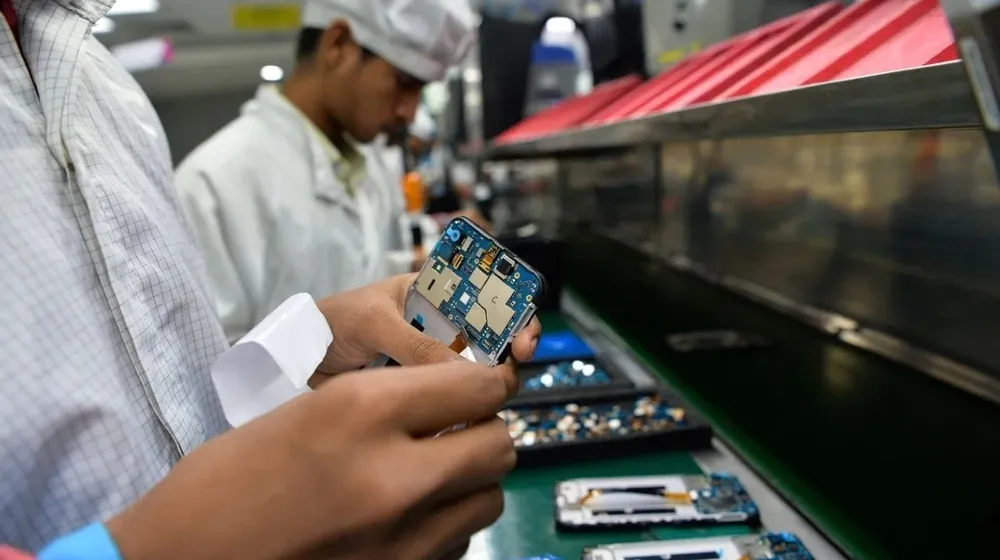
Transsion Holdings, the Chinese parent company of popular smartphone brands Tecno and Infinix, is looking to expand its manufacturing operations in Pakistan. Discussions center on moving beyond basic smartphone assembly towards local component manufacturing and deeper industrial localization within the country.
The high-level talks took place in Islamabad on November 13. Transsion Chairman and Founder George Zhu met with Finance Minister Muhammad Aurangzeb to outline the company's future investment and expansion plans for the South Asian nation.
During the meeting, the company detailed its existing operations in Pakistan. These current business lines include smartphones, electric bikes, and energy storage products, establishing a broad technological footprint in the local market.
What Transsion Proposes for Pakistan Industrial Sector
The discussions between corporate leadership and government officials focused heavily on increasing local manufacturing capacity. Both parties explored methods for developing domestic supply chains and establishing supporting industries to feed the technology sector.
Transsion highlighted the potential to expand beyond simple assembly operations towards greater value addition. Local component manufacturing could create numerous opportunities for Pakistani businesses, small-scale suppliers, and local manufacturing plants.
However, despite the forward-looking talks, the company did not announce a specific investment amount. Corporate representatives also withheld details regarding a new manufacturing facility or a concrete implementation timeline for the proposed expansion.
Pakistan Government Stance on Export-Oriented Manufacturing
Finance Minister Muhammad Aurangzeb actively encouraged Transsion to broaden its investment footprint inside Pakistan. The minister emphasized the critical importance of export-oriented manufacturing to improve the national economy.
Furthermore, the government highlighted the need for local value addition and integration into international supply chains. Officials believe that bringing advanced component creation inside national borders will help diversify exports and stabilize foreign exchange reserves.
The dialogue also covered the potential to use Pakistan as a regional manufacturing and export base. Transsion identified the country's large domestic consumer market and strategic geographic location as key factors supporting its long-term business plans.
Key Industry Figures Attend Islamabad Meeting
The Transsion delegation included several high-ranking corporate officials who traveled to discuss the future of technology production. Pakistan Head Joe Hu, board member Arif Chowdhry, Head of Manufacturing Zakkary Zhou, and General Manager of Manufacturing Center Eason Zhou all participated in the talks.
Local industry partners also joined the discussions in Islamabad. Tecno CEO Aamir Allawala, Director Asif Allawala, and Director Abdullah Allawala attended the meeting to represent local operational interests.
Both sides expressed strong mutual interest in strengthening cooperation. Corporate leadership and government representatives agreed to pursue further investment and business expansion opportunities in Pakistan as discussions continue.
Background on Smartphone Assembly in Pakistan
Over recent years, Pakistan has worked to attract international technology brands to establish assembly plants within its borders. Government policies have aimed to curb high import bills for finished electronic goods by encouraging domestic assembly instead.
Companies like Transsion took advantage of these policies by setting up facilities to assemble mobile devices for local consumers. Moving from assembly to component production represents a natural progression for industrial policies aimed at retaining more manufacturing value within the domestic economy.
While complete semiconductor and advanced chip fabrication remains concentrated in specialized global hubs, producing peripheral phone parts locally is a realistic goal for growing economies. Supplying chargers, batteries, casings, and circuit boards domestically can significantly reduce production costs for major brands.
Economic Impact of Component Localization
Expanding into component manufacturing affects multiple sectors of the domestic economy. Local engineering firms, plastic injection molding companies, and packaging suppliers stand to gain commercial contracts if smartphone brands source parts domestically.
Job creation is another primary benefit cited by economic planners when discussing industrial localization. Technical training programs and factory jobs tend to expand as assembly operations evolve into full manufacturing ecosystems.
Consumers may also benefit from lower device prices over time as supply chains shorten and transportation expenses decrease. However, achieving these structural changes requires sustained capital investment from multinational corporations and consistent regulatory support from the government.
Next Steps for Transsion and Pakistani Authorities
Following the November 13 meeting, industry observers will watch for formal announcements regarding pilot projects or land acquisitions for new component plants. Transsion has not yet provided a calendar for future decisions.
The Ministry of Finance is expected to continue engaging with technology investors to refine policies that support export-led growth. Observers note that predictable regulatory frameworks and stable utility supplies remain vital factors for foreign companies planning long-term industrial investments in the region.