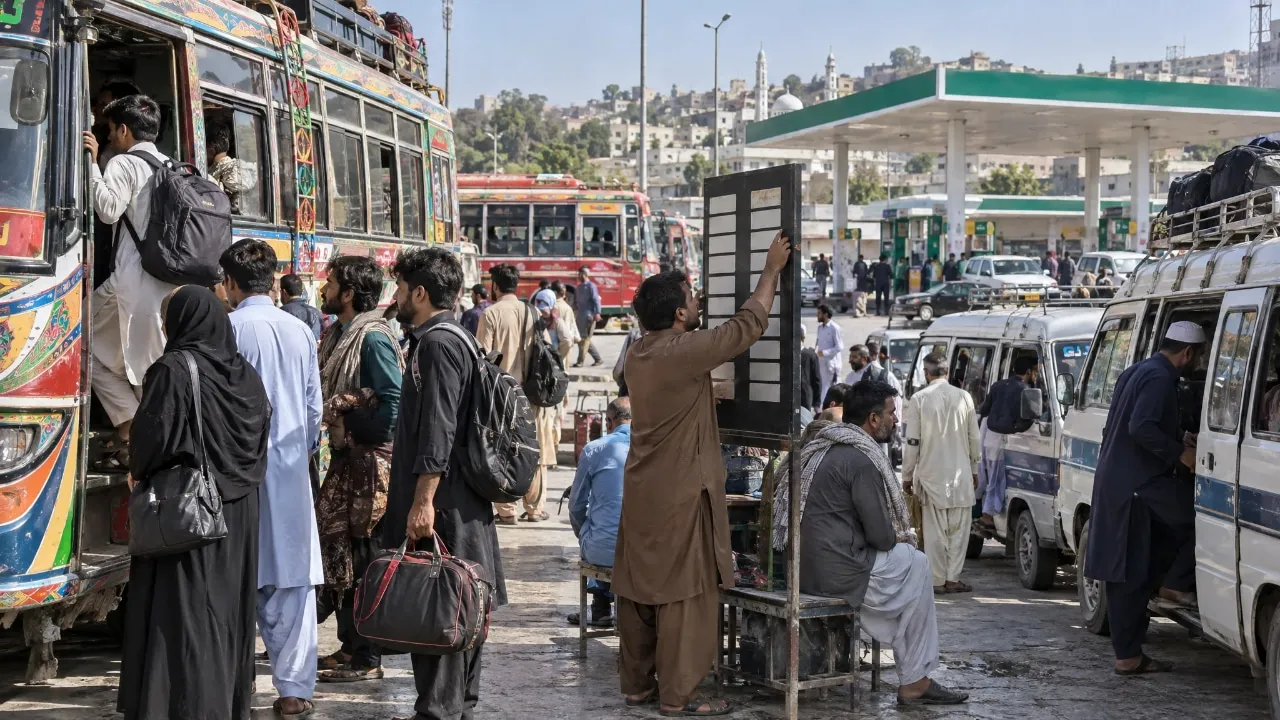
Transport Fares Drop Across Rawalpindi Following Fuel Price Cuts
Transport fares in Rawalpindi have started declining following a significant reduction in petroleum product prices, with local passenger fares cut by 12 per cent, intercity fares by 5 per cent, and freight rates for goods transportation by 10 per cent. The reduction comes after petrol prices fell by Rs39.91 per liter and high-speed diesel by Rs31.96 per liter over the past 10 days. These downward adjustments offer immediate financial relief to daily commuters, local families, and commercial enterprises operating throughout the Rawalpindi region.
The adjustment of passenger and cargo tariffs directly follows historical pricing patterns where fuel costs heavily dictate operational expenses for commercial vehicles. Public transport operators rely heavily on petroleum products to run buses, vans, and delivery trucks. When fuel expenditures drop sharply, administrative bodies step in to ensure savings are passed down to everyday travelers rather than retained entirely by vehicle owners.
Official Directives and Administrative Enforcement in Rawalpindi
Earlier, Rawalpindi Deputy Commissioner Nadeem Nasir issued directives ordering a reduction in transport fares in line with the decrease in petroleum prices. Regional Transport Authority Secretary Syed Asad Abbas Shirazi also held a meeting with transport operators and directed them to implement the revised fares immediately. Local administrative machinery monitors compliance closely to prevent operators from overcharging commuters who depend on public transport networks daily.
The Rawalpindi administration has urged citizens to report any instances of overcharging by transport operators by calling the helpline 1071. Establishing direct communication channels between regulatory authorities and the public helps enforce compliance across major bus terminals, wagon stands, and commercial transport routes within the district.
Understanding Petroleum Pricing and Transport Economics in Pakistan
Transport tariffs in Pakistan are closely tied to the weekly or fortnightly announcements regarding petroleum product prices issued by the federal government. Fluctuations in global crude oil markets, exchange rate variations, and domestic taxation structures heavily influence the retail prices of petrol and high-speed diesel. When international oil markets experience downward corrections, domestic consumers expect corresponding relief in both energy bills and transportation costs.
Commercial transport associations negotiate regularly with regional authorities whenever fuel prices shift significantly. While local routes respond quickly to administrative orders, intercity networks and goods transporters often require structured meetings with regulatory secretaries to agree upon percentage reductions that reflect their specific fuel consumption metrics and long-distance operational overheads.
Petroleum Dealers Demand Forensic Audit of Oil Refineries
Meanwhile, petroleum dealers have demanded a forensic audit of oil refineries profits, claiming that a transparent review could reveal scope for reducing petrol prices by Rs50 per litre and providing relief to consumers. The demand was raised during an emergency meeting of petroleum dealers in Karachi, where participants discussed refinery profits, petroleum pricing, and possible relief for consumers. Petroleum dealers, including Malik Khuda Bakhsh and Anwar Kamal, called for a transparent forensic audit of the financial affairs of all refineries to establish the actual profits earned by the companies.
Malik Khuda Bakhsh said refineries had earned profits equivalent to a full year's earnings in just three months, adding that a forensic audit would bring the facts about their profits to light. This public call from association representatives highlights ongoing tensions within the domestic energy supply chain regarding profit margins maintained by oil refining enterprises versus the retail margins received by fuel station owners and the financial burdens carried by end consumers.
Impact on Commuters, Businesses, and Goods Transportation
The reduction in local passenger fares by 12 per cent eases the monthly travel budgets of students, office workers, and daily wage earners who traverse Rawalpindi for work and education. Public transport is the primary mobility option for a vast majority of urban residents who do not own personal motor vehicles. Lowering travel costs directly increases disposable income for households dealing with broader inflation.
At the same time, the 5 per cent cut in intercity fares benefits travelers moving between Rawalpindi and other major cities in the province. The 10 per cent reduction in freight rates for goods transportation lowers the cost of moving commercial merchandise, agricultural produce, and manufactured items. Cheaper freight logistics can potentially stabilize or reduce consumer goods prices in local retail markets across the region.
What to Watch for Regarding Fuel Prices and Fare Compliance
Observers and commuters in Rawalpindi must monitor whether transport operators maintain the revised fare structures over the coming weeks. Regulatory enforcement by the Regional Transport Authority and active reporting through the 1071 helpline remain vital deterrents against unauthorized fare hikes. Future adjustments will depend entirely on upcoming petroleum price reviews conducted by federal authorities and potential policy decisions regarding the operations and audits of domestic oil refineries.





