Fog and Smog: Two Different Atmospheric Phenomena
With the arrival of November, cooler weather settles over Punjab, frequently bringing a grey veil that lowers visibility and intensifies worries regarding declining air quality. Yet, the appearance of haze does not automatically mean pollution levels have surged. Differentiating between natural fog and pollution-heavy smog remains essential for grasping atmospheric shifts and their public health consequences.
This distinction becomes critical during winter months, when shifting weather patterns can trap existing pollutants, preventing harmful particles from scattering effectively.
While fog and smog share visual similarities, their origins and environmental impacts differ greatly. Fog emerges naturally as moisture in the air cools and condenses into microscopic water droplets near the surface. Conversely, smog stems from air pollution, carrying toxic gases and suspended matter, including fine particulate material known as PM2.5.
During cold weather, temperature inversions, sluggish winds, and stagnant air trap pollutants close to the ground, allowing emissions from diverse activities to build up. When fog forms amid these already polluted surroundings, it blends with airborne contaminants to create the dense haze typical of winter smog.
Visibility alone, however, cannot confirm whether pollution has reached hazardous thresholds. The Air Quality Index serves as the primary metric for evaluating pollution and associated health threats, meaning a visually clear day might still harbor unhealthy air, while natural fog does not inherently signal dangerous Air Quality Index readings.
Why Air Pollution Needs Attention Beyond the Winter Season
Although winter conditions worsen pollution visibility, the activities generating these emissions operate year-round. Vehicle exhaust, factory operations, brick kiln emissions, construction dust, crop residue burning, and open waste fires all add to the pollution burden.
The seasonal trapping of pollutants makes these ongoing sources more visible and potentially more damaging, which is why managing smog demands continuous intervention rather than emergency reactions solely during winter.
Punjab has steadily shifted toward a comprehensive strategy tackling pollution across multiple sectors, prioritizing prevention, regulation, technological upgrades, and consistent enforcement.
Punjab's Efforts to Reduce Pollution at Its Source
Accelerating the Shift Towards Cleaner Transport
Emissions from transport form a key target in regional pollution control strategies. The provincial government has deployed 1,100 electric buses across 28 districts, with an additional 1,900 units scheduled to expand clean public transit options.
Furthermore, vehicle emission checks have scaled up, examining roughly 1.2 million vehicles through official testing channels to spot excessive emissions and foster better adherence to environmental rules.
Reducing Emissions from Industries and Brick Kilns
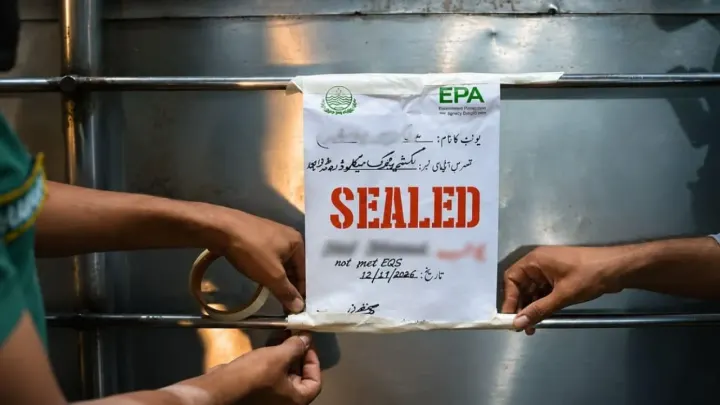
Industrial activities represent another primary focus for environmental authorities. More than 14,000 emission-control systems are now installed across industrial facilities, encompassing over 96% of the targeted sites.
Significant strides have also transformed the local brick kiln sector. All 8,000 kilns part of the provincial project have transitioned to zigzag technology, swapping out traditional methods for a cleaner production model aimed at cutting down smoke and gas output.
Addressing Crop Residue Burning Through Agricultural Reforms
The open burning of agricultural remnants aggravates seasonal air pollution, rendering farming practice reforms a vital element of mitigation efforts.
To supply farmers with viable alternatives, the province has distributed over 10,045 super seeders at a subsidized rate of 60%, empowering agricultural workers to manage crop waste without resorting to fires.
Outcomes show promising progress, with reported crop-burning incidents dropping by 65% in 2025 compared to 2024 numbers.
Alongside these preventative steps, authorities set up 67 Quick Response Units involving 750 officers to tackle reported field fires, aiming for a rapid 10 to 15 minute response window to bolster ground enforcement. These actions have also drawn international media notice from outlets like Reuters and Arab News.
Expanding Environmental Monitoring Through Technology
Pinpointing pollution sources and enforcing rules demands dependable environmental data and robust monitoring tools.
Punjab has established 80 air-quality monitoring stations, with targets to expand this network to 103 by the close of 2026. Artificial intelligence-backed monitoring and digital reporting frameworks are likewise rolling out to sharpen surveillance, catch violations faster, and back enforcement operations.
What Do Environmental and Health Figures Reveal?
Gauging how well pollution controls work requires looking at environmental metrics side by side with public health data. Recent regional figures highlight several positive trends:
- Lahore's air quality: October 2026 stood out as the cleanest October the city experienced in five years.
- Smog-related health cases: Patients recorded across five smog-linked illness categories dropped by 43% from January through October 2026 relative to the same period in 2025.
- Respiratory illness: Outpatient visits for respiratory conditions fell from roughly 22.87 million during January to October 2023 down to 7 million over those months in 2026.
These statistics signal a favorable direction and offer encouraging indicators of headway, though weather shifts, population exposure levels, and other variables must be factored in when interpreting environmental and healthcare outcomes.
Following International Models for Cleaner Air
The regional strategy for combating air pollution draws insights from nations that achieved headway via long-term environmental policies.
Places like China, South Korea, the United Kingdom, Japan, and Mexico illustrate how persistent state action, backed by strong regulations, cross-sector coordination, and sustained funding, can yield major air quality gains.
Applying lessons from these global examples, the government launched a 10-year Smog Mitigation Plan to tackle pollution through steady, synchronized efforts. The framework merges tougher enforcement, targeted interventions on major emission sources, agricultural shifts, and broader environmental surveillance.
The initiative's initial two years have yielded encouraging signs, with smog metrics trending downward. Maintaining these gains will nonetheless demand persistent execution and strict enforcement.
A Long-Term Commitment to Cleaner Air
The 10-year Smog Mitigation Plan shifts perspective away from treating smog merely as an isolated seasonal inconvenience, placing year-round pollution reduction at the core of the environmental agenda instead.
By uniting transport reforms, factory controls, farming interventions, regulatory compliance, and tech-driven monitoring under a single umbrella, the province targets multiple pollution vectors simultaneously.
The measures rolled out during the first two years build a solid foundation, yet the ultimate success hinges on sustained cross-sector enforcement and strict adherence to environmental benchmarks.
Cleaner Air Requires Collective Action
While official policies and institutional oversight set the framework for cleaner skies, lasting success relies heavily on community, industrial, and individual participation.
Farmers can embrace stubble management alternatives, businesses can upgrade emission filters, construction sites can suppress dust, and drivers can maintain proper vehicle emission standards. Households can also contribute by refraining from burning waste in the open.
Civic engagement remains equally vital, allowing residents to report regulatory breaches via the Green Punjab App or the dedicated helpline at 1373.
The true benchmark of success goes beyond temporary visibility gains during November or December, resting instead on year-round reductions achieved by tackling root sources continuously.
Cleaner Air, Healthier Lives. A Sustainable Future Requires Action from Everyone.