How Do Fog and Smog Differ in Punjab During Winter?
With the arrival of November, many cities across Punjab begin experiencing a familiar reduction in visibility as a grey layer spreads across the skyline. This seasonal change often raises an important question, prompting residents to wonder if they are witnessing ordinary winter fog or a rise in air pollution.
Although the two can sometimes appear similar, fog and smog are fundamentally different. Understanding what distinguishes them, how winter conditions influence pollution and how air quality is measured is essential to understanding the challenge Punjab faces every year.
Fog develops naturally when water vapour in the atmosphere cools and condenses into microscopic water droplets near the earth's surface. Smog, in contrast, is associated with polluted air containing harmful gases and suspended particles, particularly fine particulate matter such as PM2.5.
The distinction becomes particularly important during winter. Temperature inversions, weak winds and limited movement of air in the atmosphere create conditions in which pollutants cannot disperse easily. Instead, they accumulate near the ground. When natural fog forms in an atmosphere already containing high concentrations of pollutants, the combination can produce the dense, grey haze widely recognised as smog.
Visibility, therefore, should not be treated as the sole indicator of air pollution. Fog can make the surroundings appear hazy without necessarily indicating hazardous pollution levels. The Air Quality Index, meanwhile, provides a measure of pollution concentration and the potential health risks associated with it. This also means that apparently clear weather does not guarantee clean air.
Why Winter Measures Alone Cannot Control Air Pollution
Winter may make air pollution more visible, but many of its underlying sources remain active throughout the year. Exhaust from vehicles, emissions from factories and brick kilns, construction-related dust, the burning of agricultural residues and open waste burning all contribute to the overall pollution burden.
Seasonal weather conditions aggravate the situation by restricting the movement and dispersion of these pollutants. Consequently, addressing smog requires more than short-term responses during the winter months.
Punjab's approach has increasingly focused on tackling pollution throughout the year, bringing together interventions across transport, agriculture, industry, technology and environmental enforcement.
How Punjab Transforms Transport and Controls Industrial Emissions
Vehicular pollution remains an important area of focus in Punjab's clean-air initiatives. The province has introduced 1,100 electric buses in 28 districts, while plans are in place to add another 1,900.
Alongside the transition towards cleaner public transport, approximately 1.2 million vehicle emission tests have been conducted through government testing mechanisms to identify vehicles contributing excessive emissions.
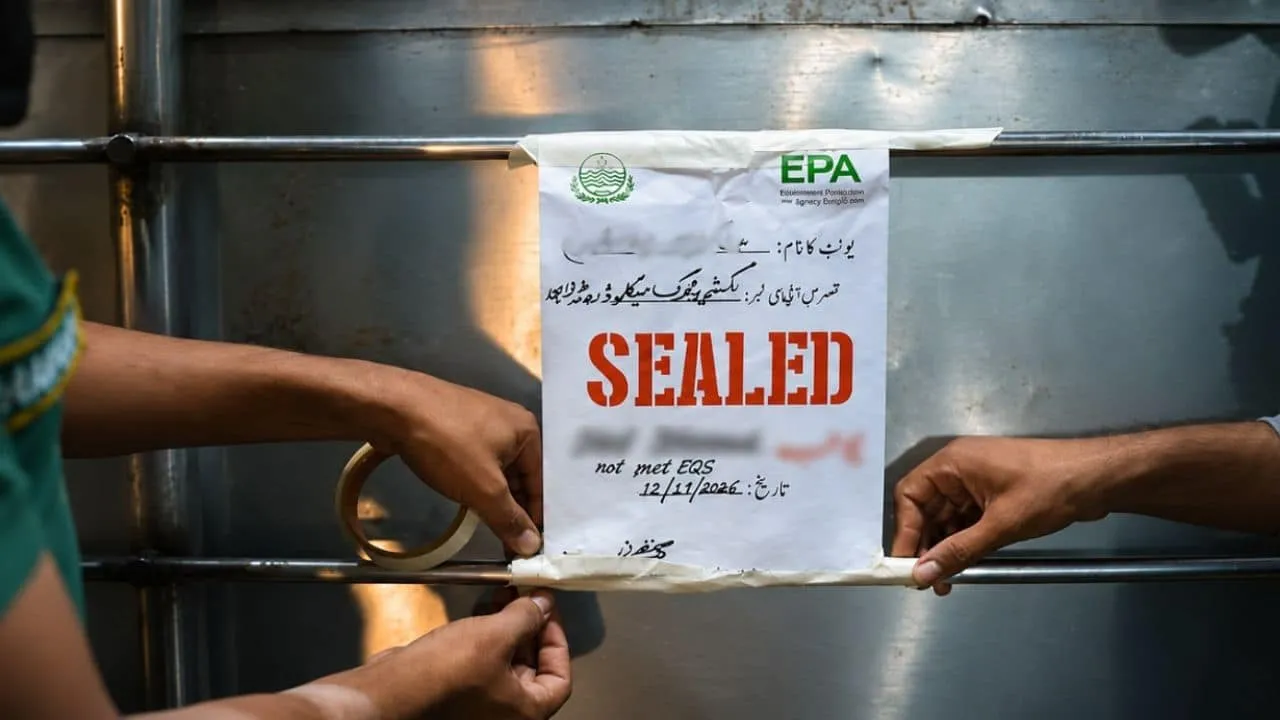
Efforts to reduce industrial pollution have included the installation of more than 14,000 emission-control systems, bringing over 96% of the targeted industrial units under coverage.
The brick kiln sector has also undergone a significant transition, with all 8,000 kilns covered by the provincial initiative converted to zigzag technology. These measures form part of the broader effort to reduce emissions from industrial and traditional manufacturing activities.
What Are the Agricultural Alternatives and Surveillance Tech?
Agricultural residue burning is another significant contributor to seasonal air pollution. To encourage farmers to adopt alternatives, Punjab has distributed more than 10,045 super seeders with a 60% subsidy.
The impact of these efforts is reflected in a 65% reduction in reported crop-fire incidents in 2025 compared with the previous year.
Enforcement has also been strengthened through 67 Quick Response Units, consisting of 750 officers, tasked with reaching reported field fires within a targeted response time of 10-15 minutes. The initiative has gained international attention, with Reuters and Arab News also reporting on these efforts.
Effective pollution management depends on the ability to monitor environmental conditions and identify violations. To strengthen this capacity, Punjab has established 80 air-quality monitoring stations and aims to expand the network to 103 by the end of 2026.
The introduction of artificial intelligence-enabled monitoring and digital reporting systems is further supporting environmental oversight, enabling authorities to improve surveillance and respond more effectively to violations.
What Do Recent Environmental and Healthcare Indicators Show?
While the challenge of air pollution remains significant, recent environmental and healthcare figures provide some encouraging indications of progress.
- October 2026 was Lahore's cleanest October in the last five years.
- Reported patients across five smog-related disease categories fell by 43% between January and October 2026 compared with the corresponding period in 2025.
- Respiratory illness outpatients declined from approximately 22.87 million in January-October 2023 to 7 million during the same months of 2026.
These figures point towards an encouraging downward trend. Nevertheless, changes in reported illnesses and environmental conditions cannot be attributed to a single intervention. Weather patterns, levels of exposure and other influencing factors must also be considered when evaluating the overall impact.
How International Experience Guides the 10-Year Smog Plan
The experiences of China, South Korea, the United Kingdom, Japan and Mexico demonstrate that meaningful improvements in air quality are possible when governments pursue consistent, long-term action. Their efforts highlight the importance of effective legislation, firm enforcement, collaboration across sectors and sustained investment in pollution reduction.
Building on lessons from these international examples, the Punjab Government has embarked on a 10-year Smog Mitigation Plan aimed at addressing pollution through a comprehensive approach. The plan integrates stronger regulatory measures, interventions across key sectors, improved agricultural practices and enhanced environmental monitoring.
The initial two years of the programme have brought encouraging developments, with several smog-related indicators registering a downward trend. While achieving lasting improvements will require continued commitment and effective implementation, these early signs indicate progress towards cleaner air in the province.
What Practical Steps Can Citizens Take to Reduce Smog?
Punjab's 10-year Smog Mitigation Plan is built around the understanding that cleaner air requires sustained action rather than interventions limited to a particular season.
Its broader direction combines improved regulatory enforcement, a transition towards cleaner transport, industrial pollution management, changes in agricultural practices and greater investment in environmental monitoring.
Institutional policies and government enforcement are essential to improving air quality, but they cannot deliver lasting results in isolation. Businesses, farmers, households and individuals all influence the environment through their everyday activities.
Avoiding the open burning of household waste, ensuring vehicles are properly maintained, minimising dust from construction activities and moving towards cleaner agricultural methods are practical steps that can help reduce pollution.
Public participation also extends to identifying and reporting environmental violations. Citizens can use the Green Punjab App or contact the helpline at 1373 to report such activities.
Ultimately, the challenge is not simply to improve visibility or reduce the winter haze. It is to address the sources of pollution consistently, regardless of the season, and create an environment where cleaner air becomes a year-round reality.