Pakistan State Oil Secures New Oman Fuel Deal
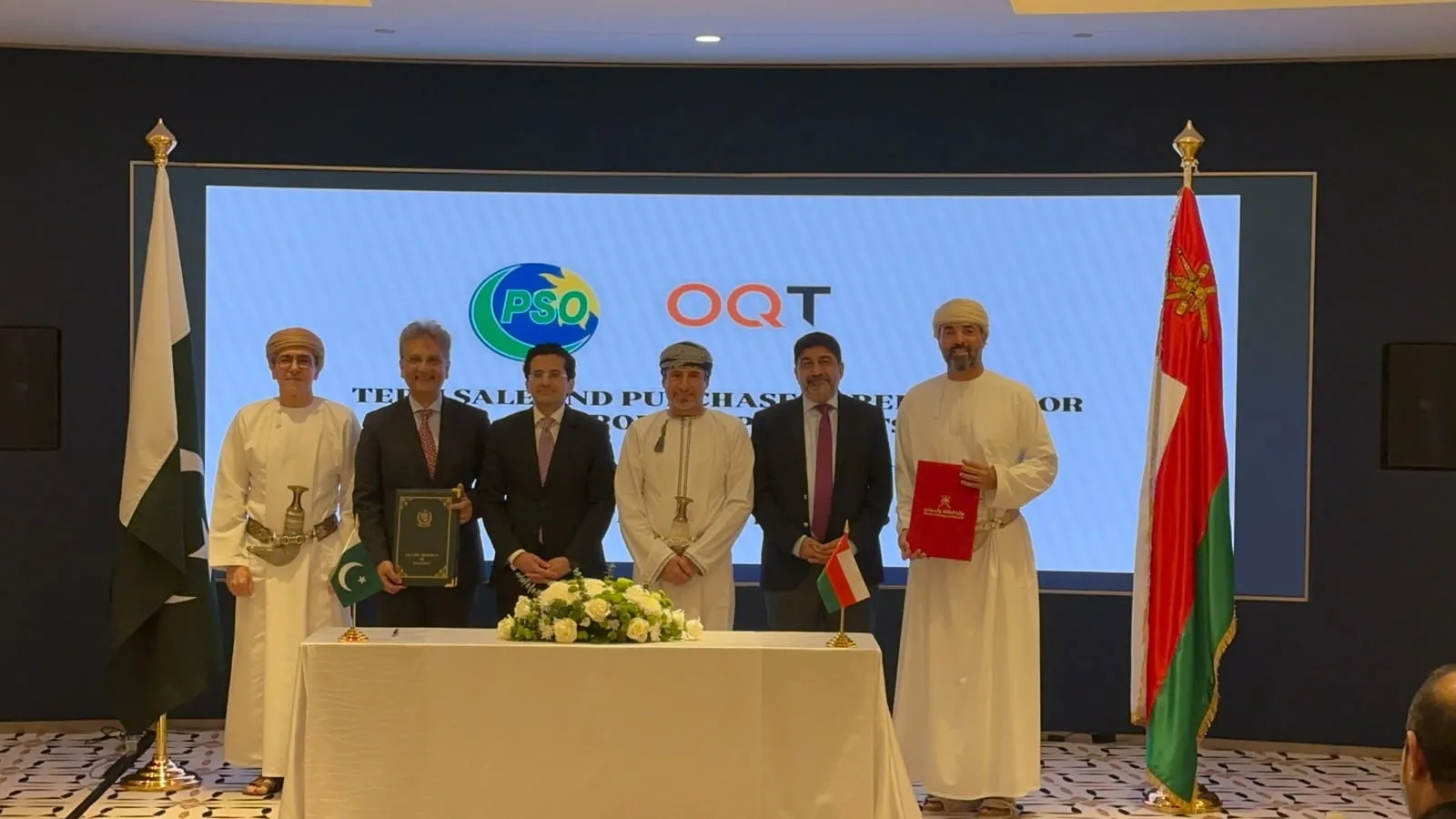
Pakistan State Oil has signed a petroleum products supply agreement with Oman's OQ Trading, which will also give the state-owned fuel company a $200 million credit facility to buy fuel. Federal Minister for Petroleum Ali Pervaiz Malik and Oman's Minister of Energy and Minerals Eng. Salim Al Aufi witnessed the signing of the deal in Muscat on Sunday, the Petroleum Division said. Under the agreement, OQT will extend a $200 million credit limit to PSO to facilitate petroleum purchases. The deal sets up a regular, structured framework for fuel supplies from OQT to PSO, which the Petroleum Division said will support supply reliability amid continued volatility in regional energy markets.
This pact arrives at a critical juncture for Pakistan as energy administrators look for stable import channels. The arrangement formalizes regular shipments from the Omani firm, protecting the domestic market from sudden shortages. Financing terms such as the $200 million credit line ease immediate payment pressures on national foreign reserves. Officials in Islamabad view this financial breathing room as essential for maintaining steady economic activity without crippling import bills.
Oman Already a Major Fuel Supplier to Pakistan
The agreement builds on an existing business relationship between the two companies. OQT has supplied more than one million tonnes of gasoline (petrol) to PSO in 2026, making it a major supplier to Pakistan's largest oil marketing company. The Omani firm has also expanded in Pakistan's liquefied petroleum gas market, supplying both state-owned and private buyers. Its LPG supplies to Pakistan are expected to exceed 120,000 tonnes by the end of this year. PSO had disclosed to the Pakistan Stock Exchange in October that it signed a petroleum supply agreement with OQ Trading on October 8 after approvals from its board and the federal cabinet. The agreement was concluded under a 2018 intergovernmental arrangement between Pakistan and Oman.
Energy trade between the two nations has grown steadily over recent years, underpinned by geographic proximity and diplomatic cooperation. By formalizing these volumes through a structured framework, both corporations reduce transactional friction. Consumers and industrial buyers across Pakistan rely on these steady petroleum flows to run transport fleets and manufacturing plants. The rising volume of liquefied petroleum gas also helps residential and commercial users who depend on alternative cooking and heating fuels.
Push to Diversify Fuel Imports Amid Regional Risk
Both ministers said the deal would strengthen Pakistan-Oman energy ties and support Pakistan's efforts to improve energy security by diversifying its fuel imports. The move comes as shipping disruptions around the Strait of Hormuz continue to threaten energy cargoes to the region. The credit line adds to the financing Pakistan has relied on to pay for oil imports. Earlier this year, Pakistan sought an extension of its $1.2 billion Saudi oil facility after fully using it between May 2025 and April 2026. The agreement also comes as PSO grows its share of the fuel market. The company grew its petroleum sales by 17.8% and lifted its market share to 45.9% in the first quarter of FY27.
Diversification remains a top priority for state planners seeking to protect the economy from single-supplier dependencies. Disruptions in vital maritime bottlenecks like the Strait of Hormuz pose constant threats to petroleum logistics in South Asia. Spreading import origins across multiple Middle Eastern partners mitigates these geopolitical vulnerabilities. Financial facilities tied directly to supply contracts ensure that commercial transactions proceed smoothly even when foreign exchange reserves fluctuate.
Expanding Bilateral Cooperation in Energy and Minerals
During their meeting, Malik and Al Aufi also welcomed the setting up of a Pakistan-Oman Joint Working Group on Oil and Gas and agreed to use it to expand cooperation in the energy and minerals sectors. The two sides also discussed investment opportunities and closer business partnerships in oil, gas and minerals. This new institutional mechanism provides a dedicated platform for bureaucratic and corporate leaders to resolve operational bottlenecks quickly. Future meetings of the joint working group will focus on identifying untapped resources and streamlining regulatory hurdles for foreign investors.
Pakistan continues to court foreign investment in its domestic resource extraction and mineral processing sectors. Omani state and private entities possess extensive technical expertise in hydrocarbon exploration and mining operations. Combining Omani capital and technical knowledge with local resources creates mutual economic benefits for both countries. Officials expect these institutional talks to yield further commercial agreements in the coming months as the working group holds its initial sessions.
Market Position of Pakistan State Oil
The latest arrangement with OQ Trading strengthens PSO as the dominant player in the local energy sector. Growing its petroleum sales by 17.8% and securing 45.9% of the market in the first quarter of FY27 demonstrates the corporate strength of the state-backed enterprise. Managing such a large share of national fuel distribution requires reliable, long-term procurement channels backed by flexible financing terms. The $200 million credit limit directly supports this operational scale by giving purchasing managers immediate liquidity.
As the primary importer of petroleum products, PSO bears the responsibility of keeping the national supply chain uninterrupted. Government policies heavily rely on the company's financial health to prevent fuel scarcity across retail petrol pumps and power plants. Securing credit lines with international trading houses reduces reliance on domestic banking liquidity, which often faces tight monetary conditions. Energy analysts monitor these supply contracts closely to gauge the stability of Pakistan's broader macroeconomic outlook.