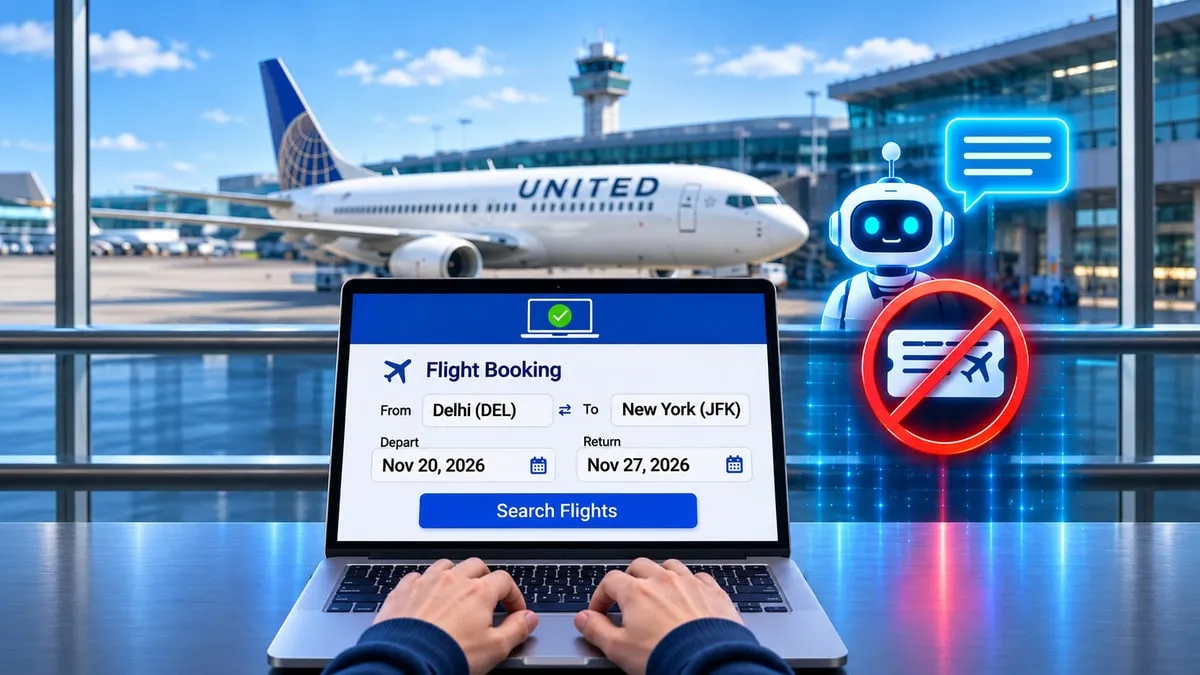
United Airlines has announced restrictions on third-party AI assistants, preventing unauthorized AI agents from booking flights, checking in passengers, or making changes to customer accounts. The US carrier announced the policy on November 11, citing concerns about passenger privacy, unauthorized purchases, and compliance with federal aviation regulations. The restrictions apply to AI agents accessing the company website and mobile app, as well as those operating through travel agencies and booking platforms.
The move highlights the growing tension between major corporations and the rapid rise of autonomous software tools. As artificial intelligence systems gain the ability to interact with web forms and user accounts, transportation companies are drawing firm lines to protect consumer data and adhere to strict safety mandates. The carrier stated that it is strengthening these rules to protect customer accounts and reduce the risk of unwanted transactions.
Why United Airlines Is Blocking AI Agents
United Airlines said allowing AI assistants to access customer accounts could expose sensitive personal and financial information. AI agents that book flights or manage travel arrangements generally require access to customer information, including account credentials and payment details. The airline warned that these tools could make purchases, change reservations, or use MileagePlus loyalty miles without the customer's intended authorization.
Protecting user credentials remains a top priority for consumer-facing digital platforms. When autonomous software interacts directly with secure databases, the margin for error narrows significantly. By shutting out unauthorized bots, the company aims to prevent data leaks and accidental financial losses linked to automated tool errors.
How AI Check-Ins Could Violate Aviation Regulations
United Airlines also raised concerns about whether automated check-ins performed by AI agents comply with federal regulations. Under US aviation security requirements, passengers must acknowledge that their checked baggage does not contain prohibited materials, including explosives. The airline said AI agents performing these steps automatically could bypass the required human acknowledgment. United cited regulations enforced by the Federal Aviation Administration (FAA) and the Department of Transportation (DOT) as another reason for restricting automated actions.
Security declarations carry legal weight in the aviation sector. When a human passenger completes a check-in routine, they legally attest to the contents of their luggage. Delegating this responsibility to an unverified software agent creates legal and safety ambiguities that federal regulators have not explicitly authorized.
How the Restrictions Affect Travel Agencies and Search Tools
The airline is updating its booking, ticketing, and distribution policies to prevent unauthorized AI agents from interacting with its services. The restrictions will apply directly to United's digital platforms and indirectly through travel agencies and flight booking aggregators. However, the decision does not mean customers will lose access to United flights through established travel booking services.
According to aviation industry analyst Henry Harteveldt of Atmosphere Research Group, travelers will still be able to find and book United flights through platforms such as Google Flights, Kayak, and Hopper. The restrictions specifically target unauthorized AI agents acting independently on behalf of customers.
Financial Costs of Automated AI Searches for Airlines
Harteveldt told CBS News that United's decision may also reflect concerns about giving AI assistants greater control over the flight booking process. Airlines already depend on intermediaries such as search engines, comparison websites, and online travel agencies to reach customers. AI agents could introduce another intermediary capable of automatically searching for flights, comparing prices, and making reservations. Harteveldt also noted that flight searches generate costs for airlines. A large increase in automated searches by AI agents could therefore add expenses for carriers, even when those searches do not result in bookings. However, United's official explanation focuses on customer security, privacy, and regulatory compliance.
Server infrastructure required to handle continuous automated queries can strain corporate resources. If hundreds of thousands of independent bots continuously scrape and query airline schedules without buying tickets, operational costs rise without a corresponding increase in ticket revenue.
What Comes Next for Passengers and AI Security
United Airlines said it will update its Digital Trust Center to explain the new restrictions and provide guidance for passengers concerned about account security. The airline also plans to explain how customers can seek assistance if an AI agent performs an unintended action. United noted that companies in the banking and retail sectors have introduced similar restrictions on third-party AI agents. The company said it will continue evaluating how personal AI assistants interact with its services as the technology develops. For now, unauthorized AI agents will not be permitted to complete bookings or manage customer accounts through United's systems.
Passengers should review how they grant third-party applications access to personal credentials. While virtual assistants offer convenience, major transport providers are drawing strict boundaries around automated account manipulation until clear legal and technical frameworks emerge.