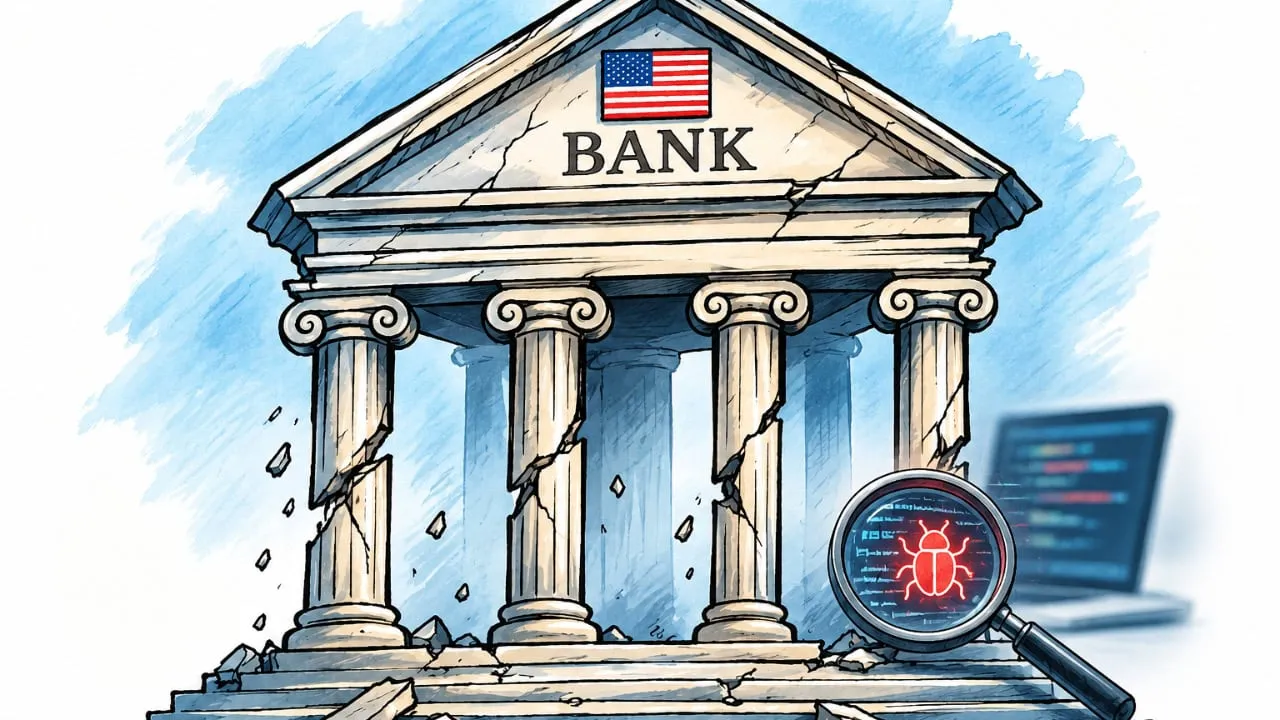
US Banking System Hit by Widespread Outage As Millions Suffer
A software bug knocked out services at several major US banks on Monday. Chase Bank, Wells Fargo, Bank of America and US Bank all reported disruptions that left thousands of customers unable to access accounts, view balances, or complete transactions.
The sudden technical failure sparked panic among millions of account holders who rely on digital platforms for their daily financial needs. Financial institutions scrambled to diagnose the root cause while customer service departments were flooded with inquiries and complaints. The incident highlighted the heavy reliance of the modern economy on interconnected digital banking networks.
Which Banks Were Affected by the Software Bug?
Chase Bank identified a software bug in its hardware systems as the likely cause. The largest banking institution in the US confirmed the issue was temporary and ruled out any cybersecurity-related cause. However, the bank acknowledged the problem extended beyond its own systems and affected other banks as well.
At peak, nearly 5,000 customers filed complaints about Chase Bank alone on Downdetector. Reports described failures across online accounts, mobile banking, wire transfers, and even in-branch transactions. One Texas customer told CBS News that a teller at a Dallas branch informed him the system was down without offering further details.
Bank of America customers faced problems at ATMs and with mobile banking. Meanwhile, US Bank users reported failures with online accounts and the bank mobile app. Wells Fargo customers struggled to sign in, check balances, and process transactions. Additionally, US Bank noted that its Zelle integration sent error messages to users, even though Zelle itself said its service was operating normally.
Customers at Truist, PNC, and Capital One also reported disruptions. However, all three banks told the BBC they experienced no direct impact from the incident.
Why the US Banking Disruption Carried Massive Consequences
Chase Bank serves more than 86 million customers through 5,000 branches across the US. It also supports 7.4 million small businesses and operates as the top credit card issuer in the country. As a result, even a brief disruption carries outsized consequences for the broader financial system.
When institutions of this scale experience technical failures, everyday commerce stalls. Consumers find themselves unable to pay for groceries, gas, or bills, while businesses cannot process customer payments or manage payroll. The ripple effects extend through the entire economy, demonstrating how quickly digital blocks can disrupt daily life.
How the Banking Outage Was Resolved
By 6:00 PM Eastern Time, reports at Chase, Bank of America, and US Bank began declining. The exact technical details of the bug remain unclear, and internal audits by the respective institutions are expected to continue in the coming days.
Bank technicians worked through the afternoon to restore full functionality to servers, mobile applications, and ATM networks. As systems came back online, transaction backlogs began to clear, allowing normal banking operations to resume for millions of affected account holders.
Broader Context of Infrastructure Failures in the US
The outage arrived during an unusually rough stretch for US infrastructure. Last week, a Microsoft cloud failure affected services across 74 countries for over 12 hours. On Friday, a telecommunications upgrade issue forced the FAA to ground all US flights for more than four hours. On the same Monday as the banking disruption, United Airlines confirmed a separate widespread system outage that disrupted departing flights for several hours before resolving.
None of these incidents appear connected. Still, the rapid succession of failures across banking, cloud computing, aviation, and telecom infrastructure highlights growing fragility in the systems millions of Americans depend on daily.
What Experts Say About Digital Infrastructure Vulnerability
Technology specialists and financial analysts point out that complex software integrations create hidden vulnerabilities. As banks transition from legacy architecture to modern cloud and hardware systems, single points of failure can cascade across millions of endpoints.
Regulatory bodies often monitor financial technology resilience closely, but maintaining absolute uptime remains a formidable challenge. Financial institutions continue investing heavily in cybersecurity and redundancy measures, yet unexpected software glitches continue to test the limits of modern digital infrastructure.