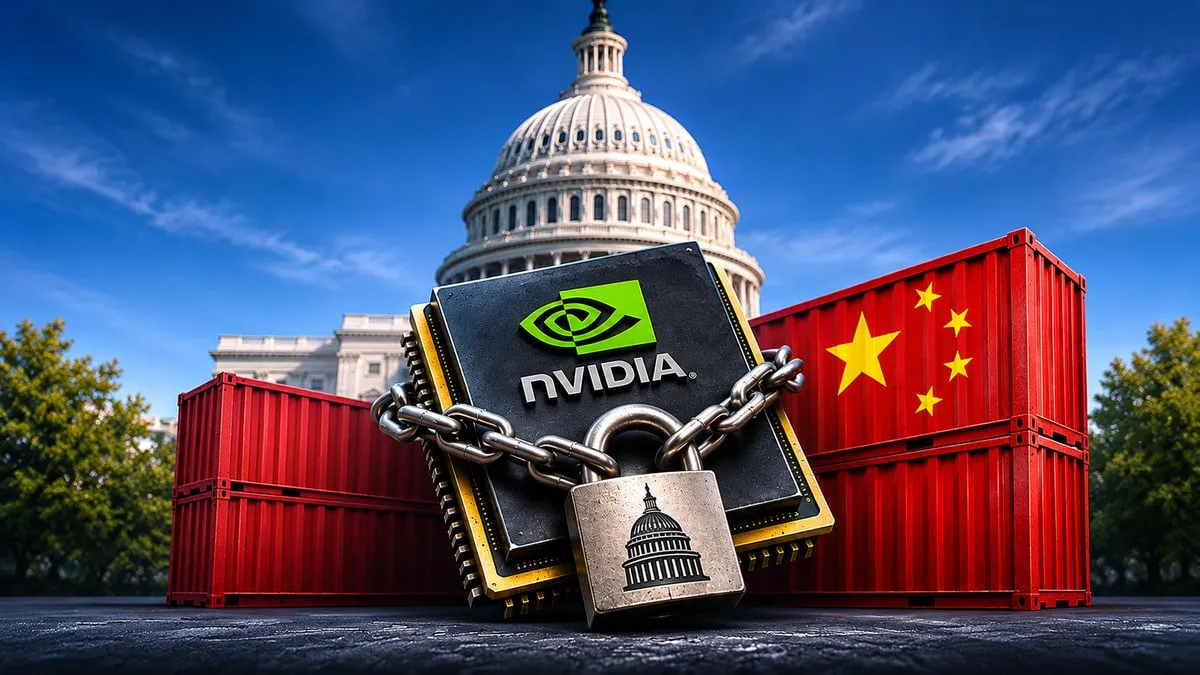
US Lawmakers Push for Tighter AI Chip Export Controls
US lawmakers from both parties are pushing for tighter restrictions on China's access to advanced artificial intelligence processors following the departure of Nvidia chief executive Jensen Huang. House Speaker Mike Johnson told Reuters that support for stricter export controls was growing in Congress and that he personally backed limiting China's access to advanced hardware.
The bipartisan urgency stems from heightened concerns regarding national security, supply chain vulnerabilities, and technology transfer. Lawmakers across the political spectrum argue that existing frameworks fail to prevent sensitive computing power from reaching strategic competitors. The debate focuses heavily on how global technology supply chains intersect with national defense priorities.
Understanding the Remote Access Security Loophole
One prominent legislative proposal targets remote access to advanced American processors. The Remote Access Security Act would grant the Commerce Department authority to restrict access through overseas data centers, where Chinese corporations can rent high-performance computing power without physically importing the physical chips themselves.
Lawmakers formally introduced the bill in April 2025. The House of Representatives subsequently passed the measure by a vote of 369 to 22 on January 12, 2026. The Senate referred the legislation to its Banking Committee the following day, though the bill remains stalled in the Senate.
This cloud computing loophole has frustrated policymakers who note that physical trade restrictions can be circumvented via foreign server farms. By renting server time abroad, foreign entities can train massive artificial intelligence models using American silicon without triggering traditional customs inspections or direct trade bans.
Additional Legislative Measures Under Consideration
Beyond remote access restrictions, Congress is weighing several complementary measures to tighten technology oversight. These proposals aim to give lawmakers more direct oversight of chip export decisions, require companies to track advanced processors to deter smuggling, and press American allies to restrict sales and servicing of chipmaking equipment destined for China. Some Republicans want to include these new restrictions in the annual defense authorization bill.
Tracking high-performance hardware is a major logistical challenge for regulators. Advanced processors are compact, high-value items that can be easily diverted through third-party nations or shell companies. Enhanced tracking requirements would force manufacturers and distributors to implement strict serial number monitoring and end-user verification.
Congressional Inquiries and Testimony Requests
Congress wants answers regarding how advanced technology reached restricted markets. Senate Banking Committee Chairman Tim Scott asked Jensen Huang and Commerce Secretary Howard Lutnick to testify publicly, ABC News reported. Senator Scott requested that Huang appear on December 3 and warned he could issue a subpoena if Huang declined. The Commerce Department stated that Lutnick agreed to appear voluntarily. House Republicans separately requested a closed-door interview with Huang on December 1.
These hearings are designed to unpick the communication channels between private technology firms and federal regulators. Lawmakers want to establish whether export enforcement mechanisms suffered from systemic blind spots or if specific compliance failures allowed restricted hardware to slip past border controls.
Political Reactions and Record Preservation
Senate Minority Leader Chuck Schumer said Jensen Huang's resignation did not end the need for Nvidia and the Trump administration to explain what they knew about the national security risks, The Verge reported. Democratic senators Elizabeth Warren and Chris Coons separately asked the administration to preserve records related to Nvidia's chip exports and the reported intelligence operation.
The demand for record preservation reflects deep legislative anxiety over institutional accountability. Senators want a complete paper trail of communications between executive agencies and semiconductor executives to determine if warning signs were ignored or if policy exceptions were improperly granted.
Why Nvidia Faces Intense Scrutiny
Jensen Huang resigned on November 12 after reports of a relationship with Alice Huang, an executive at Nvidia partner Megaspeed, whom American authorities suspect of spying for Beijing. Jensen Huang acknowledged having an affair without identifying the other person. Beijing denied that Alice Huang was a spy. American authorities also suspect Megaspeed of helping China obtain chips covered by export controls, Reuters reported.
This personal and professional entanglement brought intense public scrutiny to Nvidia, the dominant supplier of graphics processing units used for training modern artificial intelligence systems. The intersection of corporate leadership, international espionage suspicions, and critical infrastructure protection has elevated semiconductor policy to a top national security priority in Washington.