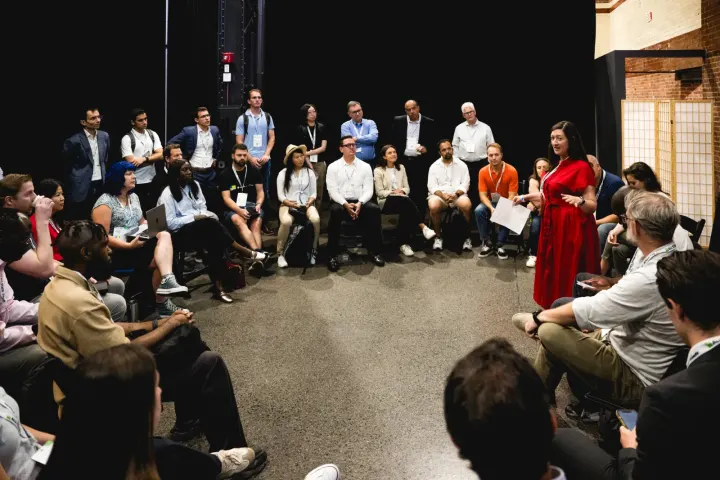
At TechCrunch Disrupt last week, Anu Bharadwaj of Iconiq, Rajeev Dham of Sapphire Ventures, and Rahul Vohra, founder of Superhuman Mail, warned that finding product-market fit has become tougher in the AI age.
Bharadwaj told the audience, "It's never been easier to gain a bunch of pilots because lots of companies across the board are open to trying new things," but added that moving from pilot to production remains the real challenge.
She noted many founders now pitch revenue numbers without clarifying whether they refer to true ARR or run rate, saying, "Is it true ARR or is it run rate? There's many ways to obfuscate the whole thing."
Recent chatter on X has focused on AI founders inflating ARR, either "annualized run rate" or "annual recurring revenue", by counting short-term pilots in yearly projections, making the figures look larger than they are.
Bharadwaj emphasized honesty, stating, "It's definitely in your long-term interest that you be very honest and upfront about what quality of revenue this is." She warned that a red flag appears when a handful of customers generate most of the revenue or can easily switch vendors, noting that churn and retention depend on such factors.
Vohra advised startups, especially consumer-focused ones, to monitor customer engagement and dollar retention, urging founders to "Figure out what benchmark [is] good, great, and excellent for your space." At Superhuman, he said they tracked ARR alongside an internal "delighted ARR" metric that measured revenue from highly engaged users, helping gauge stickiness.
He added, "Those users are now still users, those companies are now still customers. We obsessed over serving that particular category of our user base and our customer base."
The panel also highlighted green signals of product-market fit. Vohra suggested asking customers how much they value the product and whether they'd miss it if it disappeared, then being honest about the responses. He warned, "If you're 15%, 14%, 13% or below, consider a complete pivot... But if you're 20%, you can totally optimize your way from 20% to 40%."
Dham reminded founders not to confuse a compelling vision with a solid business. At the seed stage, Bharadwaj said she doesn't look for product-market fit yet, but asks if the founder's thesis seems plausible and if they can adapt as conditions change.
Dham added that he now values founders who have made multiple pivots, seeing it as evidence of tough decision-making in a volatile environment.
He concluded that product-market fit must be continuously re-earned, noting, "Even at a billion in revenue, these companies are re-earning their product-market fit. You constantly have to be innovating on products."