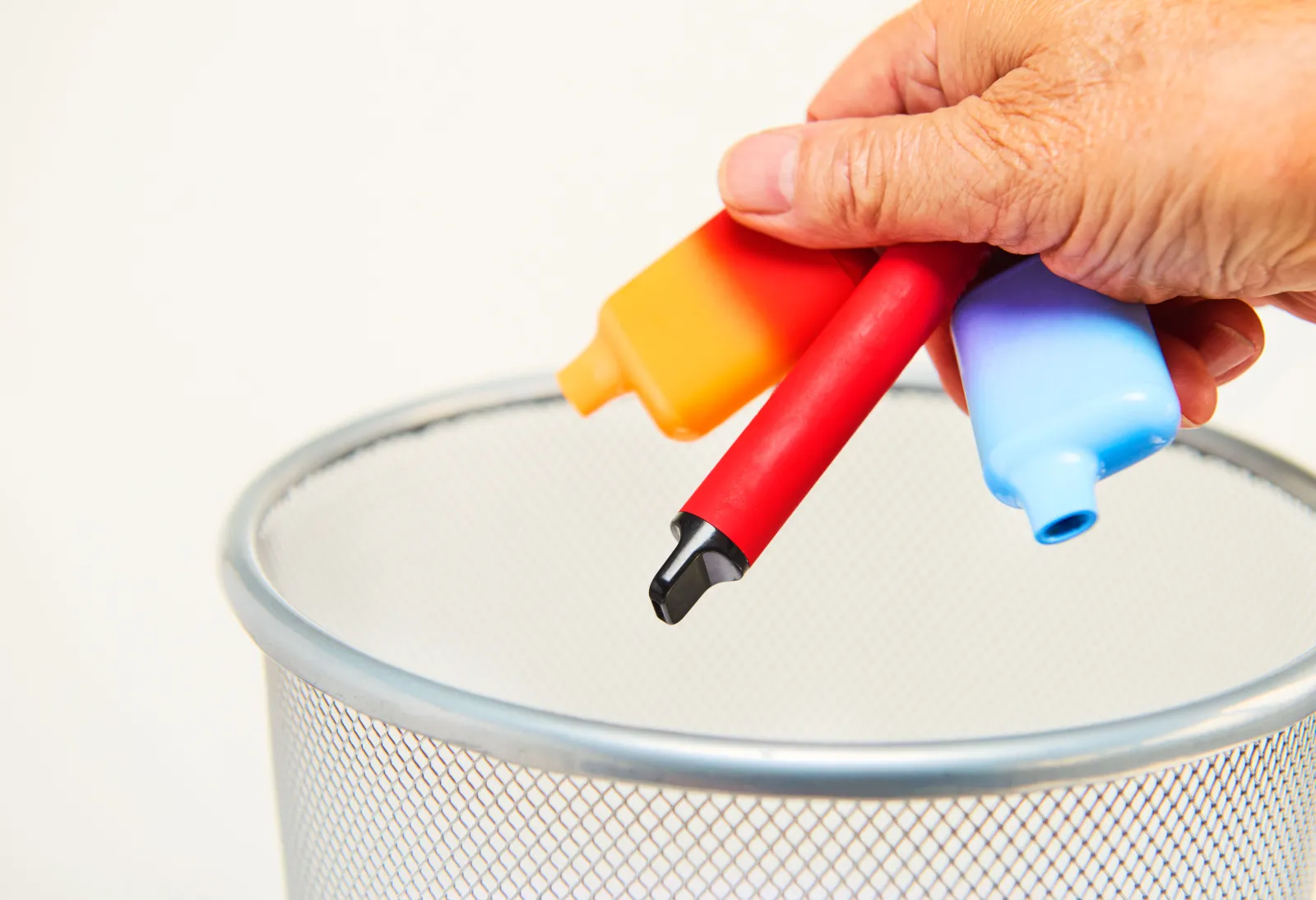
Vaping has become a widespread habit, with many people using it in cars, on sofas, in bed or even on the toilet.
Originally intended to help smokers quit, vaping now often turns into its own addiction.
The Office for National Statistics reports that around 5.4 million people in Britain currently vape, outnumbering the 4.8 million smokers.
Dr Crystal Wyllie, a GP at Asda Online Doctor, warns that vaping is not risk-free.
"Vapes can cause airway irritation, headaches and nausea, long-term lung damage, heart problems and addiction."
While e-cigarettes lack the harsh chemicals of tobacco, the NHS still recommends them for quitting cigarettes because they contain nicotine, which is highly addictive and can cause mood swings, anxiety and restlessness during withdrawal.
Many switch to vaping to stop smoking, only to find it equally hard to give up, if not harder. Non-smokers, including children and teenagers, are also attracted to vaping.
According to the Office for National Statistics, about three per cent of never-smokers vape, and Action on Smoking and Health says roughly six per cent of 11-17-year-olds currently vape.
Dr Wyllie explains that vaping can become an almost automatic habit, making it difficult to notice how often nicotine is used, and that withdrawal symptoms often keep people returning to the habit.
She adds that many people reach for their vape at certain times, such as when stressed, bored or socialising.
Singer and actress Selena Gomez, 34, urged her 400 million Instagram followers to quit vaping, saying, "I vaped nicotine a lot. Nicotine is so hard to quit. I think I just wanted to say if you're going through it or if you're even trying to vape, it's just not worth it. It's so stupid and it's changed my voice."
Presenter Kate Garraway, 59, said she "hates herself" for vaping, while former Geordie Shore star Vicky Pattison, who calls herself a "vapist", expressed she is "not proud" of her struggles to quit.
The NHS provides extensive guidance on quitting smoking, but offers little on quitting vaping. Below are several strategies suggested by experts.
Craving Attack
Nicotine Replacement Therapy (NRT) can aid in quitting vaping as it does for smoking, coming in patches, gum, spray or lozenges that supply a small nicotine dose to curb cravings.
The NHS states that Nicorette® QuickMist is the only approved NRT for vaping cessation.
Dr Wyllie says: "NRT can help to reduce your reliance on vaping by providing controlled doses of nicotine without the harmful chemicals found in vape products."
Although NRT still contains nicotine, it can be weaned off, helping users "adjust to life without vaping," according to Dr Wyllie.
Wean Yourself Off
Rex Fan, lead behavioural insights specialist at Bupa UK Insurance, suggests gradually lowering the nicotine strength of the vape rather than quitting abruptly.
He says: "It may also reduce nicotine cravings as your body and brain adjust to lower levels of nicotine. But, if you find yourself vaping more frequently than you would usually, with a lowered nicotine strength, it could signal that you've cut your strength too much in one step."
'Ozempic for Smoking' Pill
Doctors may prescribe medications originally intended for cigarette smokers to help those struggling with vaping.
Dr Wyllie notes: "Two options include Champix and Zyban. Champix contains varenicline, which works by targeting the same receptors in the brain as nicotine. It can make smoking less satisfying, helping you break the cycle of reaching for nicotine. Zyban contains bupropion, which affects chemicals in the brain linked to mood and cravings. This can help reduce the urge to smoke and make withdrawal symptoms more manageable."
Ten-Minute Reset
When cravings hit, distracting oneself for at least ten minutes can help.
Dr Wyllie says: "Cravings often pass if you give them time. Changing your surroundings can help distract your mind and break the automatic habit of reaching for nicotine."
Rex advises planning distractions based on personal patterns, such as chewing gum while driving if that's a usual vaping moment.
Brain Rewire
Hypnotherapy aims to change subconscious thoughts, weakening the link between vaping and everyday triggers.
During a session, a therapist induces deep relaxation, making the mind more receptive to suggestions like "vaping tastes bad" or "you are more focused without it."
Dr Wyllie adds: "Hypnotherapy isn't a guaranteed way to stop smoking or vaping, but it can help people recognise emotional triggers behind their habits."
It is not NHS-backed and costs between £50 and £100 per session, with online courses also available.
Dismantling Beliefs
Allen Carr's 1983 bestseller The Easy Way to Stop Smoking is cited by the UK parliament as the world's most successful quit-smoking method.
The Easyway approach has been adapted into an online video programme for vaping, priced from £199 and divided into four parts.
Fake It 'Til You Make It
Rex suggests viewing oneself as an ex-vaper.
"Once you've decided you want to quit, refer to yourself as someone who used to vape. Having this mindset, rather than thinking of yourself as someone who's trying to quit, sends clear signals to your brain that you're serious about stopping."
Writing down reasons, such as saving money or embarrassment, and sharing the goal with friends and family can boost motivation, Rex notes.
Trying to quit smoking? Call the Smokefree National Helpline on 0300 123 1044 for free, confidential advice from trained stop smoking advisers.
The NHS gives advice on quitting vaping on the Better Health website.
It says you can ask your pharmacist or stop smoking adviser about switching to a suitable nicotine replacement therapy (NRT) product.