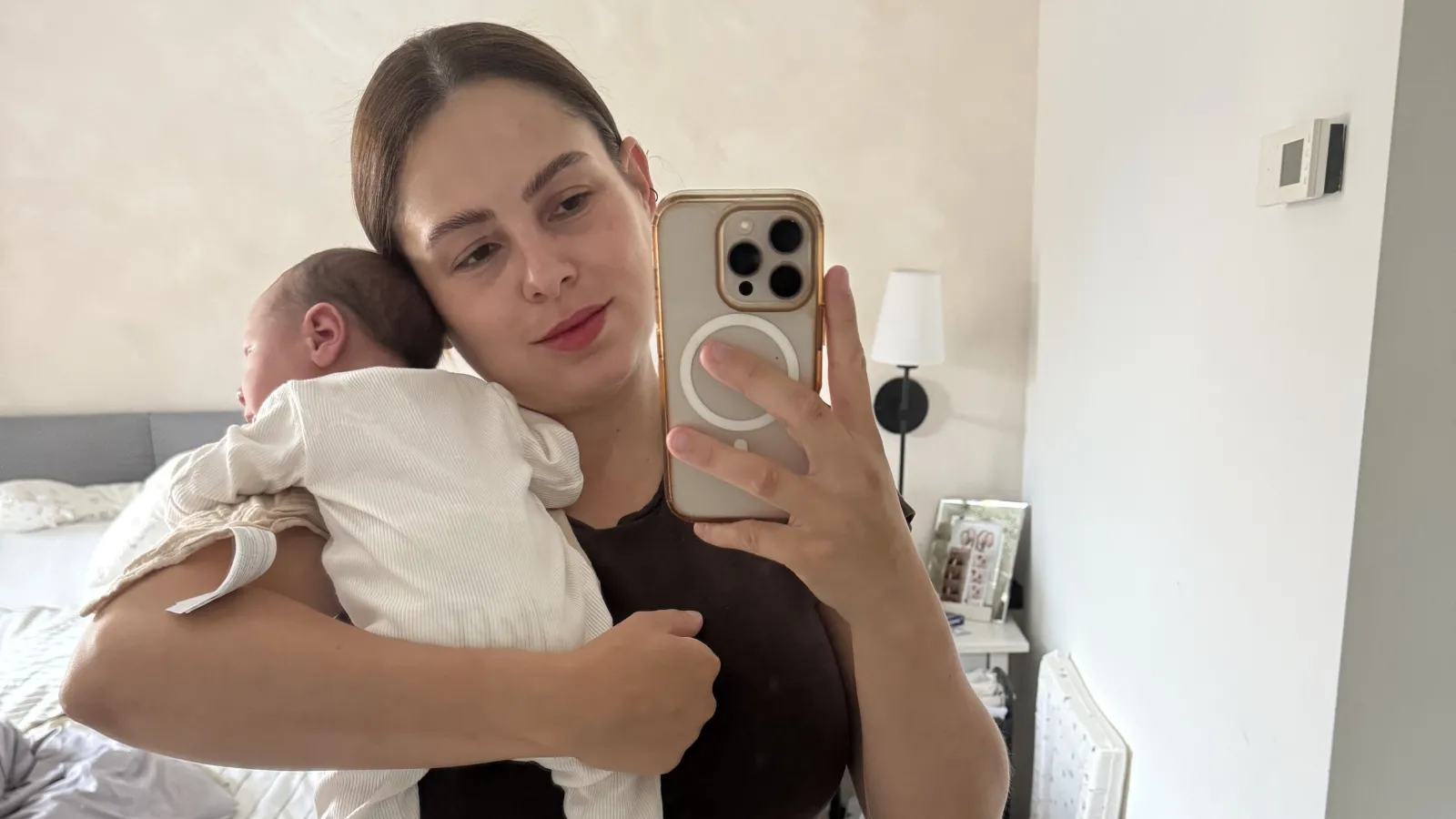
A mother from Durham is recounting how a small rash on her eight-week-old son led to a meningitis diagnosis.
Gabrielle Ingham welcomed son Hayden Hopkinson just eight weeks earlier, when he seemed perfectly healthy.
On 13 September, the 32-year-old noticed a light rash around his ears and cheek and tiny dots on his chest.
Because it appeared relatively harmless, Gabrielle, who also cares for 21-month-old Hallie, initially dismissed it as a simple heat rash.
The next morning Hayden's temperature spiked, prompting her to suspect something more serious.
He was taken to A&E, where doctors informed the family that he had meningitis.
"I felt absolutely heartbroken - I was so worried about Hayden, but also blamed myself and questioned whether I should have realised something was wrong sooner," Gabrielle, a retail manager from Durham, says.
"At first, I thought it was just a heat rash, so I didn't think too much of it.
"I think there's an idea that meningitis always looks a certain way, but that wasn't our experience at all."
Before the fever, Hayden was generally fit with "no indication that anything serious was wrong".
The night after the rash appeared, Gabrielle and the father, Chris, grew concerned and called 111, who advised an immediate A&E visit.
Gabrielle says treatment began as soon as they arrived.
"Because Hayden was so young and had such a high temperature, the doctors took it extremely seriously, as a high temperature in a baby of his age can be very dangerous."
Hayden received two antibiotics and underwent two lumbar punctures while doctors fought the infection.
The infant stayed in hospital for six days and was discharged on 20 September.
He has now made a full recovery and requires no further check-ups.
"He's back to being his happy self, which we are incredibly grateful for."
Gabrielle is sharing their experience to raise awareness of early meningitis signs, including the subtle rash that first appeared on Hayden.
Meningitis is an inflammation of the meninges surrounding the brain and spinal cord and can affect anyone, though it is most common in babies, young children, teenagers and young adults.
Some bacteria that cause meningitis can also cause septicaemia, leading to sepsis. Both conditions can develop within hours, making rapid recognition of symptoms essential.
In babies, meningitis and septicaemia may present with a rash that does not fade under pressure, though this sign is not always present. Other symptoms include refusing feeds, drowsiness, floppiness, irritability, rapid breathing, fever and pale, blotchy or blue-tinged skin.
"I would say a typical meningitis rash tends to be more purple with dark spots that can resemble tiny bruises.
"The rash he had wasn't what people would necessarily consider a 'typical' meningitis rash."
The UK Health Security Agency notes that a typical meningitis rash often begins as a few small spots and quickly becomes a non-blanching rash that does not disappear when pressed.
It warns not to wait for a rash before seeking help if a baby is unwell and deteriorating.
Meningitis and how to keep babies safe
Meningitis can be life-threatening if not treated promptly.
Symptoms can include:
- A high temperature
- Very cold hands and feet
- A stiff neck
- Joint and muscle pain
- A severe worsening headache
- Eye pain in bright light
- Seizures
- Vomiting and diarrhoea
- Confusion
- Extreme sleepiness or difficulty waking
- Spots or a rash that does not fade when pressed with a glass (harder to see on brown or black skin)
Early signs may resemble flu, a stomach bug or a hangover.
Babies and children under five may also:
- Refuse to feed
- Have fever, cold hands and feet
- Produce a high-pitched, unusual cry
- Be stiff, floppy or unresponsive
- Show a bulging soft spot on the head
- Vomit
- Dislike handling
- Breath rapidly or grunt
- Have pale, blotchy skin or a rash
- Dislike bright lights
If a baby or toddler is ill and worsening, seek medical help immediately. Do not wait for a rash.
Not all meningitis cases present with a rash, but typical features are small red pinpricks that spread quickly into red or purple blotches and do not fade when pressed.
Check paler areas such as palms, soles, roof of the mouth, whites of the eyes or inside eyelids, especially on darker skin.
Vaccination remains one of the safest ways to reduce meningitis risk. The NHS schedule offers MenB, MenACWY, pneumococcal, 6-in-1 and MMRV vaccines at various ages.
MenB is free for babies at 8 weeks, 12 weeks and 1 year; 6-in-1 is given at 8, 12 and 16 weeks; pneumococcal doses are at 16 weeks and one year. MenB is also offered until March 2027 to young people born between 1 September 2007 and 31 August 2008, or on or after 21 July 2001 starting university or further education in autumn 2026.
Sources: UKHSA, NHS and Meningitis Now
"I hope by sharing Hayden's story, other parents might recognise that something isn't right and trust their instincts.
"Babies can become seriously unwell so quickly, and I think it's really important for people to know that meningitis doesn't always present in the way you expect.
"We will always be incredibly thankful to Durham Hospital for acting so quickly and taking such wonderful care of us both.
"During such a frightening and uncertain time, their kindness, care and reassurance meant the world to us.
"We are truly grateful for everything they did for us."