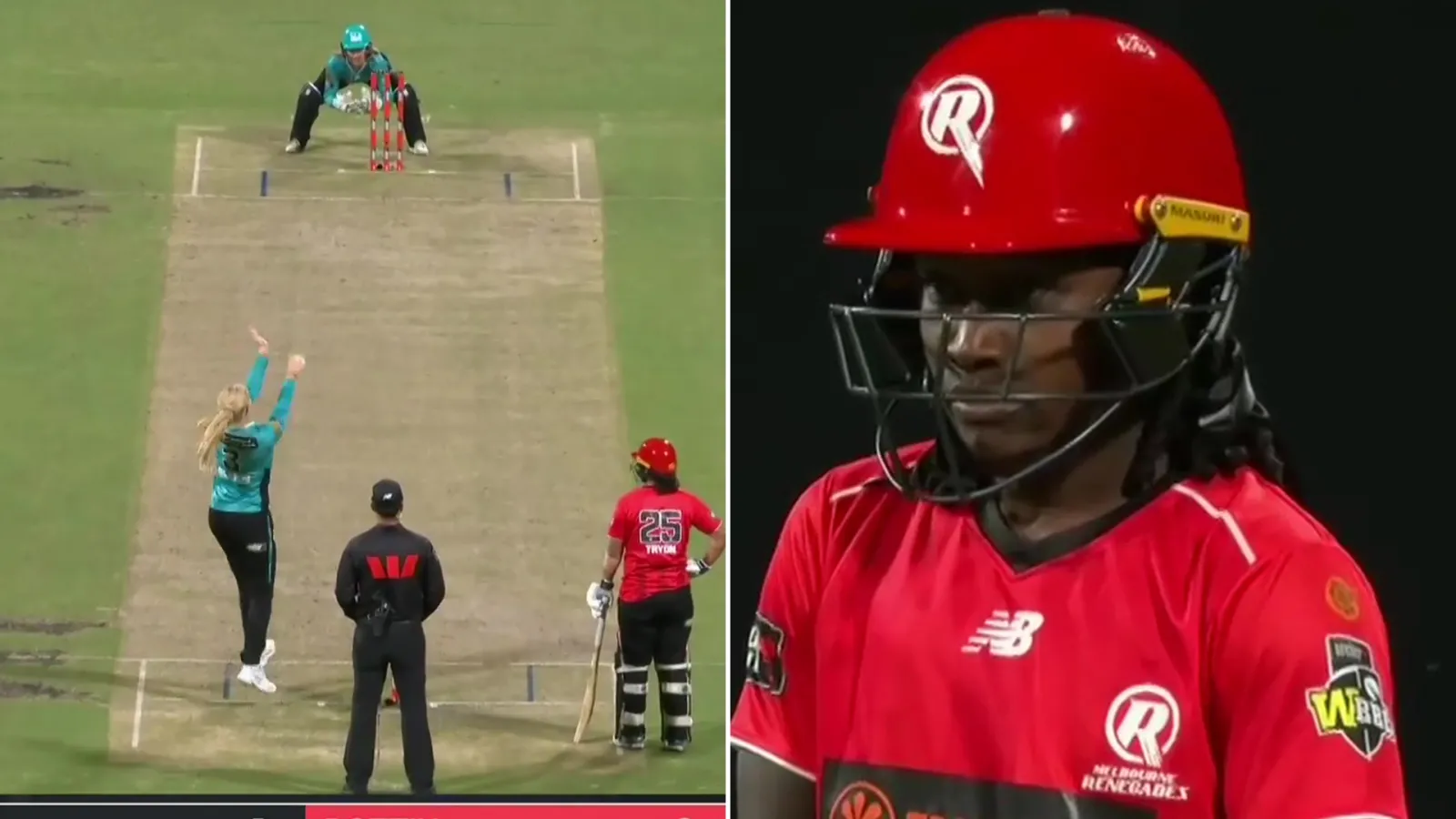
Viewers were left stumped after watching one of the strangest dismissals ever in a Women's Big Bash contest.
Brisbane Heat's Sarah Glenn would up bowling to an empty set of stumps and knocking off the bails after Deandra Dottin was ordered to stand aside.
Extraordinary.
— Weber Women's Big Bash League (@WBBL) November 25, 2026
Deandra Dottin was late to the middle. Now she's out after Sarah Glenn hit the stumps with a ball she couldn't face! #WBBL12 pic.twitter.com/lsG3SZAw8b
The Melbourne Renegades batter Deandra Dottin was ruled to have taken too long to get ready.
Dottin, an all-rounder for the West Indies, was sent out after Georgia Wareham's dismissal.
But she took an age with her equipment and started fiddling with her helmet and putting on gloves after reaching the middle.
What Is the 75-Second Ready Rule?
The rule was introduced for the 2021 WBBL season to curb delays and keep the game moving at a brisk pace. Under the regulation, an incoming batter must be ready to face the next delivery within 75 seconds of a wicket falling or a retirement being recorded. "Ready" means the batter has taken a proper stance at the crease, helmet and gloves on, and is prepared to receive a ball. If the time expires, the umpire can call the batter out, and the bowler is allowed to bowl a free ball at the empty stumps.
The rule mirrors a similar provision in men's limited-overs cricket, but its enforcement in the women's league has been rare. The intention is to prevent tactics that deliberately slow the game and to reduce the number of dead-ball periods that frustrate fans and broadcasters.
How the Dismissal Unfolded
During the match, Georgia Wareham was dismissed, prompting the next batter, Deandra Dottin, to walk to the crease. Instead of stepping straight to the crease, Dottin paused at the middle of the pitch, adjusted her helmet, and slipped on her gloves. The umpires started the 75-second clock, and Dottin continued to take her time.
When the allotted time ran out, the umpires instructed Dottin to step back from the stumps. Sarah Glenn, bowling for Brisbane Heat, was then allowed to deliver a free ball at the unoccupied wickets. She bowled a full-length delivery that hit the stumps, dislodging the bails and resulting in a wicket without a batter facing a ball.
Glenn's reaction was mixed; she laughed, put her head in her hands, and seemed unsure whether to celebrate. Her teammates rushed in, urging her to decide, and ultimately she was credited with the wicket.
Fan Reaction and Social Media Buzz
Fans took to social media platforms, especially X (formerly Twitter), to voice their opinions. One user wrote, "Either you time the batter out or you dont." Another called the rule "Bizarre." A third supporter argued, "Might be the only one that likes this rule. Better than timed out, bowler still has to hit the stumps." A fourth commenter dismissed the incident as "just theatrics, she's Timed Out." The mixed reactions highlight the ongoing debate about the rule's fairness and its impact on the flow of the game.
Impact on the Match Outcome
At the time of the dismissal, the Renegades were 97-5, needing 41 runs off 34 balls. Despite the setback, the team rallied and chased down the target on the final delivery, securing a win. The unusual wicket did not ultimately change the result, but it added a memorable talking point for the match and for the season.
Historical Context of Timed-Out Dismissals
Timed-out dismissals are rare in cricket. The first recorded instance in international cricket occurred in 2007 when England's Kevin Pietersen was given out for not being ready within the stipulated time. In women's cricket, the rule has been applied sparingly, primarily in domestic leagues that experiment with faster-paced formats. The WBBL's adoption of the 75-second rule reflects a broader trend toward shortening match durations to cater to broadcast windows and audience attention spans.
What the Rule Means for Players and Teams
Players now have to be acutely aware of the clock. Teams often assign a batting coach or senior player to monitor the time and remind the incoming batter to be ready. Some teams have started practising "quick-ready" routines during training sessions to avoid future penalties.
For bowlers, the rule offers an additional weapon: the ability to claim a free ball at empty stumps, which can be psychologically unsettling for the batting side. However, bowlers must still deliver a legitimate ball; a no-ball or wide on the free delivery would still count as a ball bowled.
Looking Ahead: Potential Adjustments and Monitoring
The WBBL governing body has said it will review the incident and gather feedback from players, officials, and fans. Possible adjustments include extending the ready-time window, providing a visible countdown on the scoreboard, or offering a brief grace period for equipment adjustments.
Until any changes are announced, the rule remains in force. Players, coaches, and umpires are advised to familiarize themselves with the exact wording of the regulation and to incorporate timing checks into match-day protocols.
Practical Takeaways for Cricket Fans
For spectators, the incident underscores how rule changes can produce unexpected moments that become part of cricket lore. Understanding the 75-second ready rule helps fans interpret future dismissals that may appear unconventional.
For aspiring cricketers, the lesson is clear: efficiency in getting ready is now as important as skill with the bat or ball. Teams that master the timing will avoid costly free-ball wickets and maintain momentum during tight chases.